
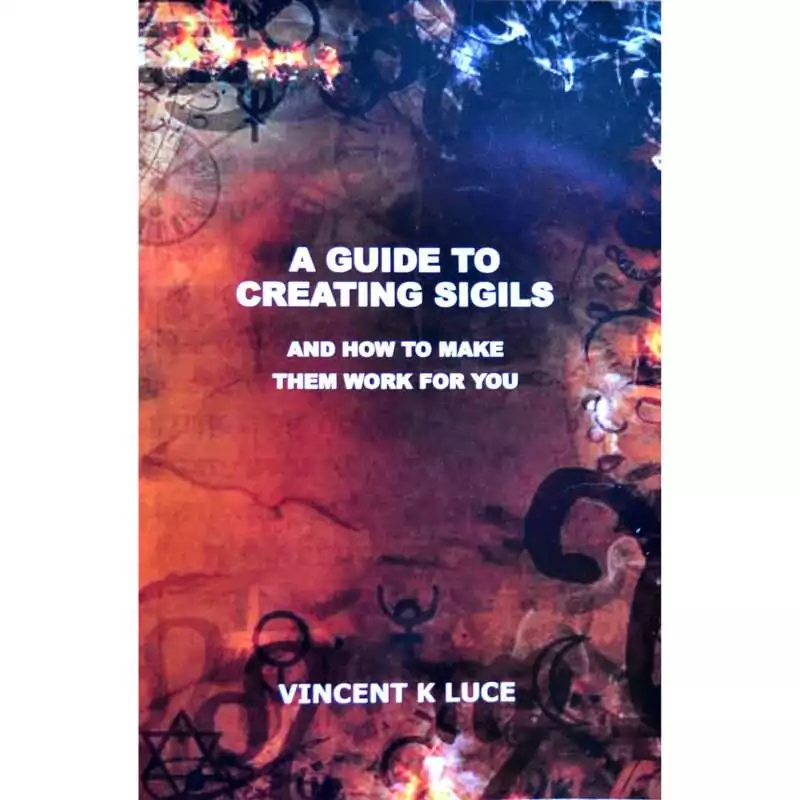


Quick Specs
- Type: Sigil creation and working guide
- Format: Paperback, 149 pages
- Author: Vincent K. Luce
- ISBN: 978-1-4929-4879-7
- Contains: Sigil construction methods, activation techniques, working uses, illustrated examples
- Best for: Beginner to intermediate practitioners building a personal sigil practice
A Practical Guide to Sigil Construction and Working Use
Sigils are one of the older and more portable working forms in magical practice. A sigil is a designed symbol that concentrates an intention into visual form, and the tradition of constructing them stretches from the medieval grimoires of ceremonial magic through Austin Osman Spare’s early 20th-century chaos magic work into contemporary practice. Vincent K. Luce’s Guide to Creating Sigils treats the form as a working technique that any practitioner can build into their own practice, and the 149 pages give the material enough scope to move past the introduction into practical application. Luce covers how sigils work, why they earn a place in a working practice, and how to construct them for specific uses.
The book is illustrated with detailed intricate examples that show the reader how a sigil moves from intention to symbol. This visual grounding matters because sigil work is fundamentally about the design of the symbol, and reading about sigil construction without seeing worked examples leaves the material abstract. Luce’s examples serve as both instruction and reference, and a reader can return to specific illustrations while building their own sigils. The material assumes some magical framework but does not require prior sigil experience. If you have a working practice in any tradition and want to add sigil construction to your toolkit, this book gives you a portable working technique that fits alongside almost any other practice.
How This Book Fits in Your Practice
Reach for Luce when you want to add sigil work to an existing practice or when you are building a working practice from scratch and want a portable technique that does not require elaborate materials. Sigil work fits with tarot practice (a sigil designed for a specific reading question), with candle work (a sigil carved or drawn on the candle), with sachet or charm bag work (a sigil folded inside the ingredients), and with daily journaling. The illustrated examples give you templates to riff on rather than a fixed set of designs. Browse my Spellcraft, Witchcraft and Magic collection for adjacent working supplies.
How to Build a Sigil Practice
Sigil work rewards steady practice more than intensity; start small and let the technique compound over time.
- Read the Construction Methods First
Before drawing your first sigil, work through Luce’s construction methods and study the illustrated examples. Sigil construction is a designed process rather than a free-form drawing exercise, and the specific techniques Luce covers (letter reduction, glyph combination, image consolidation) give you actual tools rather than a vague sense of the form.
- Start with a Small Intention
For your first sigil, choose a small concrete intention rather than a large abstract one. Something specific, near-term, and clearly workable. Small intentions teach you the technique without staking the outcome of major life work on your first attempt. As the practice compounds, larger intentions become workable.
- Activate and Retire the Sigil
Sigil traditions vary in activation and disposal practices. Luce covers activation methods in the book; choose one that fits your existing practice. When the intention has completed its work, retire the sigil deliberately (burning, burying, dissolving) rather than leaving it lying around indefinitely. The retirement is part of the working.
The Tarot Fellow Standard
I brought this book into the shop because sigil work is one of the most portable working techniques in magical practice, and Luce writes about it in a way that treats the technique with the seriousness it deserves while keeping the material approachable. The illustrated examples give the book replay value beyond a one-time read. Browse my Altar Supplies collection for the working supplies that pair with sigil practice.
Frequently Asked Questions
Activation happens through gnosis: an altered mental state during which your conscious mind’s critique and second-guessing drop, letting the intention land in the symbol directly. Common gnosis methods include physical exhaustion, sustained focus, meditation, or emotional peak states. Luce covers activation methods in the book; the underlying principle across chaos magic and older traditions is the same: create the symbol, charge it in gnosis, then release the conscious attachment to the outcome.
The Austin Osman Spare tradition treats forgetting as an important step, because the conscious mind’s continued attention interferes with the working. The idea is that once the sigil is charged and released, dwelling on the intention pulls it back into conscious critique. Practitioners handle this differently; some destroy or hide the sigil, others simply stop looking at it. Read Luce’s approach and adopt what fits your practice.
Sigil work has roots in medieval ceremonial magic and grimoire traditions, and Austin Osman Spare reshaped the technique for what became chaos magic in the early 20th century. Luce’s guide treats sigil construction as a portable working technique usable across traditions rather than tying it strictly to chaos magic. If you practice ceremonial magic, folk magic, or eclectic Wicca, the techniques adapt to your framework.




Reviews
There are no reviews yet