

Quick Specs
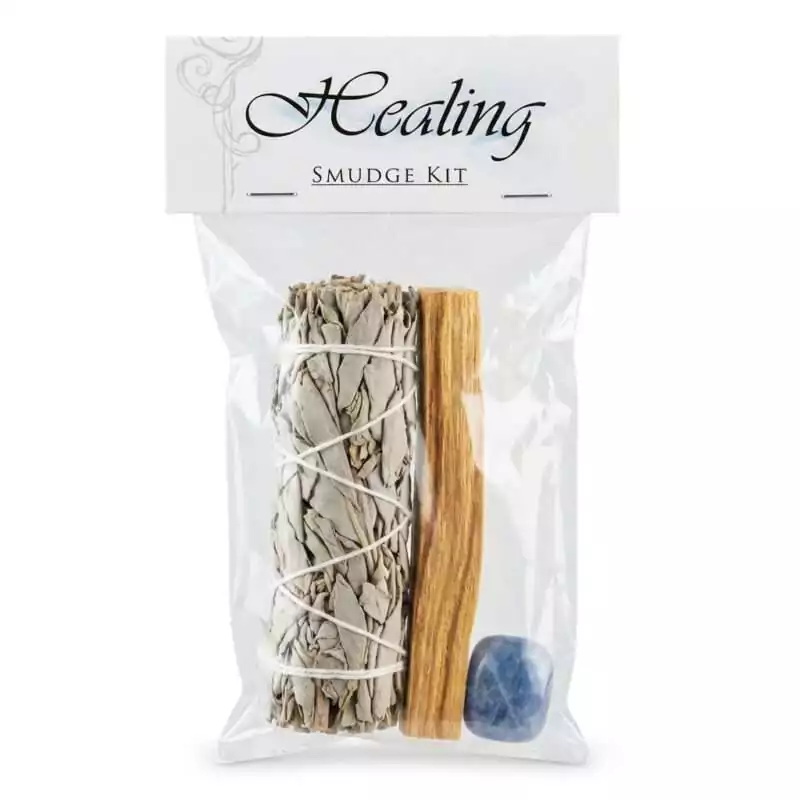
- White sage bundle (Salvia apiana), approximately 4 inches
- Palo santo stick (Bursera graveolens), 1 stick
- Feather for directing smoke
- Instruction card for first-time use
- Compact kit format — everything you need in one package
Smoke, Intention, and the Case for Starting with a Kit
White sage, or Salvia apiana, has been used in smoke-cleansing ceremonies by Indigenous peoples of what is now California and the Sonoran Desert for a very long time. That context matters to me. The bundled smudge stick as a practice tool has roots in specific cultural ceremonies, and while the form has traveled far outside those communities, I think it’s worth knowing where it came from rather than treating it as a generic wellness product. What we’re talking about here is smoke applied to a space, an object, or a person with deliberate intention — that’s the practice, and the kit is an accessible entry point to it.
Palo santo (Bursera graveolens) brings a different character to the kit. It’s a hardwood from South America with a distinctly warm, resinous scent that’s softer than white sage. Practitioners often use sage to clear and palo santo to invite — the sequence matters. Smoke from either plant does the same atmospheric work: it shifts how a room smells and feels, which is enough to interrupt habitual thought patterns and signal to your nervous system that something is starting or ending. Whether you attribute that to energetics or simple behavioral cueing, the effect is real and reproducible.
The kit format exists because starting from scratch is the hardest part of any practice. When you have a feather, a sage bundle, a stick of palo santo, and a card telling you what to do with them all in one place, the barrier drops. I’ve carried these kits for years precisely because I see people buy individual pieces and then not know how to combine them. This kit removes that hesitation. It’s a solid entry point for anyone building a cleansing or intention-setting practice from the ground up.
How to Use Your Healing Smudge Kit
Three steps to complete a full smudging session with the Healing Smudge Kit.
- Prepare your space
Open a window or door to give smoke a way out. Place your abalone shell or a heat-safe dish nearby to catch ash. Set a clear intention for what you want to release or invite before lighting anything.
- Light and smudge
Light the tip of the white sage bundle, let it catch, then gently blow out the flame so it smolders. Fan the smoke with the feather or your hand, moving from low to high and corner to corner through your space.
- Close the practice
Return to your starting point and press the bundle firmly into your shell to extinguish it. Thank the space aloud or silently. Store the kit in a dry spot so the herbs stay ready for next time.
The Tarot Fellow Standard
I’ve stocked smudge kits since 2018, and the thing I check for every reorder is bundle density and moisture content. A loosely wound sage bundle that comes apart on first use is a waste of your time and a fire hazard. The kits I carry are consistently wound, consistently dry, and arrive smelling the way white sage should — sharp, camphor-adjacent, unmistakably Salvia apiana. I don’t carry kits from suppliers whose product smells faintly of cardboard or burns unevenly; I’ve passed on plenty of samples for exactly that reason.
One honest note: if you live in a humid climate, store your kit in a sealed bag or tin between uses. Sage that has absorbed ambient moisture will not smolder cleanly — it’ll go out repeatedly and frustrate you. A small silica packet in the bag fixes this completely. The instruction card in the kit covers the basics, but that particular tip doesn’t always make it to print.
If you want to expand your practice, browse the full smudge sticks and burning accessories collection or explore altar supplies to build out a dedicated working space.
Frequently Asked Questions
The kit typically includes a white sage bundle, a palo santo stick, a feather, and an instruction card. Exact contents may vary slightly by batch, but the core smoke-cleansing tools are always included.
No. White sage is Salvia apiana, a plant native to the coastal sage scrub of California and Baja California. Culinary sage is Salvia officinalis. They are different species with distinct scent profiles and traditional uses.
Yes. Crack a window first so smoke and any stagnant energy have somewhere to go. Keep a heat-safe dish under the bundle at all times and never leave a smoldering bundle unattended.
A white sage bundle used in a small space typically lasts 4 to 6 sessions when you extinguish it properly after each use. Palo santo sticks last even longer because you only burn them for a minute or two at a time.


Reviews
There are no reviews yet