
Quick Specs
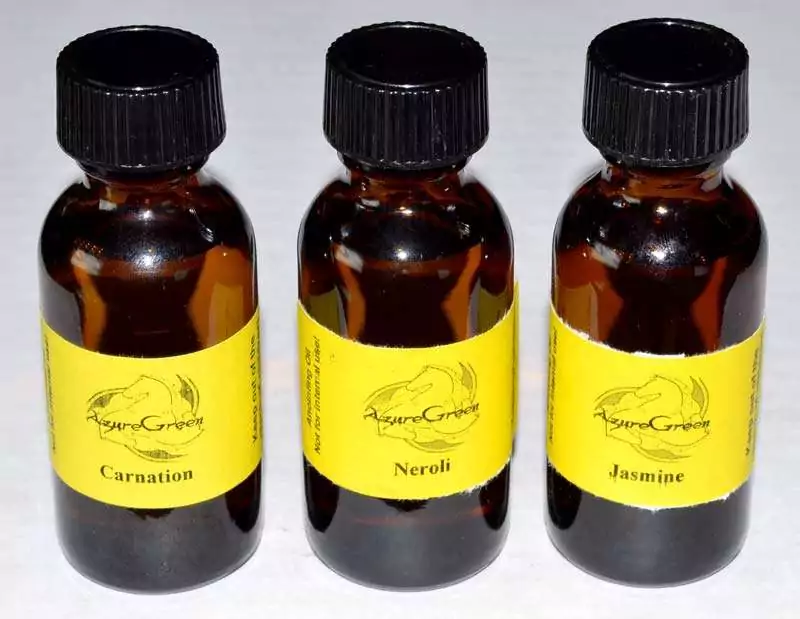
- Brand: AzureGreen
- Type: Ritual aroma oil (fragrance)
- Scent: Heliotrope
- Size: 1 oz bottle
- Traditional Association: The sun, devotion, invisibility lore
Heliotrope Oil and the Old Lore of Invisibility
Heliotrope turns up in old magical writing as a flower with a long reputation, and the lore around it is older than any bottle of scent. Pliny the Elder records that magicians used a stone called heliotrope as a stone of invisibility, and the belief that carrying one made a person unseen stayed in circulation for well over a thousand years. Boccaccio repeats the claim in the Decameron, and Dante refers to it in the Inferno. Writers disagreed about whether the thing was a stone or an herb, and the name covers both: the green, red-flecked stone now called bloodstone, and the plant that turns toward the sun. Both take the name from the Greek words for sun and turning. People who work with the idea today usually read invisibility as privacy: moving through a hard stretch without drawing notice, keeping a plan quiet until it’s ready, stepping out of an unwanted spotlight. This oil carries the flower’s name and that long reputation. It’s a fragrance, so the lore is the whole of what it offers, and it gives a working plenty of material.
The sun is the other half of the heliotrope’s character, and the two halves pull in opposite directions: the flower faces the light, the stone hides its owner. That pairing makes the scent useful for workings about being seen on your own terms, such as keeping quiet until the right moment and then stepping forward. The flower’s Victorian meaning, devotion and eternal love, adds a third thread for anyone working on loyalty. Midsummer, when the sun reaches its height, is the natural date for the bright half, and a new moon suits the quiet one. A 1oz bottle sits in the middle of the range. It holds four times what a 2 dram vial does, enough to dress candles every week for a season and anoint a set of charm bags with oil left over. It’s the size for someone who has decided heliotrope belongs on the altar and wants to use it freely, and it’s big enough to share with a friend or a small circle that dresses candles together.
Practical Ritual Applications
Heliotrope splits into two kinds of candle work. For the light half, dress a yellow or gold candle from my pillar candle collection on a bright morning and set it where the sun reaches it; at litha, the summer solstice, that candle can anchor your evening. For the quiet half, dress a white or dark candle on a new moon and burn it while you plan something you’re keeping to yourself for now. Fold a petition and put a drop on the fold; the scent stays with the paper, whether you carry it or keep it on the altar. A 1oz bottle makes it easy to dress several candles in a row, so a week-long working can have a fresh candle each night. Dress candles away from the wick and burn them in holders on heat-safe surfaces.
How to Dress a Candle With Heliotrope Oil
Here's a method for a candle working with either half of the heliotrope, the light or the quiet.
- Choose the light or the quiet
Decide which half of the heliotrope you're working with before you pick a candle. For the light half, choose a yellow or gold candle and a sentence about what you want to face toward: a goal, a person, a practice. For the quiet half, choose a white or dark candle and a sentence about what you're keeping to yourself for now. Write the sentence down and keep it where you can see it while you work.
- Dress it, away from the wick
Put one drop on your fingertip and spread a thin coat over the candle's sides, leaving the top inch of wax clean, since an oiled wick is slow to catch and gives off smoke. Add a second drop only if the candle is large, and wipe your fingers on a cloth afterward. Aim for a light sheen you can barely see.
- Burn it and close the working
Light the candle in its holder, on something heat-safe, and read your sentence aloud once. Keep it where you can see it while it burns. Snuff it when you're ready to stop; a dressed candle can be relit across several nights, so a longer working can run for a week on one candle. Recap the bottle and put it somewhere cool and dark.
The Tarot Fellow Standard
I stock Heliotrope in the 1oz size as the working bottle of the scent: large enough to use freely and small enough to use up, with room left for charm bags and altar tools. Heliotrope’s lore comes from classical writers, medieval storytellers, and the Victorian garden, and the oil borrows that reputation. If you’d like a vial to carry in a pocket kit, my 2dr AzureGreen oils collection has the small bottles, and the scent also comes in a bulk size for groups that go through it quickly.
Frequently Asked Questions
I can't give you an ingredient list for this oil, so I won't claim flowers are in it. In perfumery the heliotrope note is almost always recreated: the flower gives up its scent poorly to traditional methods, so perfumers build the note from heliotropin, also called piperonal, a compound named for the flower. Think of this oil as a heliotrope-style fragrance and use it for the flower's associations.
Practitioners follow a few conventions. Stroking from both ends toward the middle gathers an intention toward you, stroking from the middle out toward each end sends it away, and a continuous stroke from bottom to top is a general choice for blessings when you're unsure which applies. Pick the direction that matches your sentence and use it across the whole candle. Whichever you choose, use a light coat and stop short of the wick.
It's meant for dressing candles, cloth, and charm bags. Oil and water separate, so a few drops in a tub float and settle against your skin undiluted, and some people react to fragrance components. For a scented ritual bath, reach for a product made for bathing. If you still try the oil on your skin, dilute it in a carrier oil and patch-test first.


Reviews
There are no reviews yet