

Quick Specs
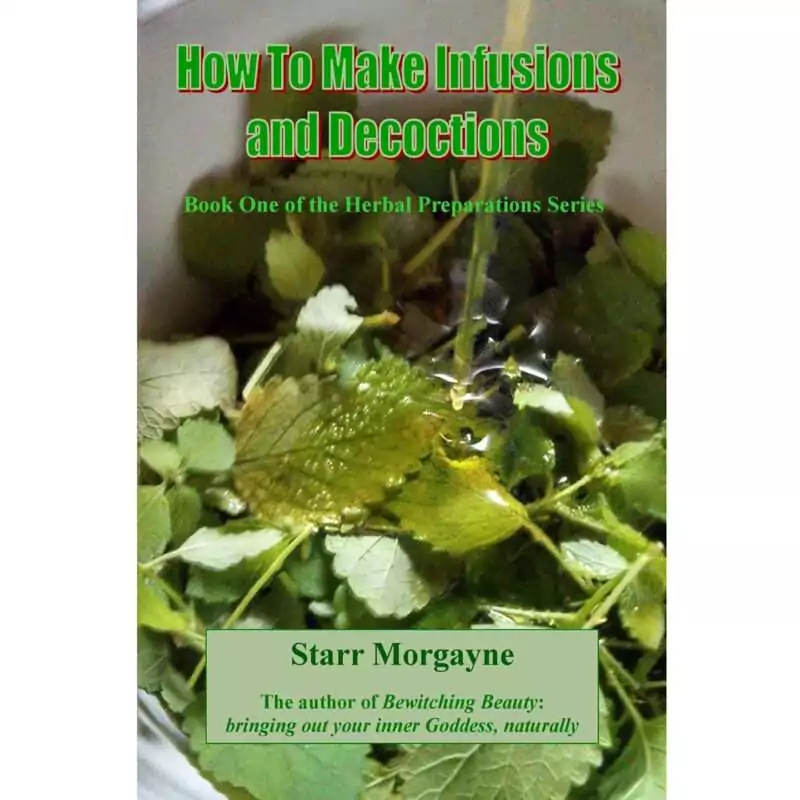
- Type: Kitchen herbalism preparation guide, Book One of the Herbal Preparations series
- Format: 6 by 9 inch paperback, 142 pages
- Author: Starr Morgayne (certified herbalist)
- ISBN: 978-1-4935-0365-0
- Contains: Instructions for infusions, decoctions, bath teas, steam facials, herbal syrups, and other preparations, with photos from the author’s own herb garden
- Best for: Home practitioners building an herbal-preparation practice from folk-tradition sources
A Kitchen Herbalism Guide from a Certified Herbalist’s Own Garden
How to Make Infusions and Decoctions is the first volume of Starr Morgayne’s Herbal Preparations series, and it walks the reader through the specific preparation techniques a home herbalist relies on: infusions (water extractions of plant material), decoctions (simmered water extractions), bath teas, steam facials, and herbal syrups. Morgayne is a certified herbalist and photographs the plants she works with from her own herb garden, so the book carries the visual specificity of a practitioner sharing her direct working knowledge rather than a general survey compiled from other sources. The 142 pages are structured around the techniques rather than around a plant-by-plant reference, which makes the book useful for a reader who wants to learn how to make a class of preparation and then apply it to different herbs.
The material is presented in the folk-tradition register rather than as clinical herbal medicine. Morgayne describes what she does in her own practice and what preparations she uses, including examples like clove and mullein-and-garlic oils drawn from the folk pharmacopoeia. As with any folk-tradition herbal writing, treat the material as reference to a living tradition of home herbal practice rather than as medical advice, and consult qualified healthcare providers for any actual medical decisions. The book’s usefulness is in teaching you the preparation techniques so you can build your own practice with the herbs that fit your working. If the tradition of home herbal preparation draws you, this is a working starting point.
How This Book Fits in Your Practice
Reach for this book if you want to add herbal preparations to your working practice: bath teas for ritual bathing, infusions for altar work or personal use, herbal syrups for offering plates, steam facials as part of a broader self-care ritual. If you already have a home herbal practice, Morgayne’s techniques may add to your working vocabulary; if you are new to herbal preparation, the book gives you a technique-first structure to build from. Browse my Herbal Spell Mixes collection for adjacent working supplies.
How to Work with Herbal Preparations
The book is a technique guide from a certified herbalist’s practice; treat the material as reference to a folk tradition and take responsibility for your own choices about what you make and use.
- Start with a Single Technique
Choose one preparation technique from the book (a simple infusion is a good starting point) and work through Morgayne’s instructions carefully before moving to a second technique. Kitchen herbalism rewards precision, and rushing through the techniques to cover more ground reduces what each preparation actually delivers.
- Source Your Herbs Carefully
Morgayne works from her own herb garden. If you are sourcing herbs from other suppliers, buy from reputable herb shops that identify plant material correctly and note the growing conditions. Misidentified herbs are the most common source of problems in home herbalism, and careful sourcing prevents most of them.
- Take Responsibility for Your Choices
Folk herbal preparation is a home practice with a long tradition and real limits. Consult qualified healthcare providers for any actual medical questions, be honest with yourself about what a preparation is for, and treat the book as a reference to a folk tradition rather than as clinical medical advice. Your practice is your responsibility.
The Tarot Fellow Standard
I brought this book into the shop because working herbal-preparation manuals from certified herbalists sharing their own garden practice are useful in a way that general herbalism books often are not. Morgayne teaches the techniques from her actual practice, which gives the material a working specificity. This book pairs with the second volume in the series on salves. Browse my Spellcraft, Witchcraft and Magic collection for the broader working practice these preparations support.
Frequently Asked Questions
An infusion is water steeped over the delicate parts of a plant like leaves, flowers, and softer stems; the water is usually just under boiling and the herb steeps covered for anywhere from a few minutes to overnight. A decoction is water simmered with the harder parts of a plant like roots, bark, and berries; the water is held at low simmer for 15 minutes to an hour to pull the compounds out of the tougher material. Morgayne covers both techniques with timing and ratios.
Morgayne is a Master Food Preserver, a Natural Health Consultant, a Community Herbalist, and a 2nd-degree Usui Reiki practitioner, with more than two decades of herbal study and practice. The book draws on her own herb garden and her own working preparations, which gives the material the specificity of a practitioner sharing direct experience rather than a general survey compiled from other sources.
Both work, and the choice affects timing and ratios. Dried herbs are more concentrated because the water in the fresh plant has already been removed, so you use less dried than fresh for the same strength. Fresh herbs give a livelier flavor and hold volatile compounds better in the moment of preparation. Morgayne works from her own garden with fresh material and gives conversion guidance for dried.
Reviews
There are no reviews yet