

Quick Specs
- Type: Natural lion’s paw shell, incense and smudge burner
- Size/Quantity: Approximately 5 x 5 inches (natural variation applies)
- Best for: Smudging sage and palo santo, cone incense, altar water element representation
The Lion’s Paw Shell: Natural Form and History
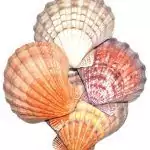
The lion’s paw shell is a large scallop in the genus Lyropecten (formerly Nodipecten), found primarily in the warm shallow waters of the Gulf of Mexico, the Caribbean, and the western Atlantic. Its common name comes from its distinctive ridged, claw-like appearance, which resembles a large animal paw. The shell has appeared as a sacred object in Western iconography for centuries: Botticelli’s 1485 painting “The Birth of Venus” depicts Venus standing on a giant scallop shell, establishing the shell’s long association with beauty, the feminine divine, and emergence from the waters of creation. In various North American coastal traditions, large scallop and clam shells have long served as vessels for burning herbs and holding sacred materials during ceremony.
Because each shell is a natural object, no two are identical in size, color, or pattern. The approximately 5-by-5-inch dimensions given are typical for this product, but natural variation means your shell may be slightly larger or smaller, deeper or shallower in its cup, more ivory or more amber-golden in tone. The ridged exterior gives grip and stability when holding the shell during a smudging walk-through of a space. The interior cup is deep enough to hold a burning sage bundle or palo santo stick upright between draws without it tipping over.
The Shell in Smudging Practice: Four-Element Alignment
In the context of smudging as practiced across many North American indigenous traditions and in the wider contemporary spiritual community, the shell carries specific elemental meaning. The shell represents water. The dried herb (sage, cedar, sweetgrass, or similar) represents earth. The flame that ignites it represents fire. The smoke that rises represents air. By using a shell as the smudging vessel, a practitioner brings all four classical elements into the ritual simultaneously, creating a complete elemental structure within a single practice. This four-element framing is also consistent with Wiccan elemental attributions, making the lion’s paw shell a natural fit for practitioners from multiple traditions.
Beyond sage and palo santo, the shell works well as a vessel for loose incense on a charcoal disc, a dish for cone incense, a holder for small crystals or tumbled stones on the altar, and a container for salt or water during ritual. Its natural surface does not hold heat as long as cast iron or soapstone, so it is not suited to extended charcoal burning without a sand liner. For a fully outfitted smudging practice, browse my sage and smudge stick collection to pair with this shell.
How to Use a Lion’s Paw Shell Incense Burner
How to prepare and use your lion’s paw shell for smudging, incense burning, and altar work.
- Prepare the Shell
Add a thin layer of sand to the interior cup before use. Sand insulates the shell from direct heat, extends its life, and catches loose ash cleanly. The natural shell can crack under repeated intense direct heat without this buffer in place first.
- Light Your Herb or Incense
For sage smudging, hold the bundle tip in a flame until it catches, then blow out so it smolders. Rest the bundle in the shell cup between passes through the space. For cone incense, nestle it in the sand layer and light the tip to burn in place.
- Move Through the Space or Hold in Place
For space smudging, carry the shell in one hand and direct smoke with your other hand or a feather. Walk each room perimeter, paying attention to corners and thresholds. Let the shell cool completely before setting it down on any surface afterward.
The Tarot Fellow Standard
I stock lion’s paw shells because they are one of the most practical and genuinely beautiful natural smudging vessels available. Unlike abalone, which has faced significant sustainability pressure, lion’s paw scallop is more broadly available from responsibly managed sources. The size and cup depth of the lion’s paw makes it a better functional smudge bowl than many ornamental shells sold for the purpose. It holds a sage bundle securely and travels well when you carry it through a space. For additional smudging and cleansing tools that work alongside this shell, explore my smudge bundles and palo santo collection.
Frequently Asked Questions
The lion paw is a large scallop of the genus Lyropecten, native to the Gulf of Mexico, Caribbean, and western Atlantic. Its ridged, claw-shaped exterior gives it the common name. Each piece varies in size, color, and shape as a natural product.
Yes. Shells are traditional smudging vessels in North American indigenous practices, representing the water element in the ritual structure. Place sand in the shell first to protect it from heat. The cup holds a sage bundle securely between passes.
Both are traditional smudging vessels. Abalone has a flatter interior and iridescent finish. Lion paw has a deeper cup and ridged exterior, easier to grip when carrying through a space. Lion paw is also more sustainably available than abalone today.
Remove ash and sand after each use and rinse with cool water. Avoid prolonged soaking, which affects the natural finish. For stubborn residue, use a soft brush and cool water. Allow the shell to air dry fully before storing. Avoid harsh cleaners.


Reviews
There are no reviews yet