
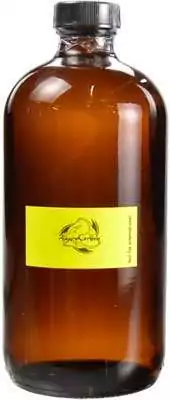
Quick Specs
- Brand: AzureGreen
- Type: Ritual aroma oil (fragrance)
- Scent: Lotus Blossom
- Size: 16 oz (1 lb) bulk bottle
- Traditional Association: Purity, rebirth, enlightenment, detachment
Lotus Blossom Oil and the Lotus as a Seat
Look at where lotus flowers appear in Asian religious art and you’ll notice they are usually underneath someone. Buddhist art seats buddhas and bodhisattvas on open lotus blooms, and nearly every important deity either sits on one or holds one, with some standing figures resting each foot on its own flower. Hindu imagery puts Lakshmi above or upon a lotus, and in creation stories Brahma emerges from one. The flower works as a throne because of how it grows: it roots in mud, crosses dark water, and opens clean in the light, so a figure on it is pictured as risen above whatever surrounds them. That makes the lotus an image of a foundation. Lotus Blossom names a scent, so the oil carries that shared symbolism of purity, rebirth, enlightenment, and detachment. In the bottle that image becomes a fragrance you can dress a candle with, wipe onto an altar tool, or set beside a gathering. For ritual work, the symbolism gives a working a stable place to stand, and a bulk bottle lets that place smell the same from one session to the next.
A 16oz bottle holds as much as sixty-four of the 2 dram vials, so it can fill a whole shelf of small dropper bottles. It’s a supply for people whose practice returns to the same image again and again: a study group that lights a candle at the start of every meeting, a reader who dresses candles for clients, a household where several people keep altars. Lotus suits that kind of standing role. The seat imagery points to beginnings, the place from which a sitting or a working starts, and an oil that every participant recognizes by scent becomes a signal that the work has begun. At this volume the question is where to keep the oil. Lotus stands for release as much as renewal, so a group can close a season with one candle and open the next at the new moon, both from the same bottle. If your use is occasional, the 1oz or 2 dram bottle will serve you better; the larger one makes sense once you know how often you reach for lotus.
Practical Ritual Applications
Because a pound of oil is a supply, set it up like one. Pour a few ounces into dropper bottles, one for each place you work. Dress a row of white candles before a gathering, a drop on each, so everyone arrives to the same scent on the same flame, and burn every one in a holder from my candle holders and snuffers collection. Rub a few drops into a cotton cloth and keep it in the altar drawer to wipe your tools and the altar surface before a working. If you make charm bags or sachets for other people, a drop on each tag carries the scent along. Wipe the neck of each bottle before you cap it, mind the wick, and don’t leave a lit candle unattended.
How to Set Up a 16oz Bottle of Lotus Blossom Oil for Shared Use
Here's a way to put a bulk bottle to work for a circle, a shop counter, or a household with several altars.
- Decide where the large bottle lives
Settle where the 16oz bottle stays and who may open it. One person refilling smaller bottles keeps the reserve sealed and the shelf tidy, and it keeps any spill to an ounce. Stand the bottle upright on a tray or in a shallow dish in case it leaks, and keep it where children and pets can't reach it.
- Fill and label the working bottles
Use a clean funnel to fill dropper bottles, leaving a little room at the neck so they close without spilling. Label each with the scent and the date, and keep one empty bottle spare for the next refill. Wipe the funnel dry afterward; leftover oil in a funnel goes stale and can carry over into the next scent you pour.
- Open a gathering with one candle
Choose a white candle, put a drop of lotus oil on your fingertip, and stroke the candle from the middle toward each end. Light it as the group settles and name the single intention for the session, such as starting fresh after a hard stretch. Let it burn in a holder through the session, and keep sleeves and papers away from the flame. The shared opening anchors everyone to one image: the flower rising clear of the mud.
The Tarot Fellow Standard
I stock Lotus Blossom in 16oz for people who have already worked out how much of it they use. The flower’s meanings come from Buddhist and Hindu devotion first, and those traditions are alive, with communities and teachers of their own. This oil is meant for anointing and candle work of your own. Treat a bottle this size as a working supply and pour from it freely. To find your pace before choosing a pound of lotus, my 1oz AzureGreen oil collection is the place to start.
Frequently Asked Questions
I don't have an ingredient list for this oil, so I can't confirm what it contains, and the safe way to think of it is as a lotus-themed fragrance. Perfumers rarely capture lotus from the flower, because natural lotus absolute is scarce and hard to produce, so the note is usually built from other materials. A scent can read as lotus with no flower in it. When one species matters to you, such as the sacred lotus, choose a botanical product that names it.
Yes. It's a ritual aroma oil that borrows the lotus's imagery for anointing and candle work. The flower belongs first to Buddhist and Hindu devotion, where it marks the seat of buddhas and of Lakshmi, and those traditions have communities and teachers of their own. For what the lotus means in worship, ask a Buddhist center or a Hindu temple, where the teachers can speak to it.
Keep it cool, dark, and tightly capped, because heat, light, and air are what wear a fragrance oil out, and most last between one and three years. Label the bottle with the date you opened it, and you have a record. Retire the oil when the smell turns sour or the color shifts.
In Indian yoga traditions the seventh chakra, Sahasrara, sits at the top of the head and is drawn as a lotus of a thousand petals in many colors, arranged in layers, while the chakra itself is represented by violet. It's described as the point where the other chakras converge, and the blooming lotus stands for awareness opening fully. Chakra systems belong to the yoga traditions that teach them, so a teacher is the place to learn how they're practiced.


Reviews
There are no reviews yet