


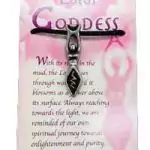
Quick Specs
- Type: Pewter pendant amulet
- Size: 1.5″
- Size/Quantity: One pendant
- Best for: Goddess devotion, divine feminine work, rebirth magic, purity and spiritual growth rituals
Lotus Goddess Amulet: The Divine Feminine and the Sacred Lotus
The lotus is one of the most cross-cultural sacred symbols in the world, appearing in Hindu, Buddhist, Egyptian, and Neopagan traditions as a primary emblem of spiritual ascent, purity, and divine feminine power. In Hindu cosmology, Lakshmi, the goddess of abundance and grace, stands on a lotus throne, while Saraswati, the goddess of knowledge and the arts, is also associated with the lotus as a symbol of transcendent beauty rising from the mundane. In Buddhist iconography, the lotus represents enlightenment itself: the flower grows from mud, rises through murky water, and blooms immaculate above the surface, a direct visual metaphor for consciousness awakening in a world of suffering.
In ancient Egypt, the blue lotus Nymphaea caerulea was sacred to Nefertum, the god of the lotus sunrise, and was associated with creation, solar rebirth, and the emergence of life from the primordial waters of chaos. The lotus-crowned goddess figure on this pewter amulet evokes all of these associations simultaneously, offering practitioners from multiple traditions a point of genuine convergence around the figure of the divine feminine ascending in her full beauty and power.
Wearing the Lotus Goddess as Devotional and Protective Jewelry
As a wearable amulet, the Lotus Goddess pendant serves both protective and devotional functions. In Wicca and goddess-centered practice, wearing an image of the feminine divine keeps the practitioner in conscious alignment with that archetype throughout the day, a form of walking meditation and ongoing dedication. Practitioners who work specifically with Lakshmi, Quan Yin, or Isis will find this lotus-crowned figure compatible with each of these goddess traditions, as all three share the lotus symbolism and the domain of compassionate, nurturing power.
The fine casting detail of this pewter piece makes it suitable for altar placement during goddess rites as well as for daily wear. It is part of the spiritual pendant collection. Those devoted to the Egyptian goddess tradition will find it pairs naturally with lapis lazuli, turquoise, and gold-toned offerings on an Egyptian-style altar.
How to Use the Lotus Goddess Amulet
Three steps for dedicating and incorporating the Lotus Goddess Amulet into daily devotional and ritual goddess practice.
- Dedicate to a Specific Goddess
Before wearing, dedicate this amulet to your goddess tradition, whether Lakshmi, Quan Yin, Isis, or the Wiccan goddess. Hold it, state her name, and ask for her presence and protection to accompany you through the amulet’s continued daily wear.
- Wear as a Devotional Alignment Tool
Put on the Lotus Goddess pendant each morning as a conscious act of aligning with divine feminine energy for the day ahead. The lotus symbolism works as a continuous reminder of rising above difficulty with grace throughout daily life.
- Place on Altar During Goddess Rites
During goddess-centered rituals, set this amulet at the center of your altar as a focal point for the deity’s presence. Offer fresh flowers, lotus, rose, or jasmine, and burn a pink or white candle beside it to honor the goddess invoked.
The Tarot Fellow Standard
I carry this amulet because the lotus goddess figure is one of the rare pieces that genuinely works across Hindu, Buddhist, Egyptian, and Wiccan goddess traditions without misrepresenting any of them. The fine pewter casting captures the detail needed to make this a meaningful devotional object rather than a generic decorative pendant. For practitioners building a goddess-centered altar or jewelry practice, browse my amulets and talismans collection for complementary divine feminine and protective pieces.
Frequently Asked Questions
Hindu traditions link the lotus to Lakshmi and Saraswati. Buddhist art uses it as the symbol of enlightenment. Egyptian tradition connects it to Nefertum and solar creation. In Wicca, the lotus represents the divine feminine rising above difficulty.
Yes. Quan Yin, the bodhisattva of compassion in Chinese Buddhism, is closely associated with the lotus and the divine feminine. This lotus-crowned goddess figure is compatible with Quan Yin devotion on altars for compassion and healing work.
The lotus symbolizes ascent, purity, and rebirth. Growing from mud to bloom above the surface, it represents consciousness rising above suffering. In Hindu, Buddhist, and Egyptian traditions, it marks the presence of divine power and grace.
Fresh lotus, rose, or jasmine flowers, pink or white candles, jasmine or sandalwood incense, and offerings of water or honey pair naturally with a goddess altar. Lapis lazuli and rose quartz complement the lotus goddess’s divine feminine domain.

Reviews
There are no reviews yet