
Quick Specs
- Publisher: Crossed Crow Books
- Author: Nicholaj de Mattos Frisvold
- Format: Paperback, 320 pages
- Dimensions: 6 x 9 in
- ISBN-13: 9781968185084
- Published: June 30, 2026
A Survey of Brazilian Magic and Spirituality
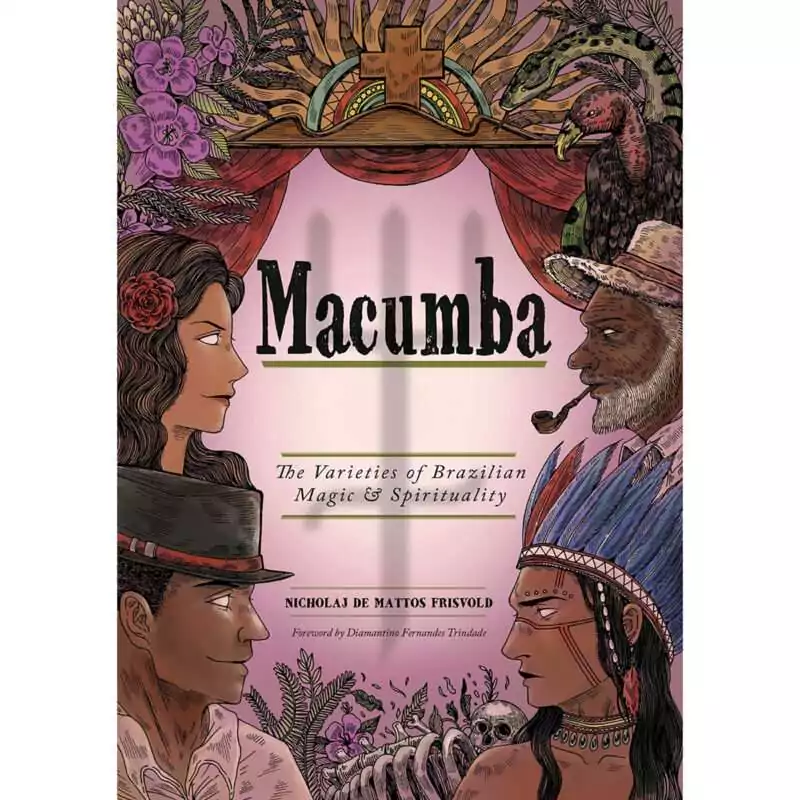
Macumba follows Brazilian magic and spirituality from the fifteenth century to the present day. The publisher describes a lyrical, immersive account that weaves African, Indigenous, European and Catholic influences together and shows how they have changed over the years. The book traces the development of Umbanda, Quimbanda, Jurema, Candomblé, Catimbó, Tambor de Mina and Encantaria, and it looks at their doctrines, mythologies and lived practices. It’s a 320-page paperback, 6 by 9 inches. It uses the word macumba, which is often misunderstood, as an umbrella term for a wide range of magical techniques. The theme the publisher stresses is creolization, the meeting of culture, spirit and necessity, and its summary calls the result a syncretic landscape in which African, Indigenous and European practices have intertwined roots. Syncretism here means traditions that formed through contact and necessity. A subject this broad suits a survey. You see how the traditions relate to one another, which historical conditions produced them and what vocabulary each one uses. That groundwork matters because every tradition has its own history, and a reader who knows which one is under discussion avoids blending them together.
Each tradition the book names has living communities of its own. Candomblé grew in Brazil during the nineteenth century, coalescing in Bahia around houses of worship called terreiros that are led by a priestess or priest. Umbanda emerged in Rio de Janeiro in the 1920s, drawing on African-derived religions, Spiritism, Catholicism and Indigenous Brazilian beliefs. Both honor the orixás, yet Umbanda places particular weight on spirit mediumship and spiritual evolution. Quimbanda, Jurema and the others have histories of their own, and place matters as much as date, so a survey helps you keep the regional picture in view. The publisher describes the work as grounded in academic research. Read it as a map of a large landscape. It can show you where traditions overlap, where they part ways and which Portuguese terms carry the most weight. What it describes is lived day to day inside those communities, and Brazilian practitioners and scholars are the ones who can tell you how. Use the book to ask better questions, and let their answers matter most.
Using Macumba as a Study Reference
Treat the book as a reading anchor. Read it beside other voices: Brazilian scholars, practitioners who speak or write publicly, and the titles that communities themselves point outsiders toward. Keep a running list of Portuguese terms and check each spelling and meaning in a second source, since a word can carry different weight from one tradition to the next. If you also read about Voodoo, Hoodoo or Santería, browse my Voodoo, Hoodoo and Santería books and keep those notes in a separate section. They’re distinct traditions with their own histories, so compare them side by side. Whatever you read, note who is speaking and which community or institution stands behind the claim. A study group can take one tradition at a time and trade notes before moving on to the next.
How to Read Macumba as a Reference
Use this sequence to read a survey of living traditions with care.
- Keep One Entry Per Tradition
Start a notebook page for each tradition the book names, and add a line or two as you meet it: where it arose, when, and which influences shaped it. Separate entries keep Umbanda, Quimbanda, Candomblé and the rest from blurring into a single idea of Brazilian magic, and they give you something to check against other sources later.
- Read the History in Order
Read the historical material through once in sequence before you dip into the topics that interest you most. Watch how African, Indigenous, European and Catholic influences enter each tradition, and at what point. Context explains why practices look the way they do, and it keeps a regional or historical detail from being mistaken for a rule that applies everywhere.
- Take Your Questions to a Community
When a passage raises a question about practice, write it down. Then look for a public event, a cultural center or a talk by Brazilian practitioners or scholars where outsiders are welcome, and ask respectfully. Some communities open ceremonies to visitors and some don't. Accept the answer you're given, and let a teacher in person answer the questions a book raises.
The Tarot Fellow Standard
I stock Macumba as a reference on Brazilian spirituality. The traditions it surveys are alive, with communities, teachers and paths of initiation or training of their own, and any book about them is an entry point to those communities. If you’re curious about how Brazilian magic and religion developed, this is a place to begin, and the next step is to listen to practitioners and Brazilian scholars. A living tradition is larger than any one book, so I recommend reading this one alongside others. I shelve it with my books and journals, where you can read across other traditions at your own pace.
Frequently Asked Questions
Macumba is a word of African origin, and scholars still debate its root. One proposal is a Bantu word for a percussion instrument; another is mocamba, a word for a house of runaway slaves. In everyday Portuguese it has served as a general name for Afro-Brazilian religions, including Candomblé and Umbanda, and in a narrower sense for practices centered on the exu spirits, especially in Rio de Janeiro.
That's how outsiders have long labeled it. The word is generally regarded as carrying negative connotations comparable to black magic, and Brazilian researchers and commentators describe its use as an insult that dates to colonial times and belongs to what they call religious racism. Some practitioners of Candomblé and Umbanda have reclaimed it among themselves, and outsiders are better off using each religion's own name.
No. Santería took shape in Cuba and Vodou in Haiti, while Candomblé and Umbanda formed in Brazil, and each has its own communities, spirits and practices. Several grew from African roots carried across the Atlantic during the slave trade, yet each developed in its own colonial setting. Macumba is a word applied to Brazilian religions, so it points to Brazil.
Macumba is a name for several religions, so the answer depends on the tradition. Candomblé is an initiatory religion, and taking part in its inner life means joining a house through initiation. Umbanda centers typically hold public ceremonies several times a week. In either case, ask the house how outsiders may take part, and treat a book as a way to learn the vocabulary and as an entry point to the teachers and communities of the tradition.

Reviews
There are no reviews yet