
Quick Specs
- Publisher: Red Wheel/Weiser
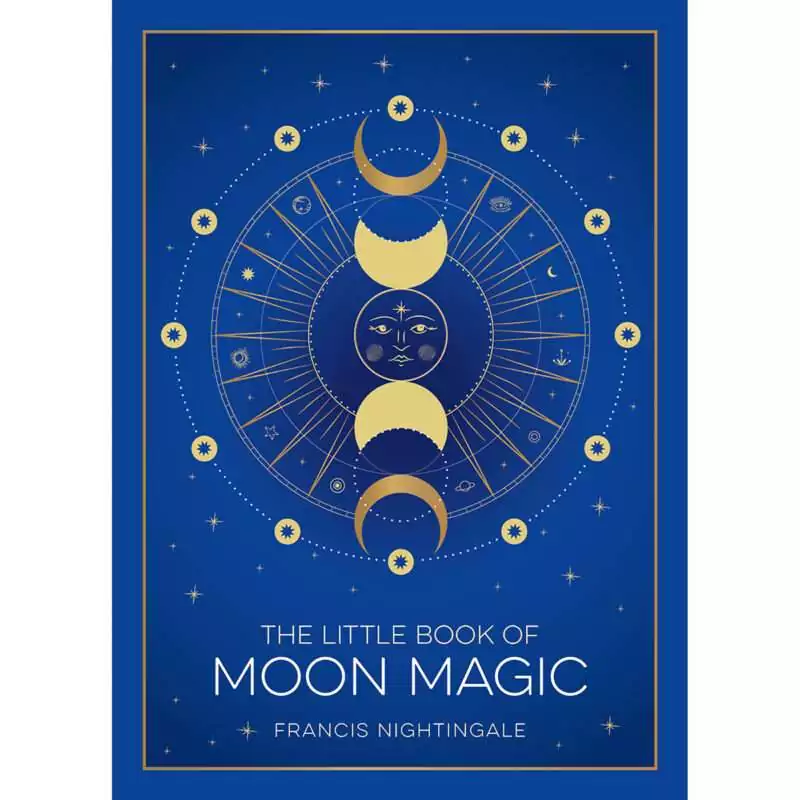
- Author: Francis Nightingale
- Subtitle: An Introduction to Lunar Lore, Rituals, and Spells
- Format: Hardcover, 128 pages
- Dimensions: 5 x 7 in
- ISBN-13: 9781590035566
- Published: October 7, 2024
Moon Lore, Phases, Spells and Meditations
The publisher describes The Little Book of Moon Magic as a spellbinding introductory guide, and its contents fall into three parts: myths and legends about the moon, rituals for working with its power, and moon meditations. Francis Nightingale starts with the moon itself, introducing it under its Roman name, Luna, and its Greek name, Selene. A review by PJ Spur at Musing Mystical says the opening offers facts about the moon, including how it formed, alongside stories about it from around the world. From there the book moves through the phases, beginning with the New Moon and continuing to the Full Moon and its varieties, among them the Blue Moon. The review also notes superstitions attached to the phases and guidance on aligning your intentions with each one. The Moon Lore chapter is where the stories live. The same review names the Venus of Laussel, a limestone carving with thirteen notches, and Mama Killa’s Tears, an Incan story that explains lunar eclipses. Learning what the moon is doing, and what people have said about it, comes before any spell, which gives the practice a setting.
Two spells show the scale of the practical material. The review names a New Moon Crystal Spell, which places crystals outdoors during the New Moon, and a Full Moon Spell to Reveal What Is Hidden, which uses a bowl of cherries. Both are small, home-scale workings, which keeps the instructions short enough to read in one sitting and prepare for over a few days. The meditation section follows with directions, step-by-step guidance, affirmations and scripts for different types of moon. The reviewer liked the tips and scripts but missed one ready-to-record script for a guided meditation, so expect to assemble your own from the pieces provided. The publisher promises rituals that help you tap into the moon’s power and meditations that can enrich your life, and it describes the whole as a guide for your own journey of spiritual exploration. The format is deliberately small. This is a little book for readers who want a first orientation, and the review says you don’t need prior moon knowledge to follow it.
Practical Ways to Work With the Moon
Match your reading to the sky. Check the dates of the next New Moon and Full Moon, read the matching section a few days ahead and gather the materials the spell lists. Outdoor workings depend on the weather, so have a plan for a rainy night. For the meditation section, read a script aloud once, then record yourself reading it so you can follow along with your eyes closed. Keep a notebook with the date, the moon’s phase and what you tried, which helps you see how each phase feels to work with over a few cycles. A white or silver candle, a small dish of water or a favorite crystal can mark the start of a session if you like physical anchors. You can browse candles, stones and other lunar tools in my moon products and add them as your practice grows.
How to Work Through a Moon Cycle With the Book
Use this sequence to follow one full lunar cycle with the book as your guide.
- Learn the Phases First
Read the opening chapters on the moon and its phases before you attempt any spell. Put the next New Moon and Full Moon on a calendar, and note which kind of working the book pairs with each phase. Knowing the cycle first means you won't have to guess when to begin.
- Choose One Spell and Prepare
Pick one spell, such as the New Moon Crystal Spell, and read it through twice before the night you plan to work it. Gather the materials ahead of time, and check the sky and the weather for that evening. Doing one spell per phase keeps the practice manageable and lets you compare how each one feels.
- Close With a Meditation and Notes
After the spell, follow one of the book's moon meditations, using its directions and affirmations as written. Then write down the date, the phase and anything you noticed. Over a cycle or two, those notes show you how you respond to each phase and which sections reward a second read.
The Tarot Fellow Standard
I stock The Little Book of Moon Magic as an introduction for readers who want to understand the moon before they build a practice around it. Lore, phases, spells and meditations sit together in one compact hardcover, so it’s easy to carry, easy to give and easy to pick up again each month. It’s a starting point, and it pairs with a deeper reference once you know which part of lunar work holds your attention. You’ll find that next step in my spellcraft, witchcraft and magic books, which range from short guides to full-length manuals.
Frequently Asked Questions
Practitioners usually match the phase to the aim. The new moon is for planning and setting intentions, the waxing moon for attracting and building, the full moon for peak workings, and the waning moon for banishing and letting go. The publisher says different phases suit different kinds of spells, and the book works through the phases one by one, so you can begin with whichever one is closest on the calendar.
The publisher ties moon magic closely to witchcraft and neopagan ritual, where the esbat, a rite typically held on or near the night of a full or new moon, is the best-known observance. Moon lore reaches well beyond those paths, though. People have tracked the Moon for thousands of years, and the book gathers moon stories from around the world.
The Moon is full at one exact moment, but NASA notes it appears full for a couple of days around it, so the sky still shows a full Moon on the nights beside the peak. The esbat tradition itself is described as held on or near the night of the full moon, which leaves room for the evening that suits you. A lunar calendar gives the exact time if you want the peak.
Several books share the title or sound alike, so go by the author. This one is by Francis Nightingale. A 2003 Rider paperback with the same title is by Teresa Moorey, and Nightingale's own book also has a UK paperback edition with a different ISBN, so compare ISBNs as well as titles.
Reviews
There are no reviews yet