
Quick Specs
- Type: Resin incense
- Common Name: Myrrh (India-grade, per packaging)
- Botanical Genus: Commiphora (classic species: Commiphora myrrha)
- Size: 1 lb bulk
- Best for: Regular purification and grounding practice, blending, coven or shop-scale use
A Bulk Supply of Myrrh for Regular Incense Practice
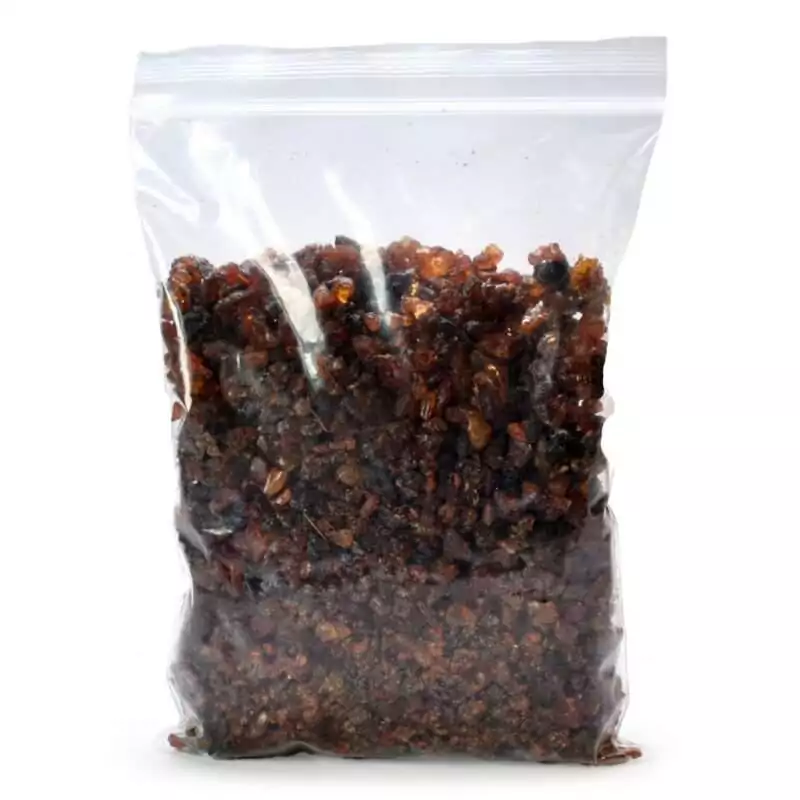
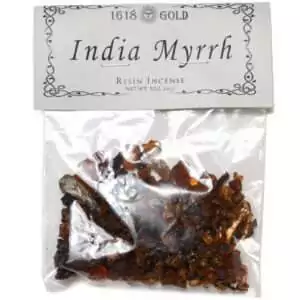
Myrrh is the dried resin of trees in the Commiphora genus, most classically Commiphora myrrha, native to the Horn of Africa and the Arabian Peninsula: Somalia, Ethiopia, and Yemen. The tree exudes a sap when its bark is wounded, and that sap hardens into the reddish-brown tears you see in a bag of granular resin. This particular resin carries the vendor’s own “India” designation, which in the global resin trade generally refers to a trade or grading origin rather than a claim about where the tree itself grew; myrrh moves through multiple hands and multiple ports between harvest and a sealed retail bag, and “India” and “Ethiopian” grades are established categories in that trade rather than strict botanical labels. The exact harvest country behind this specific batch is not verifiable beyond what is printed on the packet, and this listing carries the same India designation the packet itself uses.
Myrrh carries a long-standing place in ritual and ceremonial practice: it has been burned as incense in spiritual and religious contexts for centuries across multiple cultures, valued for a deep, earthy aroma that’s frequently paired with frankincense in traditional blends. As granular resin, it needs a heat source (a charcoal disc, most commonly) rather than a direct flame, since it doesn’t burn on its own the way a stick or cone does. At a full pound, this quantity is built for practitioners who burn resin incense often enough that a small bag disappears too quickly, or for anyone blending myrrh into their own custom incense recipes at a scale beyond a single working.
Practical Uses for Bulk Myrrh in a Working Practice
Use it as your standing purification and grounding resin, burned regularly rather than saved for occasional use, or work it into your own incense blends alongside frankincense, benzoin, or other resins and herbs you favor. The 1 lb format suits a coven sharing supplies, a shop stocking its own incense blends, or a solo practitioner who has settled on myrrh as a staple and wants to stop reordering small bags every few months. Browse my Altar Supplies collection for charcoal discs and burners sized for regular use.
How to Store and Use Bulk Myrrh Resin
A pound of resin lasts considerably longer than a small bag, so storage matters more here than it does for a quantity you’ll use up in a few sittings.
- Store in an Airtight Container
Transfer the resin to a sealed glass jar or airtight container rather than leaving the original bag open between uses. Resin can dry out, pick up ambient moisture, or absorb odors from nearby storage over months, and an airtight container protects the full pound for the long haul.
- Portion Out What You Need Per Session
Rather than working from the full container each time, portion out a small amount into a dish for your current working. This keeps the bulk supply cleaner and reduces how often the main container is opened and exposed to air.
- Prepare Charcoal and Burn as Usual
The burning method doesn’t change with quantity: light a charcoal disc fully, add a few pieces of resin, and tend the burner while it’s lit. A bulk supply just means you’re not rationing how often you reach for it.
The Tarot Fellow Standard
I stock this myrrh in a 1 lb bulk size because practitioners and shops that use resin incense regularly go through small bags faster than expected, and running out mid-practice is its own small frustration. The bulk format also makes sense for anyone blending their own incense recipes at scale rather than working from single-use packets. Browse my Herbs By Magical Use collection for other bulk resins and herbs.
Frequently Asked Questions
Granular resin needs a heat source rather than a direct flame; the standard method is a self-igniting charcoal disc set in a heatproof burner or censer filled partway with sand or ash. Light the charcoal disc until it glows fully, place a few small pieces of resin on top, and the heat will release the smoke without the resin catching fire outright.
India refers to a trade and grading designation used in the resin market, not a claim about where the source tree grew. Myrrh resin passes through multiple trade routes and grading points between harvest and a sealed retail packet, and India-grade and Ethiopian-grade are established categories in that trade. This listing uses the same designation printed on the packet rather than asserting a specific tree-level origin that can’t be verified.
No, though the two are closely related and frequently burned together. Frankincense comes from Boswellia trees; myrrh comes from Commiphora trees. Both are resins from the same general region of the world and both have a long shared history in ceremonial incense use, but they’re different trees with different traditional associations and distinct aromas.
Reviews
There are no reviews yet