



Quick Specs
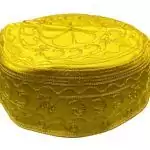
- Type: Ceremonial ritual headwear
- Size/Quantity: One hat, adult size
- Best for: Santeria ceremony, orisha devotion, Oshun altar work, initiation rites
Oshun: Orisha of Rivers, Love, and Abundance
Oshun, called Ochun in many Cuban Lucumi lineages, is among the most widely loved orishas in the Yoruba-derived traditions carried across the Atlantic through the transatlantic slave trade. She governs fresh water, rivers, love, fertility, sensuality, and the sweetness of life. Her story is inseparable from the survival of the Yoruba spiritual tradition itself, and she holds a special place as the youngest of the orishas, whose charm and resourcefulness saved the world from ruin in key sacred narratives called patakis.
Her colors are yellow and gold, reflecting sunlight on still river water, honey, and the shimmering wealth she commands. Head coverings in Lucumi houses reflect the colors of the wearer’s Orisha.
Ceremonial Use in Lucumi, Candomble, and Related Traditions
In Lucumi and Cuban Santeria practice, each orisha has a prescribed set of colors, numbers, offerings, and ritual objects that form the vocabulary of their veneration. Headwear, crowns, and hats are part of this material language. In Lucumi houses, a cap like this is called a gorro. Gorros are worn by initiated priests and priestesses (olorishas) and by the iyawo at their ceremonies, in the colors of their Orisha. If you are not initiated, please talk with your godparent or house before wearing or using one. Browse my ritual wear collection for related items.
The tradition extends into Candomble in Brazil, where Oshun, known as Oxum, is similarly associated with freshwater, beauty, and prosperity. Her golden regalia appears in ceremony there as well. Whether in a Cuban house or a Brazilian one, the yellow and gold palette connects practitioners to orisha veneration that stretches back to West Africa.
How to Use the Oshun Santeria Hat
Three steps for incorporating this Oshun ceremonial hat into devotional practice.
- Ask Your Godparent or House First
Before wearing or using this cap, talk with your godparent or house about whether it fits your initiations and your house’s practice.
- Wear It as Your House Directs
Gorros are worn by initiated priests and priestesses and by the iyawo at their ceremonies. Wear this cap the way your godparent or house directs.
- Store With Respect After Ceremony
After ceremony, store the hat wrapped in yellow cloth away from direct sunlight to preserve the colors. Keeping ritual headwear dedicated to a single orisha honors the boundary between sacred and everyday and maintains its spiritual function.
The Tarot Fellow Standard
I carry this hat as a ceremonial piece for orisha devotion. Santeria is a living tradition, and this hat is a supply for devotion, not a substitute for initiation or for the guidance of a godparent and house. Browse my full Voodoo, Hoodoo, and Santeria collection for complementary altar supplies, candles, and ritual oils suited to Oshun and the broader orisha tradition.
Frequently Asked Questions
In Lucumi houses, a cap like this is called a gorro and is worn by initiated priests and priestesses and by the iyawo, in the colors of their Orisha. If you are not initiated, please talk with your godparent or house before wearing or using it.
Yellow and gold are Oshun’s sacred colors across Lucumi, Candomble, and related Afro-Caribbean traditions. These colors correspond to sunlight, honey, and river gold, all sacred offerings associated with her sphere of power.
This hat is ritual headwear, not a fashion accessory. It belongs on an altar, in ceremony, or worn during orisha-related devotional practice. Using it outside that context is not recommended for practitioners following Lucumi protocol.
I stock this alongside other Santeria items. It belongs with other Oshun altar items like yellow candles, honey, and river water offerings.





Reviews
There are no reviews yet