

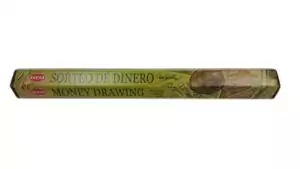

Quick Specs
- Brand: HEM
- Type: Stick Incense
- Quantity: 20 sticks per pack
- Best for: Earth magic, money drawing rituals, grounding meditation, releasing old patterns
Patchouli’s Origins: From Southeast Asian Textile Trade to Western Ritual
Patchouli, Pogostemon cablin, is an herbaceous perennial in the mint family native to the Philippines and cultivated commercially across Indonesia, Malaysia, and India. It first entered European awareness not through botany but through commerce: in the 19th century, Kashmiri shawl merchants packed their goods with dried patchouli leaves during the long sea voyage to Britain, using the plant’s natural insect-repelling properties to protect expensive fabric from moths. The exotic, musky scent became so associated with luxury shawls that fashionable Europeans began demanding patchouli-scented goods even without understanding the plant’s origin. By the 1830s, it had reached Indian Ayurvedic practice in a formalized way, where it was used to treat colds, nausea, and digestive complaints, and to repel insects in humid climates.
The Chinese medical tradition incorporated the herb under the name Pogostemoni Herba, using it to remove dampness and address heat-related illness. Indonesian traditional healers valued it similarly. The word patchouli derives from a Tamil term meaning “green leaf,” pointing to its long association with the Indian subcontinent despite its Southeast Asian origins. By the time Western counterculture adopted patchouli as its signature scent in the 1960s, the plant already carried centuries of cross-cultural use in trade, medicine, and ritual.
Patchouli in Ritual and Earth Magic Practice
In earth-based magic, patchouli is commonly classified as an earth element herb governed by Saturn, associated with material abundance, fertility, and the physical plane. It is one of the most frequently called for ingredients in money drawing formulas alongside cinnamon and bay, and it appears regularly in love and lust workings as a grounding counterweight to more volatile floral scents. You can browse complementary tools in my stick incense collection.
The scent itself is deeply divisive, and that’s worth acknowledging plainly. Patchouli is bold, earthy, and persistently musky, qualities that longtime practitioners describe as grounding and stabilizing, and that people new to it sometimes find overwhelming. If you’ve only encountered synthetic patchouli in cheap body products, HEM’s version is more authentic: heavy, dark, and true to the dried leaf. Those who work regularly with earth magic and money drawing tend to come to rely on it; it is not a scent that disappears into the background. The 20-pack format makes it practical for regular ritual use without constant restocking.
How to Use Patchouli HEM Incense Sticks
Three steps for burning patchouli HEM incense sticks effectively in ritual and daily practice.
- Prepare Your Space and Holder
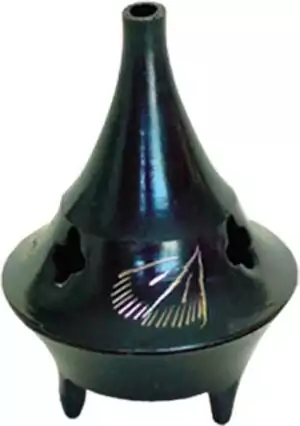
Open the pack and remove one or two sticks. Set them in a stable incense holder angled slightly downward, or stand them upright in a sand-filled dish. Light the tip, let it catch flame for a few seconds, then blow it out gently to begin the smolder.
- Set Intention and Let the Smoke Work
As the smoke rises, state your intention aloud or silently. For earth magic, money drawing, or releasing old patterns, patchouli practitioners recommend letting the smoke fill the room and saturate the air before beginning any candle work or ritual.
- Ventilate After Use
Allow the stick to burn completely in a ventilated room. Patchouli smoke lingers longer than most incense scents. If the boldness is too much for a small space, crack a window and burn just one stick rather than reducing frequency of use.
The Tarot Fellow Standard
I stock HEM patchouli specifically because HEM’s formulation stays closer to the authentic dried-leaf character of the plant than many mass-market alternatives. The scent is not for everyone, and I don’t try to sell it to everyone. If you’re doing earth magic, money drawing, or fertility work and want a reliable, affordable stick incense that smells like it should, this is the straightforward option. For more of the same brand, browse my HEM incense sticks.
Frequently Asked Questions
These are HEM incense sticks, sold here in a 20-stick pack.
Patchouli (Pogostemon cablin) is native to the Philippines and Southeast Asia. Its association with money drawing in modern magical practice comes from its connection to earth energy and material abundance.
Patchouli has a bold, musty, earthy scent often described as the base note of 1960s counterculture. It is polarizing: earth magic practitioners tend to find it essential, while those new to it often need time to adjust.
Patchouli was used to protect cashmere shawls from moths during shipping from India to Europe. This insect-repelling property made its scent synonymous with luxury fabrics, linking it to wealth and material prosperity.

Reviews
There are no reviews yet