
Quick Specs
- Material: Carnelian (chalcedony)
- Quantity: 1 lb lot of tumbled stones
- Finish: Tumbled and polished
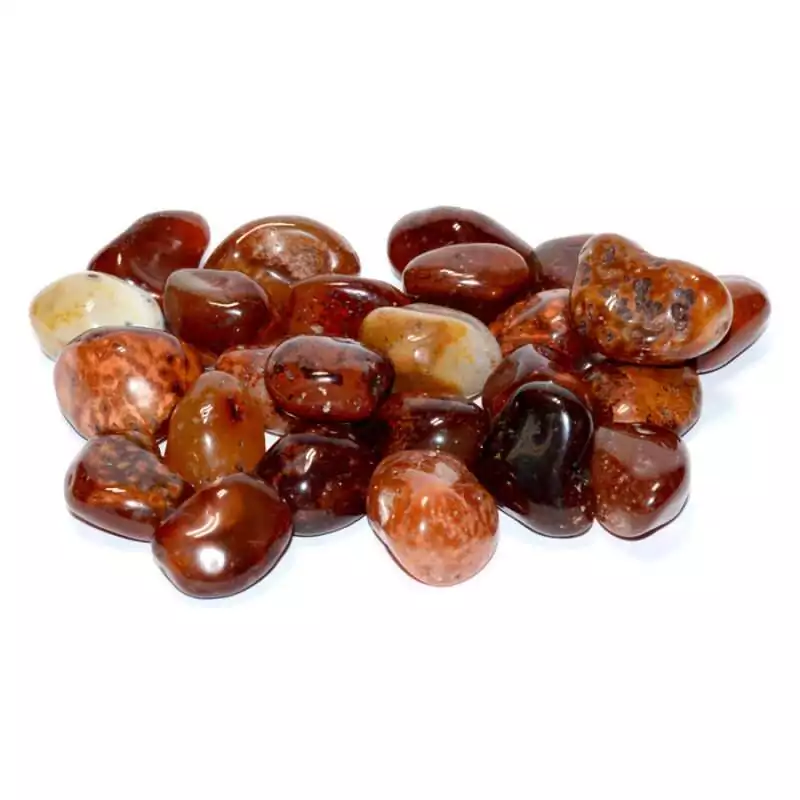
- Color: Deep red-brown and chestnut with dark speckles, plus a few cream and tan stones
- Mohs Hardness: 6.5 to 7
Carnelian in Deep Red-Brown, With Cream for Contrast
This pound leans dark. Most of the stones are a rich red-brown or chestnut, polished to a gloss that shows the color at its deepest, and many carry black speckles scattered across the surface. A handful are mottled in orange and brown like a leopard’s coat, and a few are cream or pale tan, some with a patch of brown, which gives the dark stones a place to stand out. Carnelian is a variety of chalcedony, the fine-grained form of quartz, and iron oxide supplies its color. Its color runs from pale orange to nearly black, so a lot like this one falls toward the darker end of the range. Chalcedony is built of fibers too small to see, and that fine structure gives a polished stone its waxy luster. Tumbling has rounded every stone into a smooth pebble with a bright polish. Chalcedony is hard enough to take that polish and keep it, at 6.5 to 7 on the Mohs scale.
The record of carnelian reaches back to the Neolithic. Red chalcedony beads from Early Neolithic Bulgaria show how far back people shaped it, and Indus Valley bead makers etched carnelian in the third millennium BCE. Bow drills were already boring carnelian beads at Mehrgarh in the fifth or fourth millennium BC. Assyrian cylinder seals, Egyptian and Phoenician scarabs and early Greek and Etruscan gems were cut from the darker red-brown stone called sard, a name that Pliny the Elder linked to the city of Sardis in Lydia. In modern crystal practice, crystal guides link carnelian with the sacral chakra, and one major gem retailer notes that the Romans believed it to be a stone of courage. Those are crystal-lore associations, offered as symbols. The dark red-brown tones in this lot pair naturally with deep red and orange candles, and the cream stones read like small spots of light between them.
Practical Ritual Applications
Use the contrast on purpose. Keep a bowl of the darkest stones by the door and pick one up on your way out when you want to follow through on a plan. Drop a stone into a pouch with a folded card that carries one sentence about the day ahead. Pair one cream stone and one red-brown stone as a set for a friend. Stones with orange mottling suit an altar where you keep fire colors together. A line of cream stones along a windowsill, with one dark stone at each end, makes a quiet border for a plant or a candle jar. For more stones tied to courage, browse my courage and strength stones.
How to Work With Red-Brown Carnelian Tumbled Stones
Three steps for turning a mixed pound of dark carnelian into a set with some contrast.
- Sort Into Dark, Mottled and Cream
Pour the stones onto a plain cloth near a window and make three piles: the deep red-brown stones, the mottled orange and brown ones, and the cream or tan pieces. Turn each stone to find the side with the best polish and the fewest dark specks, and set that side up on the cloth. The piles show you what the pound holds, and each one has a different job in a layout.
- Build a Contrast Ring
Place a candle in the middle of a heatproof dish or plate and ring it with alternating dark and cream stones, leaving small gaps between them. Keep the stones back from the flame, and never leave a lit candle unattended. The cream stones catch the light, and the dark stones recede, which gives the ring a rhythm. Light the candle only while you sit nearby, then blow it out and tidy the ring away.
- Make a Pair for Giving
Choose one red-brown stone and one cream stone that sit well together, and wrap them in a scrap of cloth or tuck them into a small pouch. Add a handwritten note if you like. The pair makes an easy gift for a friend who likes earthy colors, and the contrast between the two stones gives it character. Wipe both with a soft cloth before wrapping, so they arrive clean and shining.
The Tarot Fellow Standard
I stock this lot for people who like carnelian in its darker tones and enjoy a mixed handful. A pound of red-brown stones with cream and tan pieces gives you contrast to work with, whether you ring a candle, fill a dish or put together small gifts. Each stone is different, so you can choose favorites and keep the rest handy for rotating through your altar. If you want other stones sold by the pound, browse my bulk tumbled stones collection.
Frequently Asked Questions
Sard is the darker form, ranging from deep reddish brown to almost black, while carnelian is the paler orange to red form. Sard is also described as harder and tougher than carnelian. The two names are often used interchangeably, and the boundary between them is blurry. Both are chalcedony, a fine-grained form of quartz colored by iron oxide.
Heating is the typical enhancement for carnelian, because the iron in the stone develops orange and red tones when heated, and it is used mainly on paler, lighter-toned material. The trade also sells dyed white chalcedony and lightly colored agate under the carnelian name.
Carnelian is mined worldwide. Most commercial carnelian comes from India, and Brazil, Uruguay and Egypt are named as gem-quality sources. Deposits also exist in the United States, in New Jersey and Oregon.



Reviews
There are no reviews yet