
Quick Specs
- Material: Yellow calcite
- Mineral: Calcium carbonate
- Quantity: 1 lb lot of tumbled stones
- Stone Size: 20-30mm (about 0.8 to 1.2 inches)
- Finish: Tumbled and polished
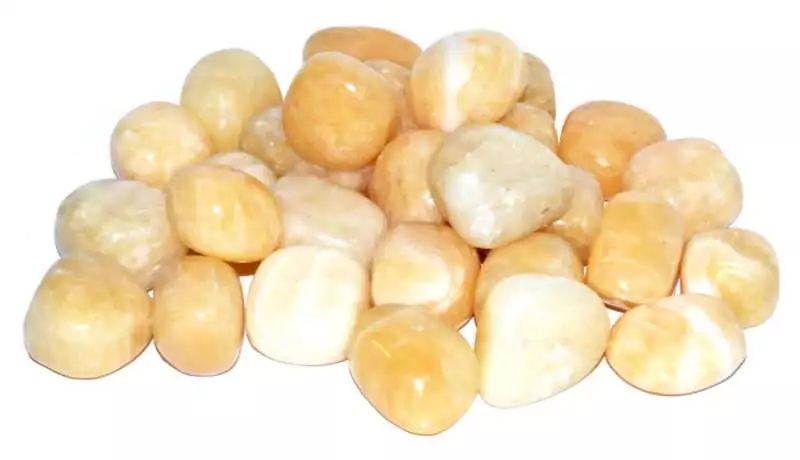
- Color: Butter yellow to honey and cream, with banding
- Mohs Hardness: 3
Yellow Calcite: Honey-Toned Stones in a Soft Mineral
Spread this pound across a cloth and the colors read like a jar of honey tipped out: butter yellow, golden amber, cream and a few nearly white stones, each crossed by soft bands where one tone fades into the next. Some stones are translucent enough to let light through their pale patches, and a few carry a white streak running through the gold. The stones measure 20 to 30mm, from about 0.8 to 1.2 inches, which is wide enough to fill the center of a palm and slightly larger than an American quarter at the top of the range. Tumbling rounds each piece and polishes it to a smooth, softly glossy finish. The mineral is calcite, calcium carbonate, and yellow is one of the colors it takes. Pure calcite is colorless or creamy white, and traces of other elements can tint it gray, orange, yellow or brown. Calcite is the main mineral of limestone and of marble, which forms when limestone is subjected to heat and pressure, and its name comes from the Latin calx, meaning lime.
Calcite is a soft mineral, so a hard knock can chip a stone and harder minerals can scratch it. In modern crystal practice, yellow and honey calcite are linked with confidence, motivation and personal power, and one crystal guide places honey calcite at the solar plexus chakra. Those are crystal-lore associations, and they work as symbols you can adopt or leave. The gold-and-cream palette suits that symbolism, since the stones look like small lamps in a dish on a desk or beside a candle. Calcite is also the mineral that builds cave stalactites and stalagmites and the shells of many marine animals, so the stone in your hand belongs to a very large family. With 20 to 30mm stones you can build a layout around one large golden piece and ring it with paler ones. Jewelry makers describe yellow calcite’s understated color as a good match for antiqued gold-plated brass, and that same quiet tone sits well beside brass candle holders and bowls on an altar.
Practical Ritual Applications
Write a goal on a small card and rest a golden stone on it, a simple way to keep the goal in view while you work on it. The confidence and motivation associations make yellow calcite a natural pick for goal-setting and manifestation work. Keep a dish of them by a candle on your desk, where the honey tones warm in the flame. Choose your deepest-colored stone to carry on days when you have a presentation, an interview or a hard conversation. Set a few on a shelf where daylight reaches them. Arrange five in a ring around the base of a yellow candle, with the largest at the top of the circle, for a small tabletop display. A stone beside your deck gives the table a warm accent that stays out of the way of the cards. For more stones linked with courage and strength, browse my courage and strength stones.
How to Work With Yellow Calcite Tumbled Stones
Three steps for putting a pound of honey-colored stones to work.
- Sort From Cream to Gold
Tip the stones onto a plain cloth in daylight and line them up from the creamiest to the deepest gold. Notice which stones show banding, which are translucent and which are a single even tone. Put your three favorites in a small dish and leave the rest in the bag. The row also shows you how wide the color range runs within one mineral, which helps when you want to pick a stone for a specific purpose.
- Pair a Golden Stone With a Written Goal
Choose one deep-gold stone and write a single sentence about what you are working toward on a card or a sheet of paper. Place the stone on the card on your desk or altar, where you will see it each day. When the goal changes, write a new card and move the stone.
- Handle Over a Soft Surface
Pick the stones up over a cloth, a tray or your lap. Carry one in its own small pouch and keep it away from keys, coins and harder stones. At home, a shallow dish lined with cloth gives the whole lot a safe place to sit, and a soft, dry cloth is all it needs for dusting.
The Tarot Fellow Standard
I stock this lot for people who like warm colors and want a mineral with a clear identity. Yellow calcite is soft, honey-toned and easy to read at a glance, and a 20 to 30mm stone has enough size to hold and enough surface to show off its banding. A pound is plenty for a dish at your desk, a few stones for a grid and a few for gifts. For other stones sold by the pound, browse my bulk tumbled stones collection.
Frequently Asked Questions
Calcite is calcium carbonate, and dilute acid dissolves it, releasing carbon dioxide gas that shows up as fizzing. That reaction is the classic field test for calcite. It also explains the care advice for calcite stones: keep them away from bleach, acid cleaners and household sprays, and skip ultrasonic and steam cleaners. A soft, dry cloth is the safest way to clean them.
Calcite rates 3 on the Mohs scale and splits along three flat cleavage planes, while quartz rates 7 and breaks along curved, glassy surfaces with no cleavage. Calcite also fizzes in dilute acid. Those differences explain why tumbled calcite takes a softer polish and why quartz stones are harder to scratch.
Iceland spar is clear, colorless calcite. A crystal of it makes objects seen through it appear doubled, a property called double refraction. Rasmus Bartholin first described the effect in 1669. Calcite crystals were later used as polarizers in optical instruments, including Nicol prisms.
Reviews
There are no reviews yet