
Quick Specs
- Type: Palm stone, polished
- Material: Infinite Stone (antigorite serpentine), South Africa
- Best for: Hand-held meditation, kundalini energy work, body layouts
What Is Infinite Stone? Serpentine Mineralogy and South African Origin
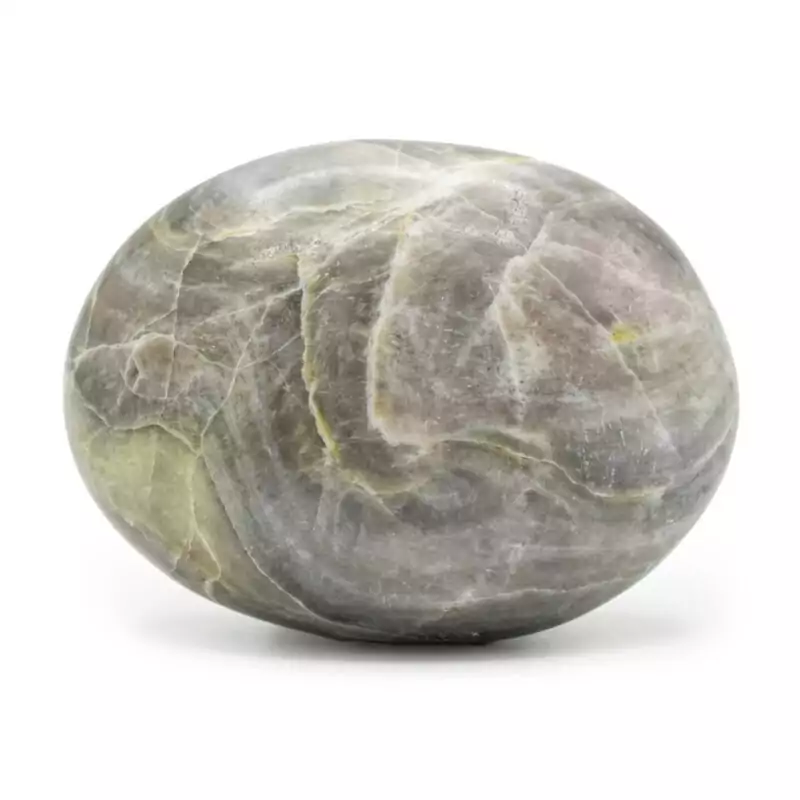
Infinite Stone is a trade name for a specific variety of serpentine mined in South Africa, mineralogically identified as antigorite, one of the three main polymorphs of the serpentine group alongside lizardite and chrysotile. Serpentine minerals are magnesium silicate phyllosilicates with a layered, waxy luster, and they’ve been historically confused with jade due to their green coloration and smooth texture when polished. This particular South African antigorite has a softer, more translucent appearance than many other serpentine varieties, with banding in pale to medium green that gives each piece a quietly distinctive look.
Serpentine’s use as a protective and healing stone spans ancient Mediterranean, Mesoamerican, and Asian cultures, where it was carved into amulets, vessels, and inlay work. In many traditions it was considered a stone of the earth’s life force, associated with vegetation, renewal, and the vitality of living systems. The South African source for Infinite Stone is a relatively modern discovery in the gem trade, but it draws on these deep historical associations with the broader serpentine family.
Palm Stone Format: Hand-Held Energy Work and Body Layouts
A palm stone is polished smooth and shaped to fit naturally in the cupped hand, larger than a pocket stone and sized specifically for held meditation work or placement on the body during relaxation sessions. This format is the one practitioners reach for when they want sustained physical contact with a stone throughout a sitting. The smooth, cool surface of polished antigorite serpentine feels grounding in the hand, and many practitioners use it to anchor focus during breathwork or guided visualization. Browse my worry and palm stones collection to compare shapes and materials.
In contemporary crystal healing, Infinite Stone is particularly associated with kundalini energy, the concept of latent life-force energy residing at the base of the spine in yogic tradition. Practitioners use it in layouts placed along the spine or held during seated meditation with that focus in mind. It’s also used for earth-connection practices and for grounding work that benefits from serpentine’s deep association with soil, root systems, and elemental earth energy.
How to Use Infinite Stone Serpentine Palm Stone
Three practical methods for working with your Infinite Stone serpentine palm stone.
- Hold for Grounded Meditation
Sit with the palm stone in both hands, letting its coolness register before you begin. The smooth antigorite surface warms slowly to body heat, which many practitioners find useful for anchoring focus to the present moment during seated practice.
- Use in Body Layouts
Place the stone at the base of the neck, along the spine, or at the sacral area during a relaxation session. Infinite Stone suits body layouts targeting kundalini pathways, supporting energetic alignment in yogic and crystal healing practice.
- Pair with Earth-Energy Practices
Combine with grounding breathwork or outdoor practice. Hold the stone while sitting on the earth, or keep it nearby during garden work or nature meditation. Serpentine carries strong earth-energy associations across healing and spiritual traditions.
The Tarot Fellow Standard
I carry Infinite Stone palm stones because the South African antigorite variety has qualities that set it apart from generic serpentine: the translucency, the consistent soft green banding, and the way it polishes to a particularly smooth surface that works beautifully in hand-held practice. Each palm stone is a natural specimen, so color and patterning will vary. If you’re building a broader crystal practice, explore my full crystals and gemstones collection for complementary stones and tools.
Frequently Asked Questions
Infinite Stone is a trade name for antigorite serpentine from South Africa. It belongs to the serpentine mineral group, a magnesium silicate family, and shares the group’s waxy luster and green coloration but has a softer, more translucent quality.
Palm stones are larger and shaped to rest in an open cupped hand, designed for held meditation and body layouts. Pocket stones are smaller and fit in a closed fist or pocket for carry. Both are polished smooth, but the size and use differ.
Serpentine is linked to kundalini energy, earth connection, and ancient protective traditions. Practitioners use it in body layouts, grounding meditations, and as a stone for renewal and connection to earth vitality across healing frameworks.
Serpentine minerals including antigorite are generally safe for brief water contact. Avoid prolonged soaking, as it may affect the polish over time. For cleansing, a short rinse or moonlight placement is recommended by most crystal practitioners.



Crystals are my absolute favorite. My Serpentine palm stone colors are beautiful and it does what I intended.