
Quick Specs
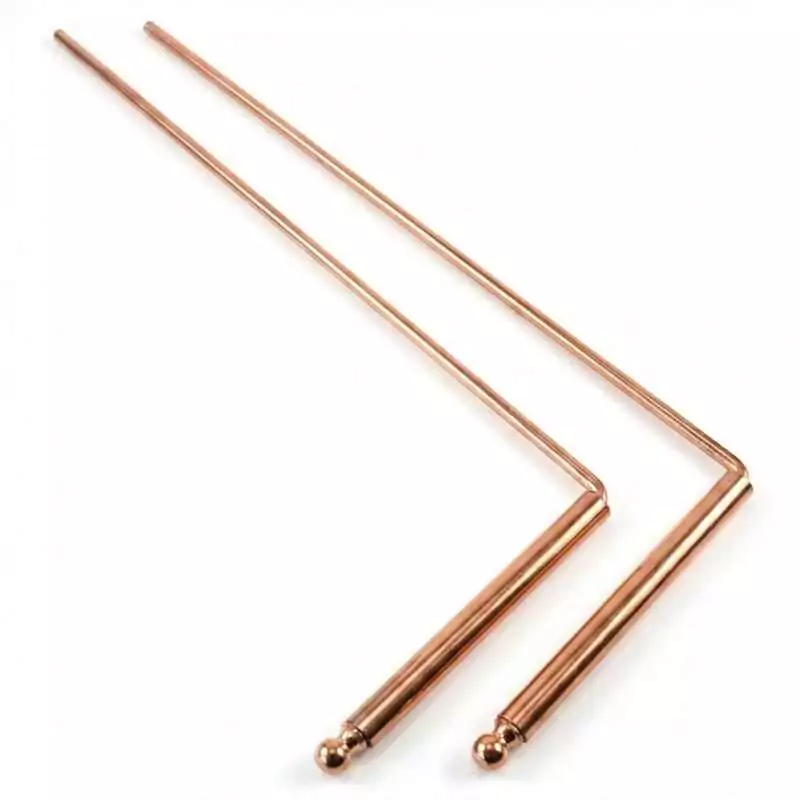
- Material: Copper
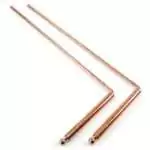
- Style: L-rods (pair)
- Length: 12 inches
- Use: Divination, energy detection, space clearing, spirit work
- Best For: Beginners and experienced dowsers, energy workers, and space-clearing practitioners
The History and Practice of Dowsing
Dowsing is one of the oldest divination practices in recorded history, used for centuries to locate water, minerals, and energy lines beneath the earth. L-rods, held loosely one in each hand with the longer arm pointing forward, are the most common tool for space-based energy detection. Copper is the preferred material because of its conductive properties, and practitioners describe it as more responsive to subtle movement than steel or plastic alternatives.
Modern practitioners use L-rods for a range of applications beyond water finding. These include mapping energy fields in a home or ritual space, scanning auras, detecting geopathic stress lines, answering yes-or-no questions through directed intention, and locating lost objects. The 12-inch length gives enough leverage for visible movement while remaining easy to hold steady during a slow walk-through.
Working with the Rods
The ideomotor effect, where subconscious muscle movements translate into visible rod movement, is the most widely accepted scientific explanation for how dowsing works. Whether you approach dowsing as a tool for intuitive focus or as a literal energy detector, the practice rewards patience and a relaxed grip. Many practitioners establish a personal code before starting, asking the rods to show their “yes” and “no” responses as a calibration step.
How to Use Copper Dowsing Rods
Three steps to get started with your copper L-rods.
- Hold and Calibrate
Hold one rod loosely in each hand, gripping the short handle with elbows bent. Let the long arm point forward parallel to the ground. Ask the rods to show a yes response, then no, and note which movement they give for each.
- Set Your Intention
Stand still, take slow breaths, and form a clear question in your mind. The more specific your intention, the more useful the rods' response. Common intentions include locating an energy line or asking a yes-or-no question.
- Walk and Observe
Move slowly through the area with your intention held steady. Watch for rods to cross toward each other, signaling proximity to your target, or swing outward, indicating you've moved past it. Follow a single rod to pinpoint the source.
The Tarot Fellow Standard
I carry copper L-rods because they’re a low-barrier entry point into dowsing, and copper’s conductivity makes them more responsive than cheaper steel versions. This 12-inch pair is the right size for indoor space work and portable enough to use outdoors. If you’re building out a divination toolkit, browse my divination collection for complementary tools.
Frequently Asked Questions
Copper is a highly conductive metal, which practitioners say makes it more sensitive to subtle energy. It also moves more freely than steel due to lighter weight, giving cleaner responses when held with a relaxed grip during dowsing.
Yes. L-rods are the most beginner-friendly dowsing format because the movement is easy to read. Start indoors by calibrating yes and no responses, then practice walking toward a known object. Most people get results within a few sessions.
L-rods are held one in each hand and swing left, right, or cross to indicate a find. Y-rods are held with both hands and dip downward. L-rods suit energy detection and yes-or-no questions; Y-rods are classic for outdoor water finding.
Wipe copper rods with a soft dry cloth after use to prevent tarnishing. Store them flat or hanging to keep the arms straight. Light tarnish is normal and does not affect function. Avoid harsh chemical cleaners, which can pit the surface.







Haven’t received any of my order I’m very upset!
Great item, excellent quality. Great for a collection or just for decoration. Thank you.
Good quality
This was a super fast delivery and I can not wait to use them! Thank you!