


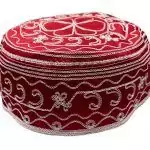
Quick Specs
- Type: Ceremonial orisha headwear
- Size/Quantity: One hat in red and white
- Best for: Shango devotion, Santeria ceremony, initiation rites, altar work
Shango: Orisha of Thunder, Fire, and Justice
Shango, also written Chango, is one of the most powerful and widely honored orishas in the Lucumi and Santeria tradition that developed in Cuba from the Yoruba religion of West Africa. His domain encompasses thunder, lightning, fire, masculine virility, and justice, and he is venerated with great intensity across the African diaspora, from Cuba and Puerto Rico to Brazil, Trinidad, and the United States. He is regarded as a king among the orishas, a warrior of tremendous force who commands both fear and deep affection from his devotees.
Red and white are Shango’s definitive colors, appearing on his sacred objects, his batea, his eleke beads, and all regalia used in ceremonies honoring him. Red carries his fire and lightning. In Lucumi houses, a cap like this is called a gorro. Gorros are worn by initiated priests and priestesses (olorishas) and by the iyawo at their ceremonies, in the colors of their Orisha.
Using Ceremonial Regalia in Devotional Practice
I sell this cap as a supply for those houses. Items associated with an Orisha are handled with care and kept separate from everyday things.
If you are not initiated, please talk with your godparent or house before wearing or using this cap, and about what belongs on a Shango altar.
How to Use the Shango Santeria Hat
Steps for incorporating this ceremonial hat into Shango devotional practice.
- Ask Your Godparent or House First
Before wearing or using this cap, talk with your godparent or house about whether it fits your initiations and your house’s practice.
- Wear It as Your House Directs
Gorros are worn by initiated priests and priestesses and by the iyawo at their ceremonies. Wear this cap the way your godparent or house directs.
- Store regalia with proper care after ceremony
After ceremony, store the hat in a clean cloth or bag dedicated to Shango’s regalia, separate from everyday items. Ritual garments in the Lucumi tradition carry accumulated ceremonial energy and benefit from respectful, dedicated storage.
The Tarot Fellow Standard
I stock Shango regalia because practitioners working in the Lucumi tradition need items that respect the visual language of the practice rather than approximate it. Santeria is a living tradition, and this hat is a supply for devotion, not a substitute for initiation or for the guidance of a godparent and house. Browse my Voodoo, Hoodoo, and Santeria supplies for complementary items, and explore my altar supplies for candles, offering bowls, and cloths that support ongoing orisha work.
Frequently Asked Questions
Shango’s colors in Lucumi/Santeria are red and white. Red represents fire, lightning, and masculine power, while white marks his royal status. These colors appear on sacred objects, ritual garments, and altar decorations across the tradition.
In Lucumi practice, the batea is a wooden vessel on a pedestal holding Shango’s sacred stones and implements. Ritual garments such as the hat may be stored or displayed near the batea as part of honoring his presence at a working altar.
Shango is venerated across the African diaspora in Cuba, Brazil, Trinidad, and West Africa. His domain covers thunder, lightning, fire, justice, and virile masculine energy, making him one of the most widely honored orishas in diaspora traditions.
In Lucumi houses, a cap like this is called a gorro and is worn by initiated priests and priestesses and by the iyawo, in the colors of their Orisha. If you are not initiated, please talk with your godparent or house before wearing or using it.




Reviews
There are no reviews yet