
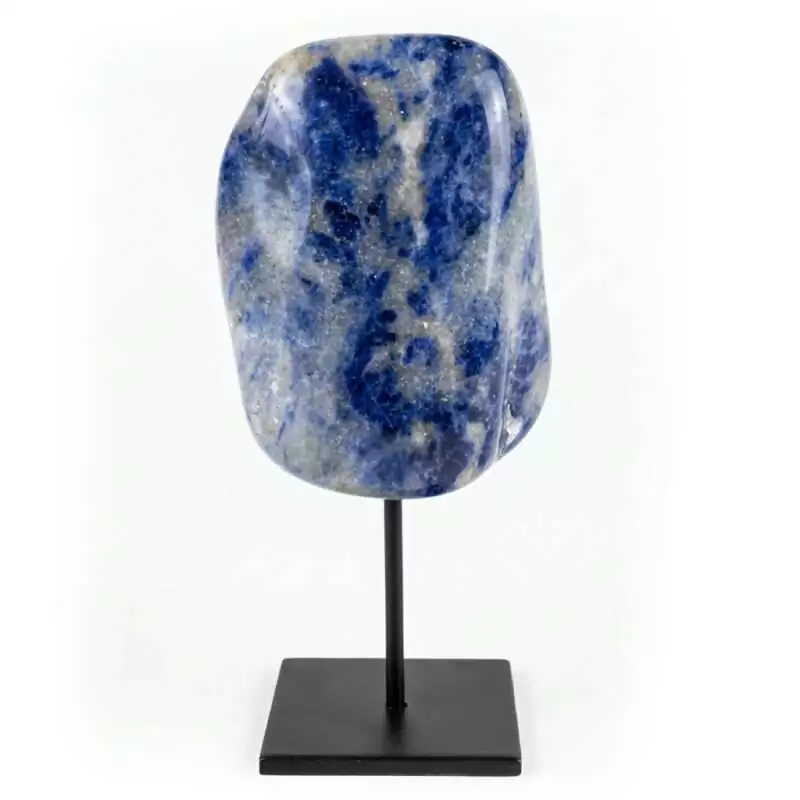


Quick Specs
- Type: Sodalite crystal on decorative black stand
- Size: 2.75″
- Size/Quantity: Single specimen with black-toned stand included
- Best for: Third-eye and throat chakra work, clarity and communication, study or reading space display
Sodalite: Blue Feldspathoid for Clarity and Communication
Sodalite is a royal blue feldspathoid mineral with characteristic white calcite or feldspar veining that creates a mottled blue-and-white pattern unique among common metaphysical stones. It is often confused with lapis lazuli, but sodalite lacks the golden pyrite inclusions that mark genuine lapis and tends to have a lighter, softer blue tone. Major deposits are found in Brazil, Canada, Namibia, and India. It is a sodium aluminum silicate chloride mineral, distinctly different in composition from quartz-family stones.
Metaphysical practitioners associate sodalite primarily with the throat and third-eye chakras, making it a standard stone for work involving communication, mental clarity, and intuitive access. It appears frequently on altars dedicated to study, writing, and divination work, and is recommended to practitioners who feel their thinking is scattered or their communication is blocked. In crystal healing contexts, sodalite is grouped with stones that support analytical and rational thinking alongside intuitive perception. You can see related stones in my concentration and focus crystals section.
The Black Stand: Contrast and Visual Impact
The black-toned stand creates a strong visual contrast with sodalite’s vivid blue and white patterning, making the stone appear more saturated and prominent than it would against a neutral or light surface. Black as a display base also carries symbolic associations with depth, mystery, and the void in various esoteric traditions, which some practitioners find resonant for a stone associated with inner perception and truth-seeking.
Practically, the black stand elevates the stone off the shelf surface, prevents rolling or shifting, and frames the sodalite as a deliberate focal object. This kind of presentation suits a writing desk, a divination table, or anywhere a practitioner wants a visual reminder of clear, intentional thought.
How to Use Sodalite on Black Stand
Three steps for displaying and working with sodalite on a black stand.
- Place in Your Work Area
Place the black stand on a stable surface and seat the sodalite piece firmly in the cradle. Sodalite’s deep blue-white coloration stands out against the black base, making it effective as a focal point in any workspace or reading area.
- Anchor Focus Before Display
Hold the sodalite and take several slow breaths before placing it. Practitioners link sodalite to mental clarity and truthful communication, and brief handling before display is how many anchor that quality of focus to their workspace piece.
- Clean and Maintain
Wipe sodalite with a dry or slightly damp cloth and dry immediately. The black stand is typically a coated metal; polish it lightly with a soft dry cloth. Avoid harsh cleaners that can strip the dark finish and dull the stand’s appearance.
The Tarot Fellow Standard
I chose the black stand pairing for this sodalite specimen specifically because the contrast makes the stone’s patterning more visible and turns a loose mineral into a finished display object. Sodalite is a stone I recommend to practitioners who want support with mental clarity and focused communication, and this mounted version removes the practical hassle of sourcing a compatible stand separately. If you are building a divination or study altar, browse my full crystal collection for compatible stones in similar stand-mounted presentations.
Frequently Asked Questions
Sodalite is a royal blue feldspathoid mineral with white calcite veining. Its blue-white patterning comes from interplay of sodalite mineral with white calcite inclusions. It is often confused with lapis lazuli but lacks its golden pyrite flecks.
In crystal practice, sodalite is linked to the throat and third-eye chakras. Practitioners use it for mental clarity, honest communication, and intuition. It appears on altars dedicated to study, writing, divination, and truth-seeking work.
Sodalite differs from lapis lazuli by lacking golden pyrite inclusions and having a softer, more muted blue tone. Lapis is heavier and more prestigious historically, while sodalite is more accessible and focuses on clarity over prestige.
Sodalite is generally stable in sunlight and does not fade significantly under normal display conditions. Very extended direct sun exposure over years can cause subtle color lightening, so indirect light preserves the deepest tones long-term.




Reviews
There are no reviews yet