
Quick Specs
- Type: New Orleans Voodoo primer (paperback)
- Size: 6 by 9 inches
- Pages: 214
- Author: Belfazaar Ashantison
- ISBN: 978-1-5376-6282-4
- Published: September 2016
- Tradition: New Orleans Voodoo
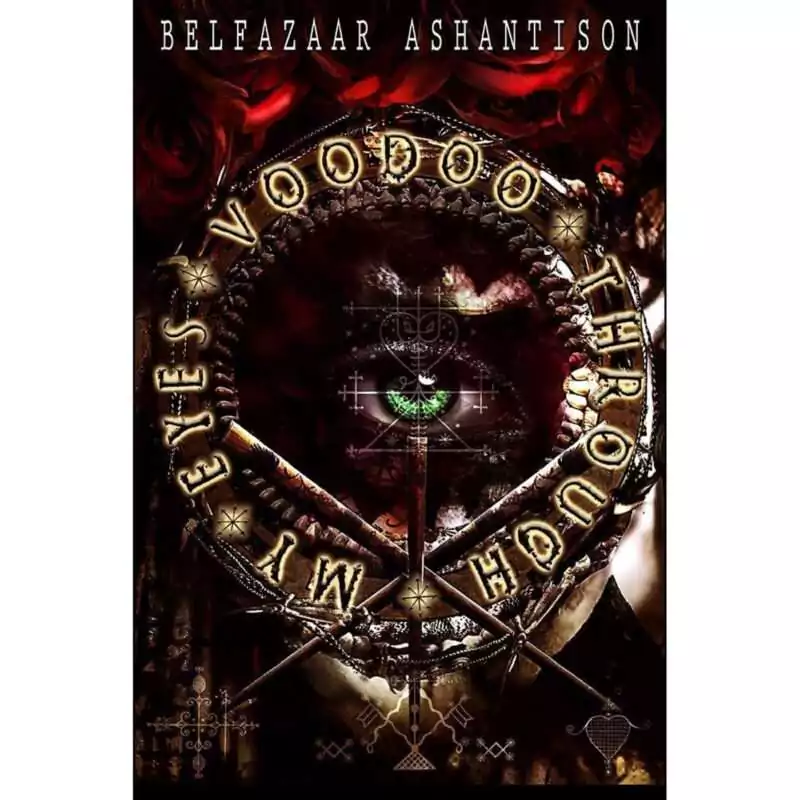
A First-Person Voodoo Primer from a New Orleans Priest
Most general-audience books about Voodoo follow the Haitian Vodou lineage, and that has value, but they leave out the specific tradition that grew in New Orleans across three centuries of African, Haitian, French, Native American, and Catholic exchange. Voodoo Through My Eyes fills that gap. Belfazaar Ashantison writes from inside the New Orleans practice: he’s a priest with more than 25 years in the tradition, works at Voodoo Authentica in the French Quarter, and organizes homeless outreach through the New Orleans Vampire Association. His voice on the page reads like someone willing to explain the basics without gatekeeping. The book opens with a glossary so you can approach it without a religious-studies vocabulary, then walks you through the Orisha, the Loa, the working tools New Orleans practitioners use, workings tied to specific spirits, and a handful of recipes from his own practice. Reviewers keep noting the same surprise: they picked it up expecting something technical, and it turned out accessible instead. That’s the whole point. It’s an introduction for readers curious about the tradition, not a substitute for community, initiation, or mentorship inside the practice.
The book’s structure mirrors how the tradition gets taught in New Orleans. Ashantison starts with definitions because New Orleans Voodoo borrows vocabulary from multiple African diasporic religions, and terms like Orisha, Loa, veve, and gris-gris carry precise meanings that get flattened in general use. His introductions to the Orisha and the Loa give you a first orientation to who these spirits are and how practitioners approach them, without pretending the book can stand in for a lifetime of relationship with them. The section on tools describes objects you’ll see in shops along Dumaine and Rampart streets and explains why they matter, which beats a decontextualized inventory. The workings and recipes come from Ashantison’s own practice, which he’s transparent about, and they’re shared with the understanding that a working done outside tradition and community isn’t the same as one done inside it. It doesn’t try to cover everything, and that restraint is its strength. It offers what you should know before deciding whether to go further, and respects your autonomy about whether to seek a teacher, attend a public ritual at a New Orleans temple, or simply read more widely.
Practical Applications and Reader Uses
Read Voodoo Through My Eyes as a first orientation before you know whether the tradition is for you, or as a New Orleans-specific comparison if you already work with Haitian, Cuban, or Yoruba practice. If New Orleans itself draws you in, the book grounds the tradition in the streets, temples, and lineages of the city and pairs well with a trip to the French Quarter. Use the workings section as a jumping-off point for study rather than a spellbook: hold each working against other primary sources before you try any of them, and check whether a local temple or teacher would deepen the working first. Ashantison’s clear that the recipes are his own, which is a feature: you know exactly whose practice you’re learning from. Keep it shelved with other practitioner writing in my Voodoo, Hoodoo and Santeria books collection.
How to Approach This Book
Voodoo’s a living religion; this book is an introduction, not a substitute for community or initiation, and it rewards a slow, respectful reading.
- Start with the Glossary
Start with Ashantison’s glossary at the front rather than jumping into the workings. Voodoo, Vodou, Vodun, Santeria, Hoodoo, and Ifa are all real traditions with real distinctions, and terms like Orisha, Loa, veve, and gris-gris carry precise meanings the general media flattens. Read the definitions first so you’re following the book on its own terms, not on Hollywood’s. Come back to the glossary every time a term reappears.
- Read the Orisha and Loa Sections Slowly
Move slowly through the Orisha and Loa sections. Each spirit gets attributes, associations, and traditional offerings, but the book’s offering an orientation, not a menu. Take notes on which spirits catch your attention, and hold them as reading questions to bring to further study, a public ritual, or a teacher, rather than as a script for a first working. Living religions don’t reward speed-reading.
- Treat the Workings as Study, Not a Formula
Treat the workings and recipes as a window into how a New Orleans priest structures ritual, not as recipe cards to execute solo. Ashantison’s clear these come from his own practice, which is the right framing for shared workings in any African diasporic tradition. If something speaks to you, look for parallels in other primary sources, check whether local practitioners work with the same spirits, and consider whether initiation, mentorship, or community attendance would deepen the working first.
The Tarot Fellow Standard
I brought Voodoo Through My Eyes into the shop for two reasons that hold up whether or not you’re already inside an African diasporic practice. First, first-person practitioner writing on New Orleans Voodoo is rare, and this book centers the Louisiana tradition on its own terms. Second, the book is clear about its scope. It doesn’t try to cover everything, and that restraint treats Voodoo as the living religion it is rather than a survey subject. If that’s what you want, this book is written for you. Browse my Books and Journals collection for adjacent primary sources on spirit tradition, witchcraft, and folk practice.
Frequently Asked Questions
Yes. Ashantison frames it as a Voodoo 101, opens with a glossary so you can read without a religious-studies vocabulary, and walks you through the Orisha, the Loa, ritual tools, and workings in order. Reviewers keep noting the same thing: they picked it up expecting a dense technical text and found it accessible instead. If you love New Orleans as a city, or you’re drawn to African diasporic religion from a practitioner voice, it’s a strong first book.
They share West African roots, especially the Loa, but they grew under different colonial pressures and mixed with different local traditions. Haitian Vodou developed under French colonial slavery in Saint-Domingue with strong Fon and Kongo lineages and a Catholic overlay. New Orleans Voodoo emerged when enslaved and free people of color from Haiti, West Africa, and the Kongo brought their practice into French, Spanish, and later American Louisiana, where it also encountered Native American traditions. Ashantison writes from that Louisiana lineage specifically.
No. The book’s written for readers approaching Voodoo from outside as much as for those already inside. Ashantison presents it as an introduction and is explicit that the workings and recipes come from his own practice. Reading isn’t initiation, and the book doesn’t claim to substitute for the community, teachers, and ritual life that structure New Orleans Voodoo. If you finish it and want to go further, the right next steps are visiting a New Orleans temple, seeking a teacher, or reading additional practitioners in the tradition, not executing the workings in isolation.
Ashantison introduces both, with attention to attributes, associations, and traditional offerings. The Orisha come from Yoruba and Ifa lineages; practitioners across Santeria, Candomble, and adjacent traditions honor them. The Loa belong to Haitian Vodou and Louisiana Voodoo, with regional variation in how practitioners approach them. The book doesn’t try to catalogue every spirit, and that restraint is intentional: a comprehensive treatment belongs in relationship with a teacher, not on a first-book page. What you get is a first orientation and a map to where deeper study begins.



Reviews
There are no reviews yet