
Quick Specs
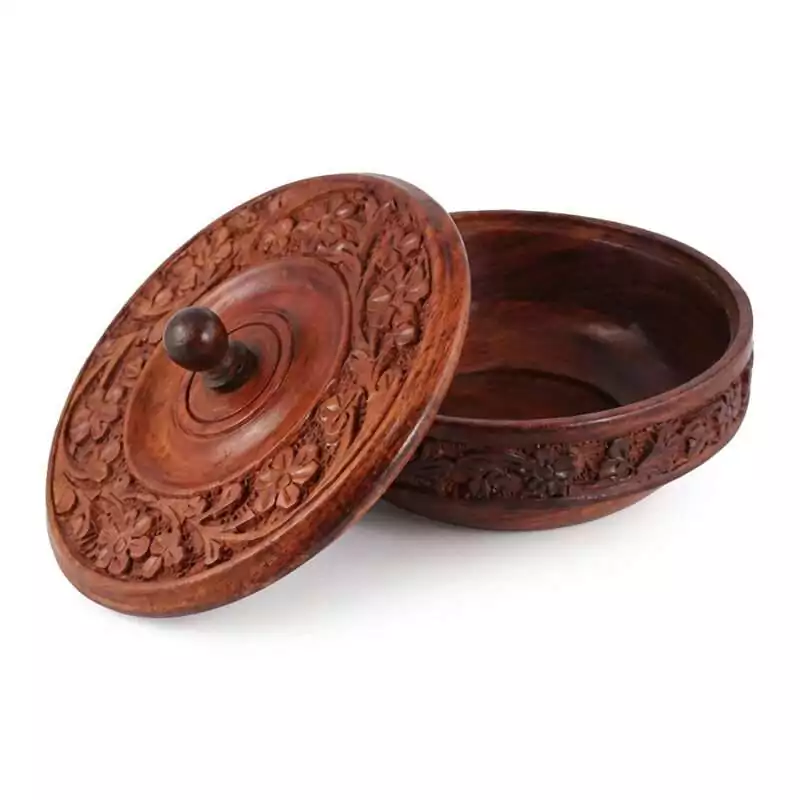
- Type: Lidded Wooden Offering Bowl, Floral Carved Pattern
- Size/Quantity: 5 in diameter x 2 in tall (bowl); approximately 3.5 in total height with lid
- Best for: Altar offerings, salt and water work, holding charged herbs or crystals, ancestor veneration
How an Altar Bowl Gets Used
The bowl is one of the oldest altar objects in human ritual history, predating organized religion in most cultures. On an altar, a bowl commonly holds salt (representing earth) or water (representing the element of water) as part of a quarter setup. It can serve as an offering vessel for libations, flower petals, or food, as a holder for small curios or petition papers during candle work, or as a place for food offerings left for ancestors.
What distinguishes a lidded bowl is containment. Many practitioners need to leave an active working in place for days, and an uncovered bowl is vulnerable to disturbance by pets, family members, or dust. The lid allows you to close the bowl and preserve the arrangement of charged items inside without dispersing whatever has been built up over multiple sittings. This is particularly useful for slow workings: a bowl of herbs left to draw over a week benefits from being covered each morning and uncovered each evening as part of the ritual rhythm.
Construction and Dimensions
This bowl is wooden with a carved floral pattern on both the bowl and lid exterior. The floral design gives it visual character without being so specific to any single tradition that it conflicts with varied altar aesthetics. At 5 inches in diameter and 2 inches deep, the bowl sits comfortably on standard altar surfaces and holds a useful quantity of salt, water, or dry herbs without being oversized. The lid fits snugly to keep contents in place. Find complementary altar pieces in my ritual offering bowls collection to see how this bowl fits within a complete altar setup.
How to Use the Wooden Ritual Bowl with Lid
A guide to setting up, using, and caring for your Wooden Ritual Bowl with Lid on the altar.
- Choose and Consecrate Its Purpose
Place the bowl on your altar and decide its primary function before consecrating it. A bowl dedicated to salt work should not also hold incense ash. Assign one purpose and consecrate with smoke, saltwater, or prayer before first use.
- Fill and Work with the Bowl
Fill the bowl with your chosen material: salt, water, herbs, crystals, flower petals, or small curios. Place the lid on the bowl when the working is complete to contain and preserve energy in charged items stored inside between rituals.
- Clean and Maintain the Wood
Clean the bowl by wiping with a dry or barely damp cloth. Avoid soaking wood to prevent warping. Periodically treat the exterior with food-safe mineral oil to maintain the finish and protect the carved floral details on the bowl surface.
The Tarot Fellow Standard
I carry this bowl because the lidded format solves a real practical problem for practitioners with active workings on the altar. The floral carving is subtle enough to work in any tradition without clashing with existing altar aesthetics, and the wood finish is clean and consistent. For practitioners building out a complete altar, this bowl pairs naturally with a chalice for water work or a salt cellar for earth representation. Browse my full altar supplies collection for cauldrons, chalices, bells, and other tools that complete a working altar setup.
Frequently Asked Questions
A lidded ritual bowl holds offerings, altar salt or water, charged herbs, or crystals. The lid allows you to store charged items between rituals, protecting them from disruption and preserving the integrity of the working until you return to it.
This bowl measures 5 inches in diameter and 2 inches tall. The lid adds approximately 1.5 inches. Total height with lid is about 3.5 inches, fitting comfortably on most altar surfaces without displacing other tools or dominating the working space.
Wooden bowls are a common offering vessel on altars. Wood is an earth element material, making it suitable for grounding work, earth-associated deities, and plant or food offerings to ancestral spirits.
Wipe with a dry cloth after use. Avoid prolonged water contact to prevent warping. Treat occasionally with food-safe mineral oil to maintain the finish. Store the lid on the bowl between altar uses to protect the interior from dust and debris.


Reviews
There are no reviews yet