
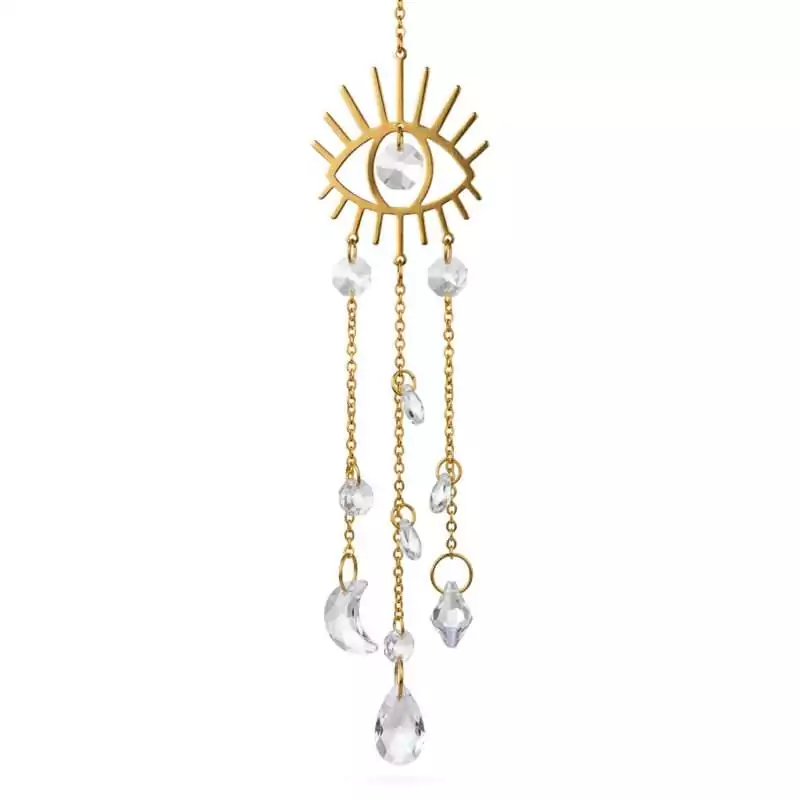

Quick Specs
- Total length: 12 inches
- Design motif: Evil Eye (Nazar) protective symbol
- Components: Evil eye bead accent, faceted glass prisms
- Best for: Window display, home protection decor, apartment or office use
The Evil Eye Talisman: History and Protective Tradition
The evil eye, known in Turkish and Arabic as the nazar (from the Arabic nazar, meaning sight or gaze), is one of the oldest and most widespread protective symbols in human culture. Archaeological evidence of apotropaic eye symbols dates back over 5,000 years in ancient Mesopotamia, Phoenicia, and the Mediterranean basin. In Turkish tradition the nazar boncugu, a concentric circle bead in shades of blue and white, is hung at thresholds, doorways, and windows specifically to intercept malevolent gazes before they enter a home. The underlying belief is consistent across Mediterranean, Middle Eastern, and South Asian cultures: an envious or malicious gaze from a person carries the potential to cause harm, and a visible eye symbol at the threshold reflects that harm back to its source.
In Greek tradition the matiasma (evil eye curse) is taken seriously in both rural and urban communities, and protective amulets, the mataki, are given to newborns, hung in cars, and placed in businesses as a matter of course. Italian folk tradition has the malocchio, which shares the same conceptual structure: the envious gaze, the need for an apotropaic talisman to deflect it. Turkish artisans have produced nazar beads for export since the late twentieth century, making this one of the most internationally recognized protective symbols currently in wide use. The evil eye sun catcher takes this threshold-protection function and combines it with the prismatic properties of glass, producing a piece that is both a functioning talisman by traditional logic and a piece of decorative window art. Browse my amulets and talismans collection for other protective pieces.
12 Inches: Compact Size, Specific Applications
At 12 inches, this sun catcher is designed for smaller windows, side lights beside a door, bathroom windows, dorm rooms, or office spaces where an 18-inch piece would be too large. The glass prisms still produce full rainbow projections when direct sunlight passes through the facets; the total light spread depends on sun angle and distance from the wall rather than the size of the piece. Smaller sun catchers often suit rental apartments and shared living situations where a more subtle window accent is appropriate. The evil eye motif also makes this a fitting gift for a new home or apartment, consistent with the traditional practice of giving nazar amulets at new thresholds.
Unlike the amethyst crescent moon sun catcher in this range, this piece carries no crystal mineral element. Its protective function is entirely symbolic rather than mineral-based, drawing on the nazar tradition rather than on crystal healing properties. That makes it a genuinely different product for a different type of practitioner or collector: someone drawn to folk protective traditions, Mediterranean or Turkish aesthetics, or apotropaic home decor rather than crystal mineralogy and lunar symbolism.
How to Use an Evil Eye Sun Catcher
Three steps for placing and working with your 12-inch evil eye sun catcher as a protective window piece.
- Hang at a Threshold or Window Facing Outward
Traditional nazar placement is at the main entrance or front-facing window. Hang from a curtain rod, suction-cup hook, or nail at the frame top. A window near the front door is ideal by tradition, positioning the eye at the threshold.
- Position for Both Light and Visibility
Hang where it catches direct sun for indoor rainbow projections while visible outside. East-facing windows produce morning rainbow effects; west-facing gives afternoon light play. Visibility from outside is part of the nazar tradition.
- Replace or Cleanse if the Bead Cracks
In Turkish folk tradition, a nazar bead that cracks has absorbed an evil eye and done its job. If the eye element shows damage, practitioners replace the piece rather than repair it, treating the break as the talisman fulfilling its role.
The Tarot Fellow Standard
I carry this piece because the evil eye tradition is one of the most genuinely cross-cultural protective symbols I stock, with documented use across Turkey, Greece, the Middle East, the Mediterranean, and South Asia spanning thousands of years. It’s not a trend item; it’s a symbol with real depth. The 12-inch size fills a specific need for smaller spaces where a full 18-inch sun catcher would be too large, and the window placement aligns with the original threshold-protection logic of the nazar tradition rather than just being decor. If you’re building a protection-focused practice or home, browse my home decor collection for complementary pieces.
Frequently Asked Questions
The evil eye (nazar) is an apotropaic symbol from Turkish, Greek, and Mediterranean tradition believed to deflect envious gazes. Window placement is traditional because the threshold is where gazes enter, making it the logical protective spot.
The prisms are faceted glass that produce rainbow light when sunlight passes through. Unlike the amethyst sun catcher in this range, this piece has no crystal mineral element. Its protective function comes from the nazar symbol, not crystal healing.
Traditional nazar placement is at a front-facing window or main entrance visible to anyone at the threshold. In Turkish and Greek folk tradition a window near the front door or facing the street is standard for a protective evil eye talisman.
In Turkish folk tradition, a cracked nazar bead has absorbed a strong evil eye and fulfilled its function. Many practitioners replace a cracked piece rather than repair it, treating damage as evidence the talisman worked rather than ordinary wear.





Reviews
There are no reviews yet