

Quick Specs
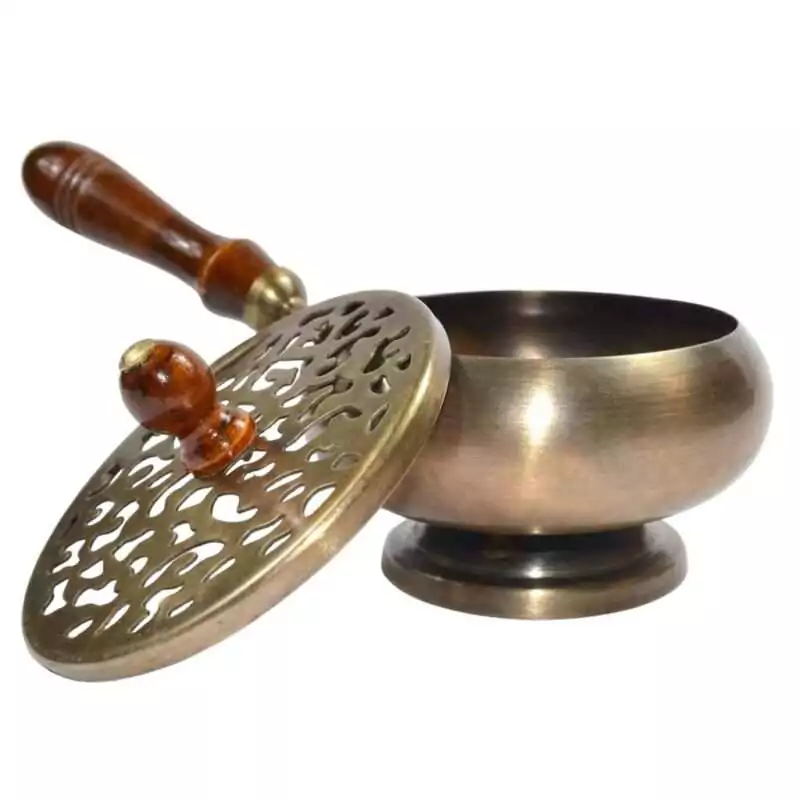
- Type: Footed iron bowl-style censer with iron finish, pierced dome lid, and wooden side-handle
- Size: 3″ x 9″
- Material: Solid iron with matching iron lid; pierced dome lid topped with a small turned-wood knob; long turned-wood side-handle attached to the bowl
- Dimensions: 3 in. bowl diameter, approximately 9 in. overall length including the handle
- Best for: Charcoal-disc incense, cone incense, granular resin (frankincense, myrrh, copal, dragon’s blood)
- Not designed for: Upright stick incense — there is no slotted holder; the form is a bowl, not a stick burner
A Hand-Carry Censer in the Thurible Tradition
This is a hand-carry censer in the lineage of the swung thurible used in Catholic, Orthodox, and Anglican liturgy and the side-handled censers used across many magical traditions. The form is purpose-built for smudging a working space, blessing a room, or processing around an altar: a footed iron bowl that holds a sand bed and a charcoal disc, a pierced dome lid that contains sparks while letting smoke pass through, and a long wooden side-handle that stays cool while the bowl heats. The handle keeps the user’s hand well clear of the hot iron, which is the key practical difference between a censer like this and a sit-on-the-altar bowl burner.
The pierced dome lid is the working detail. Iron is opaque, so a closed bowl would smother the charcoal; the perforations let air flow through to keep the disc burning while still containing any pop or spark from resinous materials. The small turned-wood finial on top of the lid gives a heat-safe lift point, and the lid sets into place over the bowl rim cleanly. The durable finish on the iron gives the piece visual weight on an altar — it reads as a serious working tool rather than a decorative trinket.
Practical Use for Charcoal, Cones, and Resin
Fill the bowl with about an inch of clean play sand or incense ash before any first burn — this is essential for protecting the iron from direct charcoal heat and for giving cone incense a stable seat. For granular resin work, light a charcoal disc, set it on the sand, wait for it to ash gray at the edges, then add a small pinch of resin. Replace the lid for a slow steady plume, or leave it off for a faster, hotter burn. For cone incense, simply press the cone’s flat base into the sand. Iron conducts and holds heat steadily, keeping the charcoal disc burning evenly through long ritual sessions in a way that thinner sheet metal or ceramic burners often can’t match.
How to Use the Iron Incense Burner with Handle
How to use the iron incense burner with side-handle for charcoal, cone, and resin incense work.
- Prepare the Bowl with a Sand Bed
Before the first use, fill the iron bowl with about one inch of clean play sand or incense ash. The sand insulates the iron from direct charcoal heat, gives cone incense a stable flat seat, and absorbs the temperature swings that can crack thinner-bodied censers. Do not run the bowl empty under a charcoal disc.
- Light Charcoal, Add Resin or Cone
For resin work, light a self-igniting charcoal disc with tongs until it sparks across, set it on the sand, and wait for the disc to turn gray at the edges. Add a small pinch of granular resin (frankincense, myrrh, copal, dragon’s blood) on top. For cone incense, press the cone base into the sand and light the tip directly — no charcoal needed.
- Carry by the Handle, Replace the Lid as Needed
Hold the burner by the long wooden side-handle, never the bowl itself, when moving it around a working space. Replace the pierced dome lid for a slower, steadier smoke flow during sustained ritual work. After use, allow the iron to cool completely, then tap ash and used charcoal into a metal waste container.
The Tarot Fellow Standard
I carry this burner because the side-handle solves the one practical problem with metal charcoal censers: how to move them while they’re hot. A bowl on a stand stays where it is. A side-handled censer like this travels with you across the working space — through every threshold of a home blessing, around the perimeter of a circle, or simply from altar to window. The pierced lid lifts it visually beyond utility-grade metalware, and the iron finish carries a working altar rather than disappearing on it. Browse my charcoal and resin burner collection for the full censer range, or pair this with my charcoal discs and my resin and herb incense selection.
Frequently Asked Questions
No — this is a bowl-style censer, not a stick holder. There is no slotted holder, and the form factor is purpose-built for charcoal discs, cones, and granular resin set on a sand bed. For stick incense, use a wooden ash-catcher tray or a brass coffin burner instead.
Sand serves three purposes: it insulates the iron from direct charcoal heat (extending the burner’s life), gives cone incense a stable flat seat, and absorbs temperature swings that can stress the metal. About one inch of clean play sand or incense ash is enough. Replace it when it becomes saturated with old ash and resin residue.
Both. The bowl itself is approximately 3 inches in diameter, and the overall length including the wooden side-handle is approximately 9 inches. The 3 in. measurement tells you the working capacity of the bowl; the 9 in. measurement tells you how much space the burner takes on the altar with the handle extended.
Iron develops a natural patina with use, which most practitioners consider a feature rather than a flaw — the iron look deepens over time. To preserve the existing finish, wipe the bowl interior with a dry cloth after each cooled use and avoid washing with water. If you prefer to slow the patina, a very thin wipe of food-grade mineral oil on the bowl exterior every few months helps. Store with the lid in place to keep moisture and dust out of the bowl. Never use abrasive metal polish on the pierced lid; it can scratch the perforations and pull the finish unevenly.


1 review for Brass Incense Burner With Wooden Handle 3 in. Bowl 9 in. Length — Charcoal Cone and Resin Censer