
Quick Specs
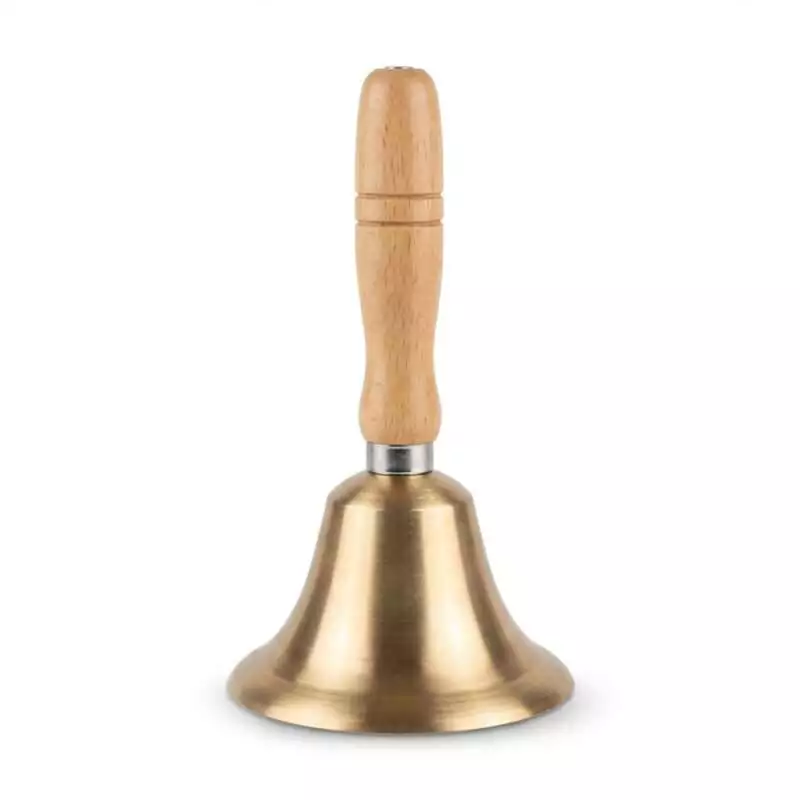
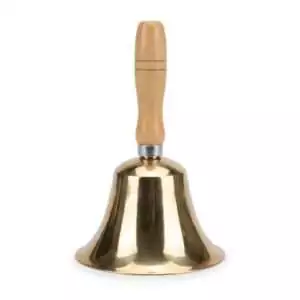
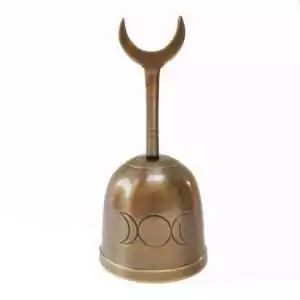
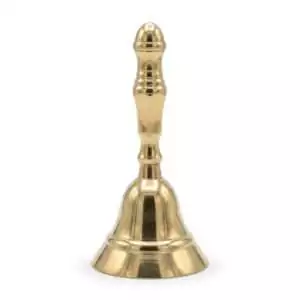
- Material: Brass with wooden handle
- Size: 4 1/4″ diameter x 7 1/2″ height
- Type: Hand bell, ritual altar tool
- Best for: Circle casting, ritual transitions, space clearing, altar use
Brass Ritual Bell: Material, Tone, and Tradition
Brass is a copper-zinc alloy chosen for ritual bells across many traditions precisely because of what it does acoustically: it produces a clear, sustained tone that carries well and decays slowly. This bell measures 4 1/4 inches in diameter at the mouth and 7 1/2 inches tall including its wooden handle, making it a full-sized hand bell rather than a small desk piece. The wooden handle keeps the bell comfortably in hand during use and contributes to the balanced feel when you ring it with a wrist motion.
Ritual bells have been used across Hindu temple practice, where the ghanta is rung during puja to invite divine attention, and in Tibetan Buddhist ceremony, where the vajra-ghanta pairs the bell with a ritual thunderbolt scepter to represent wisdom and method. In Wiccan and broader pagan practice, the bell is typically associated with the element of Air, though some traditions link it to Water because of the way sound ripples outward. It often sits on the left side of the altar, the side associated with the Goddess, and is rung to invoke her presence, open a circle, or seal spellwork.
Altar Bell Uses and Practical Care
The clearest practical distinction between this bell and a singing bowl is the type of sound each produces. A hand bell gives you a single clear strike-tone, immediate and directional. A singing bowl produces a sustained resonance you maintain by running a mallet continuously around the rim. Both have their place, but for marking ritual transitions, opening and closing a circle, or cutting through stagnant air in a space, the hand bell is the traditional choice. Browse my altar supplies collection for tools that work alongside it.
Brass tarnishes over time when exposed to air and humidity. This is normal and doesn’t affect tone, but if you want to maintain the polished look, wipe the bell with a dry cloth after each use and apply a small amount of brass cleaner when tarnish accumulates. Buff it dry completely before using it near candles. This is a practical piece built to last, not a disposable ritual supply.
How to Use a Brass Ritual Hand Bell
How to ring and maintain a brass hand bell in ritual practice.
- Open the Ritual Space
Before beginning any ritual, hold the bell at arm’s length and strike it once with a firm, controlled motion. Allow the tone to decay fully before proceeding. This opening ring signals the boundary between ordinary time and sacred space.
- Mark Transitions During Ceremony
Use the bell to mark transitions within a longer ceremony: between invocation and the main working, between spellwork and thanksgiving, or at the close of a circle. Three rings is a traditional closing sequence in many Wiccan and folk traditions.
- Clean and Maintain the Bell
To maintain the bell’s tone, wipe it with a dry cloth after each use. If tarnish builds up over time, a small amount of brass polish applied with a soft cloth and then buffed dry will restore its original resonance and appearance without damage.
The Tarot Fellow Standard
I stock this bell because it’s a real working tool at a size that actually carries in a ritual space. The 7 1/2-inch height gives it enough mass to produce a tone worth hearing, and the wooden handle makes it feel intentional in the hand rather than toylike. Brass has a centuries-long track record across traditions for a reason: it rings true. If you’re building out a sound practice, you can browse my sound and vibrational healing collection for singing bowls and other instruments that complement altar bell work.
Frequently Asked Questions
Brass is a copper-zinc alloy that produces a clear, sustained tone when struck. It has been used for ritual bells in Hindu temple practice, Buddhist ceremony, and Western folk magic for centuries because of its tonal quality and durability.
In Wicca, the bell is often associated with the element of Air and is used to open or close a circle, invoke the Goddess, call in elemental energies, and mark transitions in ritual. Some practitioners also use it for space clearing.
A bell produces a single clear strike-tone that decays. A singing bowl produces a sustained resonance you maintain by running a mallet along the rim. Both are used in sound healing and ritual, but they serve different ritual and sonic purposes.
Brass bells tarnish over time when exposed to air and moisture. Wipe with a dry cloth after each use to slow tarnishing. When tarnish builds up, apply a small amount of brass polish with a soft cloth and buff dry to restore the finish.




Reviews
There are no reviews yet