


Quick Specs
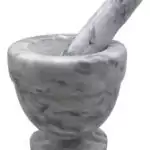
- Type: Mortar and pestle set, white marble
- Size/Quantity: 4″ mortar
- Best for: Herb grinding, ritual incense blending, kitchen witch preparations, apothecary altar work
White Marble: Material Properties for Herb and Resin Work
Marble is a metamorphic rock composed primarily of recrystallized calcite or dolomite, formed under heat and pressure from limestone. White marble is notably harder than soapstone, which is softer and more porous; marble ranks around 3 on the Mohs scale, making it dense enough for efficient grinding while still smooth enough not to splinter herbs into dust too aggressively. The non-porous surface resists staining and does not absorb aromatic compounds into the stone the way porous materials do, which makes it practical for switching between different herbs or resins without flavor or scent carryover.
White marble has been used in culinary and apothecary traditions for centuries. Traditional Mediterranean and Middle Eastern kitchens have long favored stone mortars, with marble being the choice for finer grinding tasks where a smooth paste or powder was needed. The same material properties, hardness, density, and smooth grinding surface, apply equally to ritual herb preparation, where consistency of grind and cleanliness between batches matters. The 4″ size is well-suited to small-batch work: grinding enough dried herb for a single incense blend, preparing a sachet powder, or crushing resins for charcoal burning. Explore my mortar and pestle collection for other styles and materials.
Kitchen Witch and Ritual Use: Where Culinary and Magical Herb Work Overlap
The kitchen witch tradition explicitly bridges culinary and magical herb work, treating the preparation of food and medicine as a continuous ritual practice. A white marble mortar and pestle sits comfortably at this intersection: it’s a serious culinary tool capable of handling whole spices, fresh herbs, and soft resins, and it functions equally well on a magical altar for grinding herbs into sachet blends or incense bases. Practitioners who work in this tradition often keep a dedicated mortar for ritual use only, separate from their cooking mortar, both to maintain intentional focus and to avoid cross-contamination of strong-flavored spices into spiritual preparations.
The visual quality of white marble also matters in altar and apothecary contexts. The veining patterns in natural marble are unique to each piece, so no two mortars are identical. White marble reads as clean and formal, a quality that suits protection and purification work as well as lunar and air-element ritual contexts where visual clarity is part of the aesthetic intention. The 4″ size is compact enough for a working altar without taking up excessive surface space, which matters for practitioners with smaller, more curated setups.
How to Use the 4″ White Marble Mortar and Pestle Set
Step-by-step guide for using and caring for the 4″ white marble mortar and pestle for herb grinding and ritual preparation.
- Season Before First Use
Before first use, grind a small amount of dry white rice in the mortar to remove any stone dust from manufacturing. Discard the rice and wipe the interior clean with a dry cloth. The mortar is then ready for herbs, resins, or spices without residue.
- Grind in Small, Controlled Batches
Fill the mortar no more than one-third full for efficient grinding. Use a pressing and rotating motion rather than sharp strikes, which risk chipping the rim. Keep resins and dried herbs separate from fresh plant material, which gums the stone.
- Clean Between Herb Types
Wipe the interior with a dry cloth between different herbs or resins to prevent scent carryover. For deeper cleaning, grind dry rice again or rinse with cold water and dry promptly. Avoid dish soap, which can leave residue in the stone over time.
The Tarot Fellow Standard
I carry this white marble mortar and pestle because marble genuinely outperforms softer stones for fine grinding tasks. The non-porous surface handles resin and herb switching without contamination, the 4″ size is practical for single-working batches, and the material is honest, natural stone with real weight and durability. It’s a better fit for practitioners who want a long-term altar tool rather than a decorative piece that wears out. If you’re building an herb preparation kit, browse my full herbs and accessories collection for complementary tools, botanicals, and storage options.
Frequently Asked Questions
Marble is harder and denser than soapstone, ranking around 3 on the Mohs scale versus soapstone at 1 to 2. Its non-porous surface resists staining and scent absorption, making it better for switching between herbs and resins without carryover.
Yes. Grind a small amount of dry white rice in the mortar before first use to remove stone dust from manufacturing. Discard the rice and wipe clean. This one-time step ensures no stone particles end up in your first herbal or ritual preparation.
Yes, but many practitioners keep separate mortars for kitchen and altar use. This avoids strong culinary spice scents contaminating ritual preparations and maintains the intentional focus of the ritual tool as a dedicated piece of the practice.
The white marble version is harder, non-porous, and better suited for fine grinding of dry resins and herbs. Soapstone is softer and more porous, which affects scent retention. Marble surface also provides a cleaner, more formal visual aesthetic.
2 reviews for 4″ White Marble Mortar and Pestle Set — Herb Grinding for Kitchen & Ritual