

Quick Specs
- Type: Mortar and pestle set
- Material: Marble
- Width: About 2 1/2 inches at the widest
- Height: About 2 1/4 inches
- Color: White with gray veining
- Shape: Footed bowl with a rolled rim; pestle with a rounded head
A Small Footed Bowl in Veined White Marble
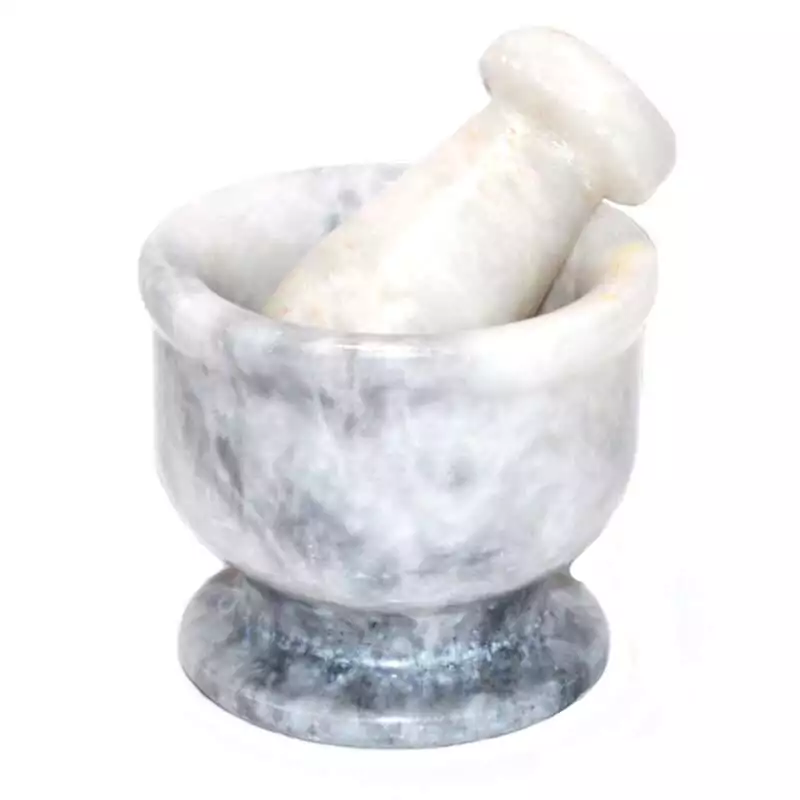
The bowl stands on a short round foot that flares at the base, so the mortar sits like a small goblet on a table. Above the foot the walls swell outward and finish in a smooth, rolled rim. The set measures about 2 1/2 inches across at its widest and 2 1/4 inches tall. The stone is white with soft gray veins and cloudy patches that drift across the walls, and the foot is the darkest part, a blue-gray with fine speckling. The pestle is a short, thick club with a rounded head and a warm, creamy cast, and it rests in the bowl with its head leaning against the rim. The surfaces look smooth and softly glossy, so light moves across the curve of the bowl without a hard edge. The color shifts gently from white near the rim to gray toward the foot. Veins and tints in marble come from impurities in the original stone, which means the swirls and shading on your set come from the block it was cut from, and the pale body suits a white altar cloth, a wooden shelf or a dark kitchen counter.
A mortar and pestle is a pair of hand tools for crushing and grinding. The mortar is the bowl, and the club-shaped pestle presses or pounds the material against it. Cooks crush peppercorns, coriander seed, cloves, cardamom, dried chilies and sea salt in it and make pastes such as pesto, artists have used it to grind pigments, and pharmacies have used it for powders, and the pair is one of the best-known symbols of pharmacy. A mortar this small works with a spoonful at a time, so each round of grinding stays manageable: a few peppercorns, a pinch of dried lavender, a sprinkle of coarse salt or a handful of dried petals. Working in small batches keeps the material inside the bowl as you press and pound. The whole set is small enough to keep within easy reach, whether it lives beside a spice rack or on a ritual shelf, and the pair stores as one small unit with the pestle resting in the bowl. At about 2 1/2 inches across it also fits in a drawer or a cupboard when you want the counter clear.
Practical Herb and Kitchen Applications
Use it for the small jobs that come up around an altar or a spice shelf: crushing dried herbs for a sachet, cracking whole spices before they go in a pot, or reducing a pinch of dried flowers to powder for a spell jar. The compact size makes it easy to leave out on a shelf, and the white stone looks tidy beside a row of herb jars. Because the bowl holds only a little, it suits someone who grinds a spoonful at a time and wants to see each batch come together. A mortar and pestle also makes a classic gift for a new kitchen witch, a gardener who dries their own herbs, or a cook who likes spices crushed fresh. If you grind plants for a project, my herbs and accessories collection carries dried herbs to put in it.
How to Use Your Marble Mortar and Pestle
Start small, press before you grind, and rinse when you finish.
- Start with a small, dry batch
Choose dry herbs or whole spices and break large pieces by hand so they sit in the bowl. Begin with a small batch so the bowl has room to spare. Working in several small rounds lets you move the pestle with more force and keeps the pieces from spilling over the rim.
- Press first, then grind
Set the pestle on the material and make a few firm presses or pounds to crack the large pieces. Once they break up, switch to a circular pressing motion, leaning your weight into the pestle and pushing the material against the wall of the bowl. Keep going until the powder reaches the texture you want, from a coarse crack to a fine dust.
- Empty, rinse and set it down
Tip the powder into a jar or a sachet, then rinse the bowl and pestle in warm water and dry them with a soft cloth. Rest the pestle in the bowl so the pair stays together, and set the mortar on a steady surface at the back of a shelf, since marble is a soft stone.
The Tarot Fellow Standard
I stock this mortar and pestle as a small, tidy set in veined white marble: a footed bowl about 2 1/2 inches across and a short pestle with a rounded head. It is a tool for small batches, the kind of piece that lives on an altar shelf or beside the stove. I carry it for people who grind a spoonful at a time and enjoy the look of natural stone among their tools. If you want a different size or stone, browse my mortar and pestle collection.
Frequently Asked Questions
Acids. Marble is mostly calcium carbonate, which reacts with acids, so vinegar, lemon juice and acidic cleaners can dull or etch the surface. The Marble Institute of America advises against vinegar, lemon juice and cleaners that contain acid, and against bleach. Warm water and a soft cloth are the gentler choice for a marble set.
Apothecaries and pharmacists used the pair in the first stage of making up a preparation, grinding minerals and dried herbs into fine powder. A museum stone set from India is described as a tool for grinding and blending plants and minerals, and a London museum notes that glass mortars and pestles were used instead of metal ones when there was a danger of fine metal particles being ground into the drug. The pair became an emblem of the apothecary trade, and large painted replicas hung outside shops as signs.
Marble is a metamorphic rock: limestone that heat and pressure have recrystallized into interlocking crystals, mostly calcite. A limestone with very few impurities turns into white marble, and impurities such as clay and iron oxides add the gray, pink, yellow or black tones and the veins. Calcite is 3 on the Mohs scale, so marble is a soft stone that carves easily.

Reviews
There are no reviews yet