
Quick Specs
- Type: Mortar and pestle
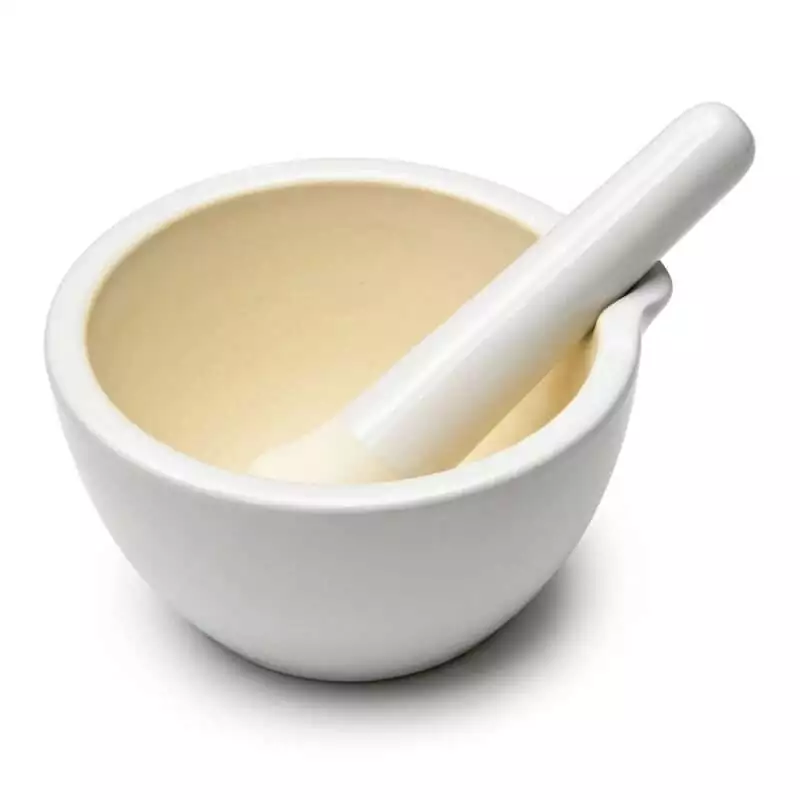
- Material: White ceramic, glazed exterior
- Bowl diameter: 5 inches across the lip, 2 1/4 inch depth
- Size: Approximately 5 inches by 3 inches tall
- Best for: Grinding herbs, resins, salts, and botanicals for kitchen or ritual use
White Ceramic Mortar and Pestle: The Kitchen Witch’s Neutral Workhorse
The mortar and pestle is among the oldest processing tools in the archaeological record, with examples found in Egyptian sites dating to roughly 3500 BCE, where they were used for grinding cosmetics, medicines, and grain. The same form, a deep bowl and a heavy rod for crushing, has survived essentially unchanged because it works. A ceramic mortar and pestle is the non-reactive, food-safe option in a category that also includes granite, marble, soapstone, and wood. Each material has its strengths: granite is heavy and produces excellent friction for tough spices; marble is elegant but can be porous; soapstone is gentle but chips with heavy use. White ceramic is the neutral workhorse, non-porous, easy to clean, and won’t absorb oils or aromatic compounds between uses.
At 5 inches across the lip and 2 1/4 inches deep, this is a genuinely working-sized bowl, not a decorative accent piece. A shallow, narrow mortar quickly becomes frustrating because ingredients scatter out during grinding. The 5-inch diameter gives enough lateral room to work dried herbs, whole resins, coarse salts, and spice blends without bouncing material over the rim. The glazed exterior keeps the outside smooth and easy to wipe down, while the unglazed interior provides the friction surface that makes grinding effective.
Ritual and Kitchen Uses of the Mortar and Pestle
In kitchen witch tradition, the mortar and pestle occupies a symbolic position as the tool of transformation: raw herbs become powders, whole resins become incense, dry ingredients become spell components. Crushing an herb by hand is understood to release not just the volatile oils that carry the scent but also the practitioner’s attention into the finished material, which is why many practitioners prefer hand-grinding over a blender or food processor for ritual work. This white ceramic set works equally well for culinary use (fresh herb pastes, grinding pepper, crushing whole spices) and for ritual grinding of dried sage, rosemary, lavender, frankincense tears, or coarse sea salt.
White is also a traditional color of purification and neutrality, which makes this mortar a versatile tool across different ritual systems. It doesn’t carry the connotation of any particular tradition’s color symbolism the way a black or red vessel might. Practitioners who work multiple traditions often prefer a white or natural ceramic piece for exactly this reason. Browse my mortar and pestle collection to see all available options.
How to Use the White Ceramic Mortar and Pestle
Three methods for working with the white ceramic mortar and pestle, from ritual herb grinding to kitchen use and cleaning.
- Grind Dried Herbs and Resins for Ritual Blends
Add dried herb or resin to the bowl, no more than one-third full. Use a circular grinding motion against the sides rather than straight pounding. Work in small batches for finer powder, and use the pestle tip for harder resin pieces.
- Prepare Fresh Herb Pastes for Culinary Use
Add fresh herb leaves and a pinch of salt to help break down the cell walls. Use a combination of grinding and pressing strokes to release the oils. The 5-inch bowl gives enough room to work garlic, basil, and other aromatics without spillage.
- Clean Between Ritual Uses to Prevent Scent Transfer
Rinse with warm water and scrub with a stiff brush. For stubborn aromatic residue, grind a small amount of dry rice and discard it, then rinse. The non-porous ceramic does not retain scents the way wood or unglazed stone does.
The Tarot Fellow Standard
I stock this ceramic set because 5 inches is the right working size for a mortar and pestle that gets used. Smaller versions are fine for a pinch of something but frustrating for any serious grinding session. White ceramic also stays genuinely food-safe across both culinary and ritual work, which matters if you plan to use the same mortar for herbal teas as well as incense blends. The glazed exterior cleans easily and the piece looks good on a shelf between sessions. See the full selection of herbs and botanicals to pair with it in my herbs and accessories collection.
Frequently Asked Questions
Yes. White ceramic is non-porous and food-safe, suitable for culinary use as well as ritual herbs, resins, and salts. Clean thoroughly between uses when switching between strongly scented ritual botanicals and culinary ingredients.
Rinse with warm water and scrub with a stiff brush. For persistent aromatic residue, grind dry white rice in the bowl and discard it, then rinse again. The ceramic surface does not absorb scents the way porous stone, wood, or unglazed clay does.
The 5-inch bowl handles dried herb leaves, whole dried flowers, coarse salt, peppercorns, and small resin chunks like frankincense or copal. Work in small batches for finer powder. It is not suited for very hard seeds or bulk quantities.
The 5 inches refers to the bowl diameter across the lip. The bowl depth is 2 1/4 inches and the piece stands approximately 3 inches total height. This is a practical working-sized mortar, not a decorative miniature.
Reviews
There are no reviews yet