

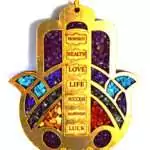
Quick Specs
- Size: 6 inches
- Type: Decorative Wall Hanging / Protection Amulet
- Material: Wood with embedded real crystal chips
- Best For: Home protection, entryway decor, altar display, gift-giving
A Symbol Older Than Any One Religion
The Hamsa, also called the Hand of Fatima in Islamic tradition and the Hand of Miriam in Jewish tradition, is one of the most widely recognized protective symbols in the world. Its name comes from the Arabic word for “five,” referencing the five fingers of the open hand. Archaeological evidence places Hamsa imagery as far back as ancient Carthage and Mesopotamia, long before it became associated with any single faith. What it has always carried is the same core idea: an outward-facing palm that intercepts the evil eye before harm reaches the household.
This version is made from wood and set with real crystal chips. The crystal chips here are a folk-practice layer on top of an already layered symbol. Many practitioners believe specific stones amplify the protective quality of the form, though that belief belongs to the realm of folk tradition rather than any verifiable science. What is verifiable is that the stones are actual minerals, not resin or plastic stand-ins. You can explore my full crystals and gemstones collection if you want to understand more about what individual stones are said to carry in various traditions.
I carry this piece because it sits at a genuine intersection of cultural history and everyday home practice. The Hamsa crosses religious lines easily because its core function is protective folk belief, not doctrinal identity. It fits well on an altar, near a doorway, or anywhere you want a grounding visual anchor. If you work with other protection-focused tools, you might also browse my evil eye products for complementary pieces that share the same protective lineage.
How to Hang and Use Your Hamsa
Three steps to place, activate, and care for your Hamsa Hand wall hanging.
- Choose Your Placement
Choose a spot near your front door or main entrance. The Hamsa is traditionally placed facing outward or downward to deflect negative energy before it crosses your threshold. A hook or nail works fine.
- Set Your Intention
Hold the piece in both hands and set a clear intention for what you want it to represent in your space. In folk tradition, naming the type of protection you want makes the symbol feel more personal and meaningful.
- Care for the Piece
Wipe the wood gently with a dry or barely damp cloth to keep the crystal chips clean and the finish intact. Avoid soaking it. Smoke or sound cleansing are both common ways to refresh the piece over time.
The Tarot Fellow Standard
I stock this piece because the supplier has maintained consistent sizing and finish quality across multiple reorders. The wood is solid, the crystal chips are genuine, and the hanging hardware holds without issue. That consistency matters more to me than novelty. The piece is 6 inches across, which is large enough to be a real visual presence on a wall without overwhelming a smaller entryway.
Wood can shift slightly with humidity, which is normal. If you notice a small warp over time, that is the nature of natural wood in a living space, not a defect. Keep it away from steam-heavy rooms like bathrooms and it will hold its shape well. The crystal chips are embedded, not glued on top, so they do not shed under normal conditions.
Frequently Asked Questions
The Hamsa is a palm-shaped amulet found in Jewish, Islamic, and other Middle Eastern and North African traditions. It is widely understood as a symbol of protection, used in folk belief to guard against envy and misfortune.
The piece includes mixed crystal chips set into the wooden form. Exact stone types vary by batch, but the chips are real natural stones, not plastic or resin fill. The natural variation is part of what makes each one slightly different.
This piece is intended for indoor use. The wooden base and crystal chips can be affected by prolonged moisture or direct sun. A covered porch or sheltered entry is fine, but keep it away from rain and extended sun exposure.
Tradition varies by culture. Facing downward is said in some folk belief to draw blessings in; facing upward is considered a ward against the evil eye. Both are common. Place it in the direction that feels right to you.

Reviews
There are no reviews yet