


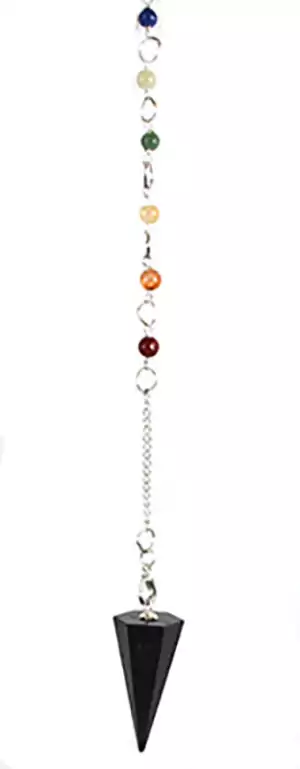
Quick Specs
- Stone: Sodalite (natural)
- Shape: 6-sided hexagonal pendulum bob
- Chain: Metal chain with chakra-colored beads
- Primary use: Dowsing, chakra scanning, intuitive divination
The Stone Behind the Pendulum
Sodalite is a sodium aluminum silicate mineral with chlorine (Na8Al6Si6O24Cl2), formed in alkaline igneous rocks. Its signature deep blue comes not from iron or copper traces but from its own chemical structure, which is part of why the color holds steady and doesn’t shift the way some dyed stones do. Major deposits come out of Brazil, Canada, Namibia, and Russia, and the stone has been worked and traded for centuries. I carry sodalite specifically because the coloration in the pieces I stock is genuine and consistent, not treated or artificially enhanced.
If you’ve seen sodalite and lapis lazuli sitting side by side, you know they can look similar at a glance. The difference is reliable once you know what to look for. Sodalite tends toward a uniform blue-grey with white calcite veining running through it. Lapis lazuli is a deeper, richer blue and carries gold pyrite flecks that catch the light. They’re separate minerals entirely. The confusion is common, and it matters because they have different reputations in practice. Sodalite belongs to the throat chakra in most Western metaphysical traditions, associated with mental clarity, calm communication, logic, and truth-speaking. It’s the stone you reach for when you need to think clearly before you speak, not just feel deeply.
The 6-sided hexagonal shape is the standard form for a working pendulum. The symmetry allows it to hang true and swing cleanly, which makes reading the motion easier and more consistent. Pairing sodalite with a pendulum is a natural fit: the stone’s association with clear perception and honest intuition supports exactly the kind of focused, receptive attention that good pendulum work requires. The chakra-colored beads on the chain add a secondary function, making this piece useful for sequential chakra scanning without needing additional tools.
How to Use a Crystal Pendulum
Use these three steps each time you sit down with a crystal pendulum for dowsing or chakra work.
- Set Your Intention
Hold the sodalite pendulum bob loosely between your thumb and forefinger, letting the chain hang free. Breathe slowly and speak your question or intention aloud. Sodalite supports clear, truthful communication, so phrase your intention plainly.
- Establish Your Baseline
Before asking any real question, find your pendulum's yes and no signals. Ask something you already know is true, such as your own name, and observe the swing. Repeat with a known false statement. This calibration step grounds the session.
- Scan and Interpret
Hold the pendulum over each chakra point in sequence, starting at the root and moving upward. Note the direction and strength of the swing. A wide clockwise circle signals open flow, a tight or still response suggests congestion.
The Tarot Fellow Standard
I stock this pendulum because the supplier has delivered consistent color quality across multiple orders. The sodalite bobs show genuine blue-grey patterning with natural white calcite veining, not the flat uniform coloring you get from dyed or synthetic material. The chain sits at a practical working length and the bead colors are accurate to the chakra sequence. That kind of consistency across reorders matters more to me than novelty.
One honest note: sodalite is not the most durable stone in the hardness range (it sits around 5.5 to 6 on the Mohs scale), so it will scratch if you store it loose with harder stones like quartz or amethyst. Keep it wrapped or in its own pouch between uses and it’ll stay looking sharp. If you’re new to pendulums, don’t overthink the motion at first. Relax your grip, stay patient, and let the stone do what it does.
If you want to round out your practice, browse my full crystal pendulum collection or explore my crystals and gemstones for stones that pair well with sodalite in chakra work.
Frequently Asked Questions
Sodalite is a sodium aluminum silicate mineral with chlorine, formula Na8Al6Si6O24Cl2. It forms in igneous rocks and gets its deep blue color from its unique chemical structure, not from trace metals.
Sodalite is more uniformly blue-grey with white calcite streaks and no metallic flecks. Lapis lazuli contains golden pyrite flecks and is typically darker and richer in color. They are separate minerals.
Sodalite is most associated with the throat chakra, the fifth energy center, which governs communication, truth-speaking, and self-expression. It also supports the third eye for intuition and mental clarity.
Rinse briefly under cool water or set it on a selenite plate overnight. Avoid prolonged sun exposure as UV can gradually fade the blue color. Moonlight or sound cleansing with a singing bowl works well.



Reviews
There are no reviews yet