
Quick Specs
- Material: Genuine leather
- Dimensions: 6″ x 8″
- Weight: 1.2 lb
- Closure: Latch
- Pages: Blank, aged-look organic paper
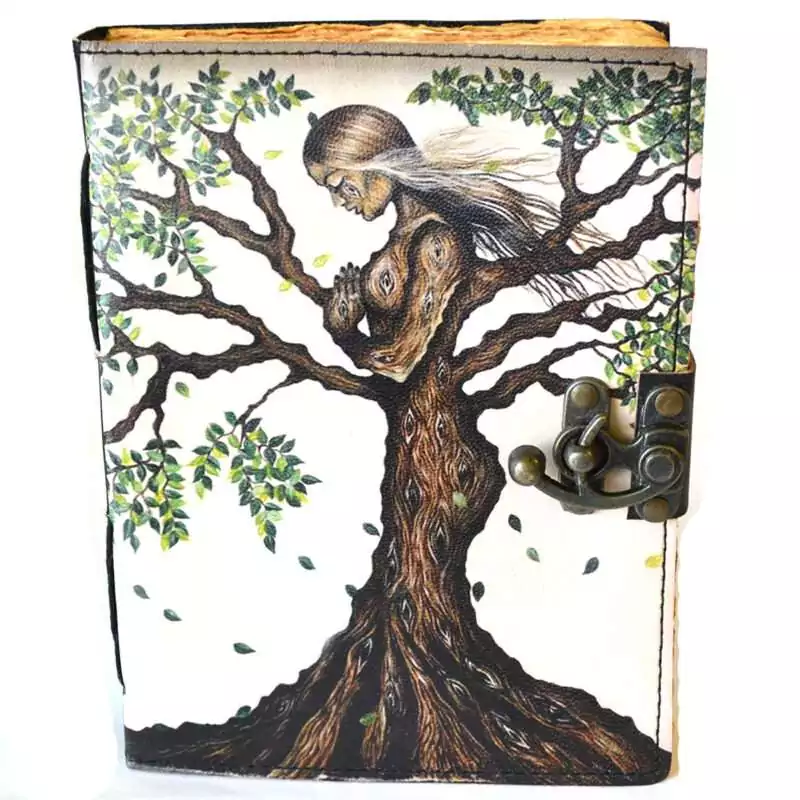
- Cover Design: Tree of Life Goddess
A Goddess Rooted in the Tree
Long before the Tree of Life became a Kabbalistic diagram or a piece of jewelry, trees were standing in for goddesses. Across the ancient Near East, trees, along with snakes and the earth itself, were bound up with fertility and life-giving power, and more than one mother goddess figure was depicted rising out of or merging with a tree. Asherah, an ancient Near Eastern goddess honored in home shrines and hilltop groves, is one of the clearest examples: her symbol was often simply a stylized tree.
The figure on this cover draws from that same well. A woman’s form growing out of, or into, a tree is shorthand for an idea that shows up again and again once you start looking for it: the earth as mother, growth as a feminine force, and the tree as the visible half of something rooted much deeper than the ground. The aged paper inside leans into that same feeling, giving the book a weight that a crisp white page doesn’t have.
Practical Ritual Applications
This is the journal I’d hand someone starting a Book of Shadows they intend to keep for years, since the larger 6 x 8 page gives you more room per entry than a 5 x 7 does. It also suits moon work, ancestral journaling, or anything centered on the feminine divine, though the blank pages don’t demand any of that specifically. The aged paper takes ink well and looks intentional rather than damaged, which matters if you’re writing something you plan to keep.
Settling Into a Larger Book
A bigger journal invites a different pace than a pocket-sized one. Here’s how to start.
A bigger journal invites a different pace than a pocket-sized one. Here’s how to start.
- Give it a dedication page
Use the first page to name the book and note when you started it. With more room per page, it helps to know from the start what this particular volume is holding, especially if you expect to fill more than one over time. A short dedication also makes it easier to identify the book later if you keep several journals side by side.
- Write in full entries, not fragments
The extra page size is an invitation to expand: describe a ritual, a dream, or a reading in more than a few lines instead of compressing everything into shorthand. Fuller entries make the book more useful to look back on later, since shorthand notes tend to lose their meaning once enough time has passed.
- Let the paper age on its own terms
The organic paper already has a weathered look, and it will keep developing character with handling and time. Resist the urge to keep it pristine and let it show that it’s been used, since that wear is part of what the paper is designed to do over years of writing.
Tarot Fellow Standard
Leather and aged paper can both look cheap if they’re not done well. I check the grain of the leather and the feel of the paper before anything with either goes into the shop, because a journal like this only works if it actually feels old rather than just looking old in a photo. This one held up to that check.
Frequently Asked Questions
Trees have long stood in for goddess figures across ancient cultures, particularly in the ancient Near East, where trees, earth, and fertility were closely linked. Asherah, an ancient Near Eastern goddess, was frequently represented by a stylized tree, and the broader association between trees and the feminine divine carried into later folk and pagan symbolism.
It’s a solid middle ground. It’s larger than a pocket journal, so you get more room to write per entry, but it’s still small enough to carry to a ritual space rather than staying deskbound the way an 8.5 x 11 book tends to.
The pages are made from a natural, organic paper that’s designed to have a weathered look from the start. It’s blank and unlined and takes ink the way any quality paper does. The aged appearance is a finish, not a sign of wear.
This journal uses colored leather rather than a plain natural tan, which is part of what gives the Tree of Life Goddess design its contrast against the cover.



Reviews
There are no reviews yet