
Quick Specs
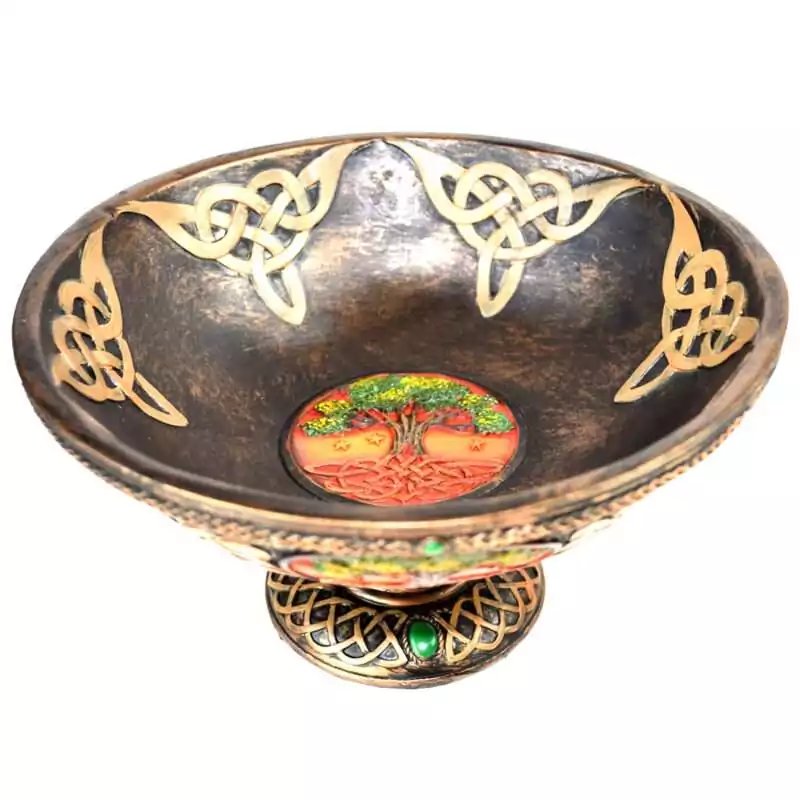
- Type: Ritual offering bowl with Tree of Life motif
- Size: 8.5″
- Size/Quantity: 8.5 inches in diameter
- Best for: Norse and Celtic altars, ritual offerings, pagan ceremonies, altar display
The Tree of Life: A Universal Sacred Symbol
The Tree of Life appears as a sacred symbol in Norse cosmology as Yggdrasil, the great ash tree that connects the nine worlds and shelters the cosmos. In Celtic tradition, the crann bethadh (tree of life) was central to druidic practice, with sacred groves and tree symbolism woven through Irish and British Iron Age religion. The symbol also appears in Kabbalistic tradition as the diagram of the ten sefirot, in Mesopotamian iconography, and across dozens of other world mythologies, making it one of the most cross-culturally recognized sacred images.
This 8.5-inch offering bowl carries the Tree of Life motif cast into the interior floor, where it becomes visible as offerings are arranged around it. The size is practical for a working altar: wide enough to hold meaningful arrangements of offerings without crowding, shallow enough that the central design remains visible. The bowl format is specifically suited to liquid offerings, salt, herbs, crystals, and flower arrangements.
Using an Offering Bowl in Ritual Practice
Offering bowls appear across pagan, heathen, Wiccan, and folk Catholic altar traditions as vessels for presenting gifts to deities, ancestors, spirits, or the elements. In Norse practice, offerings at a blot might include mead, water, food, or symbolic objects placed in a vessel before being poured out or left. In Wiccan ritual, offering bowls hold water for the west quarter, salt for the north, or combined elemental offerings at the center of the altar.
The 8.5-inch diameter gives this bowl a presence on the altar without dominating it. The Tree of Life motif makes it a natural centerpiece for seasonal rituals, ancestor work, and ceremonies honoring the interconnection of all life. I carry this bowl because it serves both the practical function of a ritual vessel and the symbolic function of a focal point that practitioners across traditions can relate to.
How to Use a Tree of Life Offering Bowl
Three steps for using and maintaining your Tree of Life offering bowl.
- Prepare the Bowl
Place the offering bowl on a level altar or table surface before filling it. The Tree of Life motif is cast into the interior floor of the bowl, so I position offerings around the edge to keep the design visible.
- Add Your Offerings
Fill the bowl with offerings appropriate to your working: water, herbs, salt, flower petals, coins, or small crystals. The 8.5-inch diameter provides ample room for layered offerings without crowding the central motif.
- Clean After Ritual
After ritual, empty and rinse the bowl with water, then dry it thoroughly before storage. I avoid abrasive scrubbers on the Tree of Life engraving, using a soft brush instead to clean the detailed grooves without damage.
The Tarot Fellow Standard
I carry this offering bowl because the Tree of Life is one of those symbols that works across traditions without feeling generic. The 8.5-inch size is genuinely practical rather than decorative-only, and the cast interior motif remains visible in use, which matters for ritual intent. Browse my ritual offering bowls and plates for related vessels, or explore my Viking and Celtic products for complementary altar pieces.
Frequently Asked Questions
This is an 8.5-inch diameter offering bowl cast with a Tree of Life motif on the interior floor. It is used in altar work for presenting ritual offerings including water, herbs, crystals, incense, and symbolic items.
The Tree of Life is a cross-cultural symbol appearing in Norse, Celtic, Kabbalistic, and numerous other spiritual traditions. It represents interconnection, ancestral lineage, and the axis between earthly and spiritual realms.
Yes. The bowl can hold water, salt, herbs, flower petals, small crystals, coins, and similar offerings. I avoid placing anything with strong dye or acid content that could stain or damage the bowl surface over repeated use.
This bowl is well-suited to Norse and Celtic altar setups given the Tree of Life motif, but the symbol is universal. Many Wiccan, eclectic pagan, and general spiritual practitioners use it as a general-purpose altar vessel.




Reviews
There are no reviews yet