

Quick Specs
- Type: Natural buffalo blowing horn
- Size: 9″
- Size/Quantity: Approximately 9 inches in length
- Best for: Norse ritual, Asatru ceremony, sound healing, Viking reenactment
The Blowing Horn in Norse Tradition
The horn as a ritual instrument is woven into Norse cosmology and practice. In the Prose Edda, Heimdall guards the Bifrost with the Gjallarhorn, the Resounding Horn, which he will blow at the onset of Ragnarok to summon the gods. The horn also appears in the mead-drinking rituals of the Germanic hall, where it circulated as a drinking vessel and symbol of communal bond. These associations make a blowing horn a resonant choice for modern Norse pagan ritual regardless of whether the practitioner uses it as a musical instrument or a symbolic altar object.
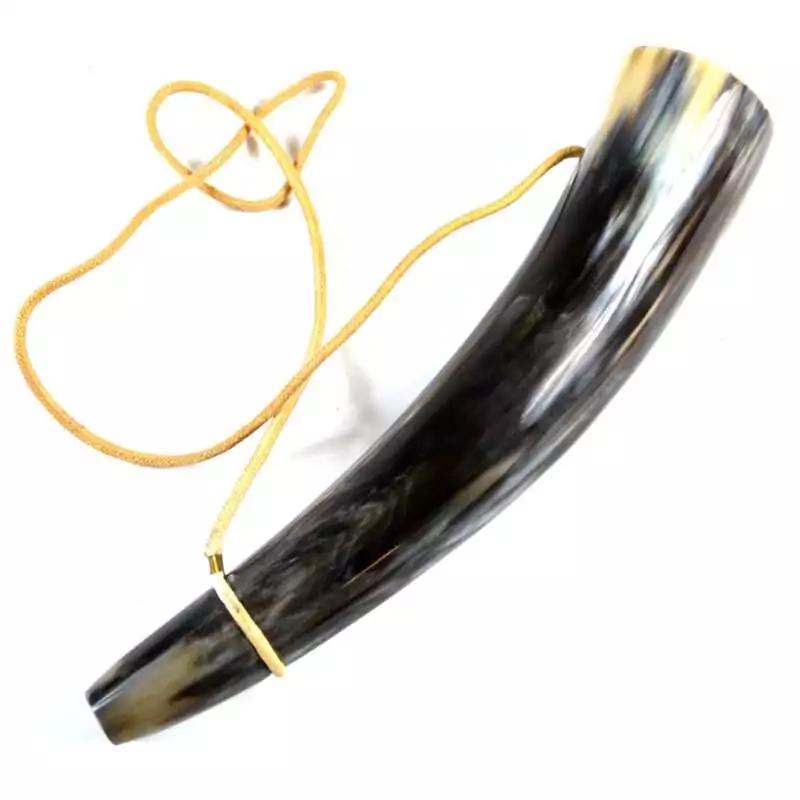
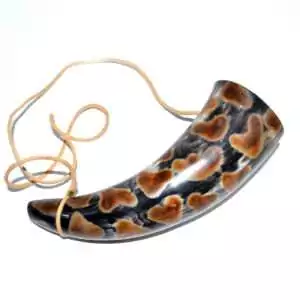
This approximately 9-inch horn is slightly larger than the 8-inch tiger-print variant and produces a deeper, fuller tone. The natural finish shows the genuine color variation of buffalo horn, which ranges from warm tan and cream to deeper brown-black at the base. No two horns are identical in color, pattern, or exact curve, reflecting the natural origin of the material.
Practical Considerations for Ritual Use
At roughly 9 inches, this horn is practical for indoor ceremonial use and outdoor gatherings of moderate size. Norse pagan groups, Asatru kindreds, and Viking reenactment societies use blowing horns to open and close ceremonies, signal transitions within a blot or sumbel, and create auditory sacred space. The sound carries a primal resonance that electric instruments or bells do not replicate.
Beyond active ceremony, the horn functions well as a display piece on a Viking or Norse altar. Alongside a drinking horn, rune set, Thor’s hammer pendant, or carved wooden figures, the blowing horn establishes a coherent altar aesthetic that connects to historical practice rather than purely decorative convention. The natural coloring integrates particularly well with wood, leather, and iron altar objects.
How to Use a Viking Buffalo Blowing Horn
Three steps for first use, technique, and proper storage of a buffalo blowing horn.
- Rinse Before First Use
Before the first use, rinse the horn interior with warm water and let it air dry completely for at least 24 hours. I never use soap inside natural horn, as residue degrades the interior surface and affects the horn’s sound.
- Learn the Embouchure
Press your lips against the narrow tip and blow with steady diaphragm breath, not puffed cheeks. At approximately 9 inches, this horn produces a deeper tone than smaller versions. Adjust lip tension to shift pitch.
- Store Away from Heat
Store the horn flat on a soft surface or hang it vertically by a cord when display is needed. Keep it away from radiators, direct sunlight, and damp conditions, all of which cause natural horn to dry, warp, or crack.
The Tarot Fellow Standard
The 9-inch blowing horn earns its place in my inventory for the same reason Norse pagans keep returning to it: the depth of tone at this size is meaningfully different from smaller horns, and natural horn simply cannot be replicated in plastic or resin. Browse my sound and vibrational healing collection for other ritual instruments, or explore my Viking and Celtic products for a full range of Norse altar pieces.
Frequently Asked Questions
This is an approximately 9-inch natural buffalo horn shaped and finished as a traditional blowing horn. The natural coloring of the horn produces subtle variation from piece to piece. No two horns look exactly identical.
The larger 9-inch size produces a deeper, fuller tone than smaller 6 to 8 inch buffalo horns. Practitioners who need a resonant, projecting sound for ritual space-clearing or ceremonial opening calls often prefer this size.
Yes. Viking and Celtic re-enactors, Norse pagans, and practitioners of Germanic heathen traditions use drinking and blowing horns as functional ritual items. This blowing horn is suitable for both ceremonial and display use.
Warm water rinse after each use is sufficient maintenance. I dry the interior completely before storing and condition the exterior with a light natural oil twice a year to preserve flexibility and prevent the horn from cracking.

Reviews
There are no reviews yet