

Quick Specs
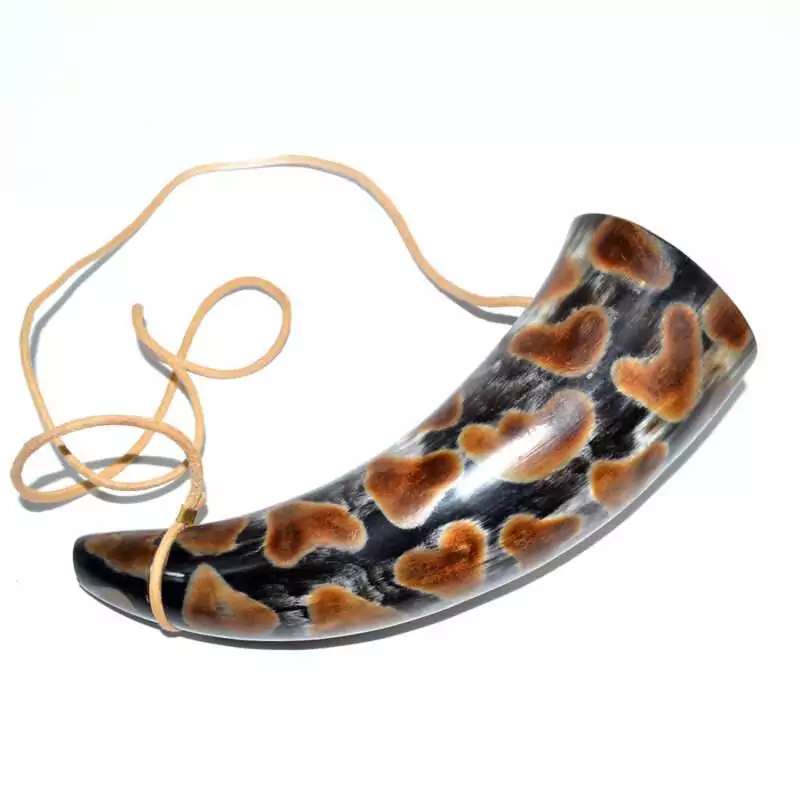
- Type: Natural buffalo blowing horn with tiger-stripe print
- Size: 8″
- Size/Quantity: Approximately 8 inches in length
- Best for: Norse ritual, Viking reenactment, ceremonial calls, sound work
The Viking Blowing Horn: A Ritual Instrument
Animal horn instruments have been used in Northern European ritual, warfare, and ceremony for well over two thousand years. The Norse lur, made from bronze, and the simpler animal horn were used to signal armies, call communities together, and mark the transitions of sacred gatherings. In Scandinavian Iron Age and Viking Age sites, horn instruments appear in burial contexts and in the Eddic literature as objects associated with the divine halls and the summoning of warriors.
This approximately 8-inch buffalo horn carries the functional form of the traditional blowing horn in a compact, manageable size. The tiger-stripe print applied to the exterior gives it visual distinction from plain natural horn, making it recognizable as a display and ceremonial object rather than a utilitarian field instrument. Natural buffalo horn has been used as a horn-blowing instrument across cultures from East Africa to South Asia and across Europe.
Practical Use in Modern Norse Pagan Practice
Contemporary Norse pagans, Asatru practitioners, and Viking reenactors use blowing horns as functional ritual instruments at blots, sumbels, and outdoor ceremonies. The sound of a horn carries well outdoors and over distances, making it practical for ritual space-opening, calling participants to gathering, and marking significant ritual transitions. A horn of this size is appropriate for indoor ceremony and smaller outdoor gatherings.
The tiger-print finish makes this horn particularly suited to altar display and ceremonial use rather than exclusively outdoor reenactment. Mounted on a stand or displayed alongside a rune set, ritual candles, or a drinking horn, it creates a coherent Norse-themed altar setup without requiring large space. I carry this horn because the compact size and decorative finish fill a gap between purely decorative pieces and full-size ceremony horns.
How to Use a Viking Buffalo Blowing Horn
Three steps for preparing, playing, and maintaining your buffalo blowing horn.
- Prepare the Horn
Inspect the horn tip and mouthpiece before first use. Rinse the interior with warm water and let it air dry fully for at least a day. I avoid soap inside natural horn, as residue can affect both sound and longevity.
- Produce Sound
Place your lips against the narrow mouthpiece opening and blow with controlled breath from the diaphragm, not the cheeks. Vary lip tension to shift tone. The tiger-stripe pattern wraps the exterior for a secure grip.
- Store Properly
Store the horn horizontally on a padded surface or hang it by a cord through the tip when not in use. Avoid prolonged exposure to extreme heat or direct sun, which can dry and crack natural buffalo horn over time.
The Tarot Fellow Standard
I carry this blowing horn because it occupies a useful middle ground: small enough for indoor ritual or desktop altar display, decorative enough to be a genuine altar object, and functional as a sound instrument when needed. See my sound and vibrational healing collection for related instruments, or browse my Viking and Celtic products for complementary altar pieces.
Frequently Asked Questions
This is an approximately 8-inch natural buffalo horn decorated with a tiger-stripe print finish. It functions as a blowing horn, producing a deep resonant tone suitable for ceremonial calls, Viking reenactment, and ritual use.
The tonal range depends on lip placement and breath pressure. Most buffalo blowing horns of this size produce a low bass note with variation possible through embouchure adjustment. Practice develops control and tone consistency.
Yes. The blowing horn has been used ceremonially across Norse, Celtic, and Germanic traditions to call gatherings, mark ritual transitions, and honor deities associated with battle and the wild. It remains a valid ritual tool.
Rinse the interior with warm water after use and allow thorough air drying. I apply a thin coat of food-grade oil to the exterior once or twice per year to prevent cracking and keep the natural horn material supple.



Reviews
There are no reviews yet