
Quick Specs
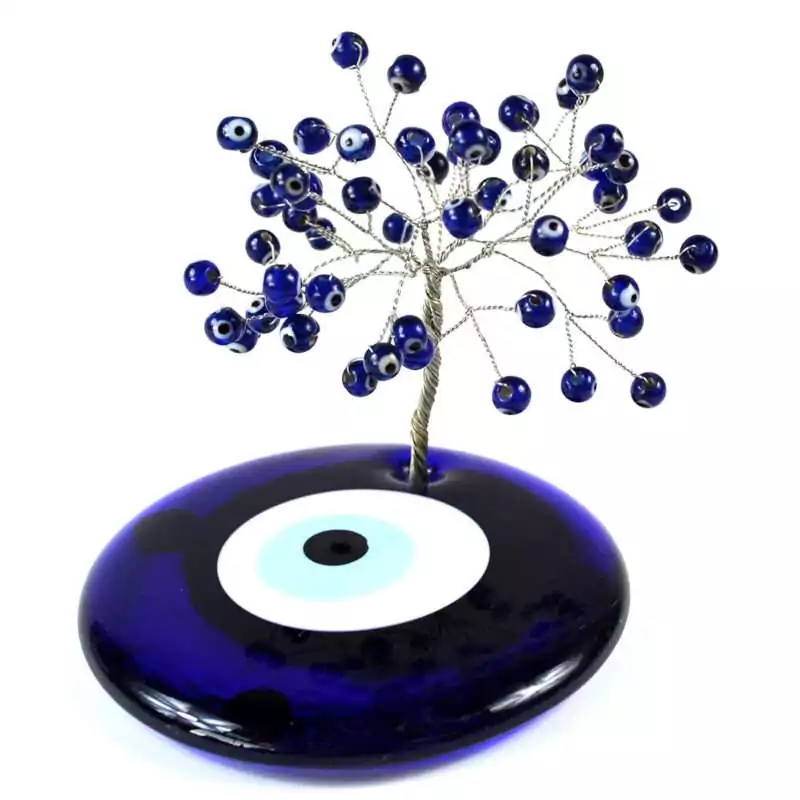
- Type: Evil eye gemstone wire tree sculpture
- Size: 6″ x 4″
- Size/Quantity: One piece, approximately 1 lb
- Best for: Protection displays, evil eye ward, altar decor, home display
The Evil Eye: Ancient Symbol of Protection
The evil eye concept, known as nazar in Turkish and Arabic traditions and mal de ojo in Latin cultures, describes the belief that a malicious gaze can transmit harmful energy to its target. The protective counter-symbol, the blue eye-shaped talisman, has been used across the Mediterranean, Middle East, and South Asia for at least three thousand years. It appears in ancient Egyptian, Greek, and Roman contexts, and remains one of the most widely produced protective symbols in the world today.
In Turkish tradition, the nazar boncugu (blue glass evil eye bead) is hung in homes, worn on jewelry, and given as gifts at births and housewarmings. The protective logic is consistent across cultures: the eye symbol watches back at malicious gazes and deflects them before they reach the protected person or space. This gem tree format places that protective symbolism in a sculptural form designed for altar or shelf display.
Gem Trees as Ritual Objects
The crystal wire bonsai tree is a contemporary ritual object drawing on the symbolic overlap between the world tree concept, the living tree as a symbol of growth and connection, and the crystal’s traditional use as an energy-bearing stone. Each branch of the wire armature holds small gem chips wound or attached to the wire, creating a miniature sculpture that functions simultaneously as a decorative object, a crystal arrangement, and a protective symbol when the evil eye elements are included.
This evil eye gem tree combines the gem tree format with the blue evil eye accents that activate its protective function. Placed at a room entry, on an altar, or on a desk, the tree displays the evil eye symbols prominently while the gem chips add the crystal element that many practitioners use alongside evil eye protection. The combination makes it more versatile than a single evil eye bead or a plain crystal tree.
How to Use an Evil Eye Gem Tree
Three steps for placing, displaying, and maintaining your evil eye gem tree.
- Choose a Placement
Find a stable surface where the gem tree will sit without tipping. I place mine on a flat altar tile or shelf ledge with the wire trunk centered. The decorative base keeps it upright without additional support.
- Position for Light
Position the tree where light can pass through or reflect off the small gem chips wired onto the branches. Near a window or lamp enhances the visual display and allows the blue evil eye elements to catch the light fully.
- Reshape If Needed
If wire branches become bent during shipping or handling, gently reshape them by hand. I fan the branches outward slightly from the trunk to create an open canopy that shows each individual gem chip to best advantage.
The Tarot Fellow Standard
I carry this evil eye gem tree because it combines two of the most consistently requested product types: evil eye protection pieces and crystal display trees. The result is more versatile than either category alone. Explore my evil eye products collection for warding pieces in other formats, or browse my stone crafts and gemstone trees for related display pieces.
Frequently Asked Questions
An evil eye gem tree combines a decorative crystal bonsai format with evil eye symbolism. The branches hold small wire-wrapped gem chips alongside blue evil eye elements, used in traditions of protection and warding.
The gem chips used in these trees vary by batch, often including blue-toned stones or glass beads alongside the evil eye components. Each tree is assembled by hand, so exact gem placement and tree shape vary between pieces.
Place it on an altar, windowsill, desk, or shelf. Many practitioners position evil eye items at room entries or near windows to intercept negative intentions before they enter the living or working space.
The evil eye, known as nazar in Turkish tradition and mal de ojo in Latin cultures, is a protective symbol found across the Mediterranean, Middle East, and South Asia. It is used to deflect envy and malicious energy.

Reviews
There are no reviews yet