


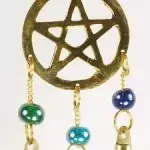
Quick Specs
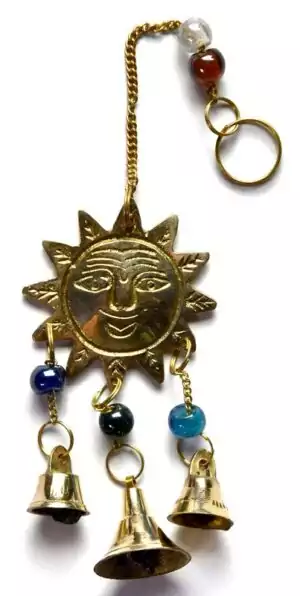
- Material: Brass pentagram charm with hanging bells
- Bells: Three bells on chains
- Symbol: Pentagram (five-pointed star within circle)
- Best for: Wiccan altar, sacred space, doorway, window, pagan home decor
Pentagram Wind Chime: Symbol, Sound, and Sacred Space
The pentagram, a five-pointed star drawn in a single continuous line, is one of the oldest geometric symbols in recorded history, appearing in ancient Sumerian texts, Pythagorean mathematics, and medieval European alchemy before becoming one of the most recognized emblems of modern Wicca and broader neopagan practice. Within Wiccan and Witchcraft traditions, the five points represent the classical elements: earth, air, fire, water, and spirit, the circle enclosing them symbolizing the unity of those forces and the boundaries of the sacred space. A pentagram at a doorway serves as a statement of practice and a symbolic ward.
Wind chimes carry a long lineage in protective and spiritual use. In ancient China, iron wind bells called fengling were hung at shrines and pagodas to attract beneficial spirits and deter negative ones through sound. In Western esoteric practice, bells are used to mark the beginning and end of ritual, to cleanse a space through sound vibration, and to signal transitions between mundane and sacred time. Combining the pentagram with three bells creates a piece that functions on both a visual and auditory level: the pentagram declares protection, and each bell ring marks a threshold. Browse my wind chime and sun catcher collection for additional options.
How Practitioners Use Pentagram Wind Chimes
Many Wiccan and pagan practitioners hang this type of chime at the entrance to their home or dedicated ritual space specifically because it combines passive symbol work with active sound notification. When air moves through a ritual room or someone passes through a doorway, the bells ring without any deliberate action, serving as an ongoing micro-ritual. The number three is itself significant in many magical traditions, representing the triple nature of the goddess, the three phases of the moon, or the triadic structure found in folk magic formulas and spell work.
The brass construction gives the chime a warm, soft tone rather than the sharp, metallic ring of steel or chrome alternatives. Brass has historically been used in ritual bells across multiple traditions, from Hindu temple bells to ceremonial handbells in Western occultism, in part because brass’s golden color associates it with solar energy and in part because its tone is considered warm and inviting rather than sharp and jarring. For a sacred space that already has strong protective wards, the brass pentagram chime adds a layer that is musical rather than static.
How to Use a Pentagram Wind Chime
Three ways to use your brass pentagram wind chime for protection, ritual, and sacred space.
- Hang at Your Main Entry or Ritual Doorway
Secure the chime above or beside your front door, the entrance to your ritual room, or your altar space. The pentagram at the entry serves as a visible declaration of magical intent and protection, while the bells ring as air or people pass.
- Use the Bell Tones to Open and Close Ritual
At the start of ritual, gently swing or tap the bells three times to signal the opening of sacred space and call in your intention. At the close, ring them three times again to seal the work and release the circle. No other tools are needed.
- Incorporate Into a Wiccan or Pagan Altar Display
Hang the chime from a hook above your altar table. The pentagram reads as a visual anchor for the space and the brass tones add ambient sound when air moves. Pair with a green or white candle and a small bowl of salt for an elemental display.
The Tarot Fellow Standard
I stock this chime because the pentagram is the foundational symbol of Wiccan and broadly pagan practice, and having it in a functional, sound-producing form that can hang at a doorway or altar is more useful than a flat pendant or wall plaque. The brass construction gives a warmer tone than cheaper steel versions, and the three-bell format keeps it compact enough for indoor use without dominating a small space. If you are building out your ritual supplies beyond the chime, browse my full altar supplies collection for complementary pieces.
Frequently Asked Questions
In Wicca and neopagan traditions, the five points of the pentagram represent the classical elements: earth, air, fire, water, and spirit. The enclosing circle symbolizes the unity of those forces and the sacred boundary around ritual space.
Three is significant in many magical traditions, representing the triple goddess (maiden, mother, crone), the three phases of the moon, and the triadic structure in folk magic. Three bells also produce a layered ring more complex than one bell.
Yes. The compact three-bell design works well indoors at a doorway, window, or above an altar. The brass tone is gentle enough for a small space. Outdoors it works in sheltered spots; avoid constant rain as brass patinas over time with moisture.
A pentagram is the five-pointed star drawn in a single line. A pentacle refers to the same star within a circle, or to a flat disc bearing this symbol. The terms are often used interchangeably, though some traditions distinguish them precisely.

Reviews
There are no reviews yet