
Quick Specs
- Material: Amethyst (purple quartz)
- Quantity: 1 lb lot of tumbled stones
- Stone Size: 20-40mm (about 0.8 to 1.6 inches)
- Finish: Tumbled and polished
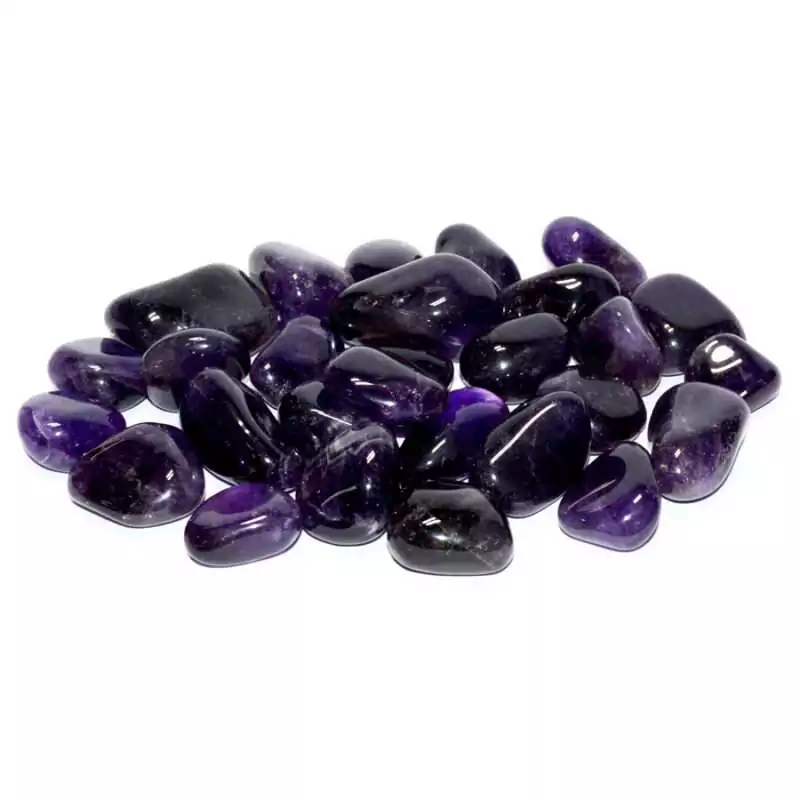
- Color: Violet to near-black purple, with lighter patches
- Grade: Sold as AAA quality
- Mohs Hardness: 7
Amethyst: Purple Quartz in Deep, Zoned Shades
Amethyst is the purple variety of quartz, and its range runs from pale lilac to deep royal purple, with some stones leaning blue and others reddish. The color begins with traces of iron taken up as the crystal grows, and natural radiation from the surrounding rock later turns that iron purple. Iron arrives in uneven amounts during growth, so one crystal can hold darker and lighter zones, and tumbling cuts through them at random angles. A pound of these stones shows the result: some are an even violet, some carry paler patches or milky streaks, and the darkest look almost black. Amethyst crystals typically grow in the cavities and fractures of igneous rock, and the largest deposits in Brazil and Uruguay fill the hollows of basalt flows with crystals. Bolivia and Zambia are also major sources today. Each stone here was shaped by tumbling, which grinds away the crystal faces and breaks and then polishes what remains. In the rough, amethyst grows as pointed, pyramid-tipped crystals lining a cavity, and tumbling removes those points. What remains is smooth, rounded and glassy.
At 20 to 40mm, each stone is large enough to fill the center of your palm and to stand out in a bowl of smaller pebbles. At this size the zoning is easy to read, and you can see where a band of deep violet meets a paler zone. Amethyst has no cleavage and breaks along curved, glassy surfaces, which is why tumbled pieces keep their smooth shape and shine. The name comes from the Greek amethystos, meaning not intoxicated, because the ancient Greeks believed the stone guarded its wearer against drunkenness. Amethyst is also the birthstone for February. In modern crystal practice the associations have moved elsewhere: amethyst is linked with the crown and third eye chakras, with calm focus, and with intuition. Those are crystal-lore meanings. Having many stones in hand also lets you compare shades side by side and notice how the zoning changes from one piece to the next.
Practical Ritual Applications
Spread the stones across a cloth and choose by shade. Use the deepest violet for a central grid stone and ring it with paler pieces for contrast. Keep a bowl of them on your altar or reading table, so you can pick one up before a Tarot reading or a meditation session. Hold a stone while you shuffle your deck, then set it beside the cards you draw. A few on a small plate with a candle make a quiet corner for journaling. Place one beside your journal, or carry one in a pocket on days you want a steady reminder. Tuck another into the pouch or box where you keep your Tarot deck, so it travels with your readings. For other stones that sit well alongside amethyst, browse my intuition and spiritual development stones.
How to Work With Amethyst Tumbled Stones
Three steps for turning a full pound into a working set.
- Sort by Shade in Good Light
Pour the stones onto a white or light cloth beside a window or under a bright lamp. Turn each one and look for zoning, the darker and lighter bands amethyst commonly shows, and pick out the deepest violet. Set aside five or six stones for a grid or altar, and leave the rest in a bowl. Good light also shows which stones carry paler patches, so you can choose the shades you want from the pile.
- Lay a Simple Grid
Choose one of the larger stones, near 40mm, for the center, and place four stones from the 20 to 30mm range at the corners of a square around it. Put a written intention, a Tarot card or a candle in the middle, depending on your practice. Build the grid on a flat surface where nothing will knock it, and leave it in place as long as it suits your purpose. Reset the stones whenever you want a fresh layout.
- Carry One and Rotate the Rest
Slip one stone into a pocket or pouch and keep the others in a dish or a cloth-lined drawer. Swap the carried stone each time you reset your grid, so every stone in the pound gets handled. If you pack the lot for travel, wrap the stones in a soft cloth or use a padded pouch, so they don't knock together on the way.
The Tarot Fellow Standard
I stock this lot for people who want amethyst by the pound at a size they can feel in the hand. At 20 to 40mm the stones are large enough to anchor a grid point or sit alone on an altar, and a full pound gives you enough to split between a grid, a dish by your reading table and a few gifts. Deep violet is what I look for in bulk amethyst, since color is the first thing you notice about the stone. If you prefer smaller pieces or another stone sold by the pound, browse my bulk tumbled stones collection.
Frequently Asked Questions
AAA is a trade label, not a published standard. Dealers aren't bound to a strict definition of the label, so its meaning varies from seller to seller. Where it's used, triple-A usually signals richer color, cleaner material and a better polish than the lower grades. Color zoning is common in amethyst, so a pound of stones will still show lighter patches and darker bands at any grade. Look at the depth of the violet and the smoothness of the polish.
Purple glass is the most common amethyst imitation. Natural amethyst often shows color zoning, bands or patches of lighter and darker violet, which is seldom seen in synthetic amethyst. Synthetic amethyst shares the chemistry and hardness of the natural stone, so only advanced gemological testing separates the two with certainty. Uneven color across a pound of tumbled stones is what natural amethyst usually looks like.
Water is fine for cleaning: use warm water, a drop of mild detergent and a soft brush, and skip ultrasonic cleaners, since inclusions can make some stones shatter in them. Light and heat are the bigger concerns. The color of some amethyst fades after prolonged exposure to direct sunlight or bright display lights, and strong heat can change it, so a sunny windowsill is a poor permanent home. Between uses, store the stones in a drawer or a lidded box.
Both are quartz, and the difference is color: amethyst is purple and citrine is yellow to golden. They are also related, because much of the yellow quartz sold as citrine is amethyst that was heated, either naturally or by people. Heated hard enough, amethyst can turn green instead, and the green stone is properly called prasiolite. Heat is also used to lighten very dark amethyst or remove a brown tint.

Reviews
There are no reviews yet