

Quick Specs
- Type: Ashtray
- Size: 6 inches
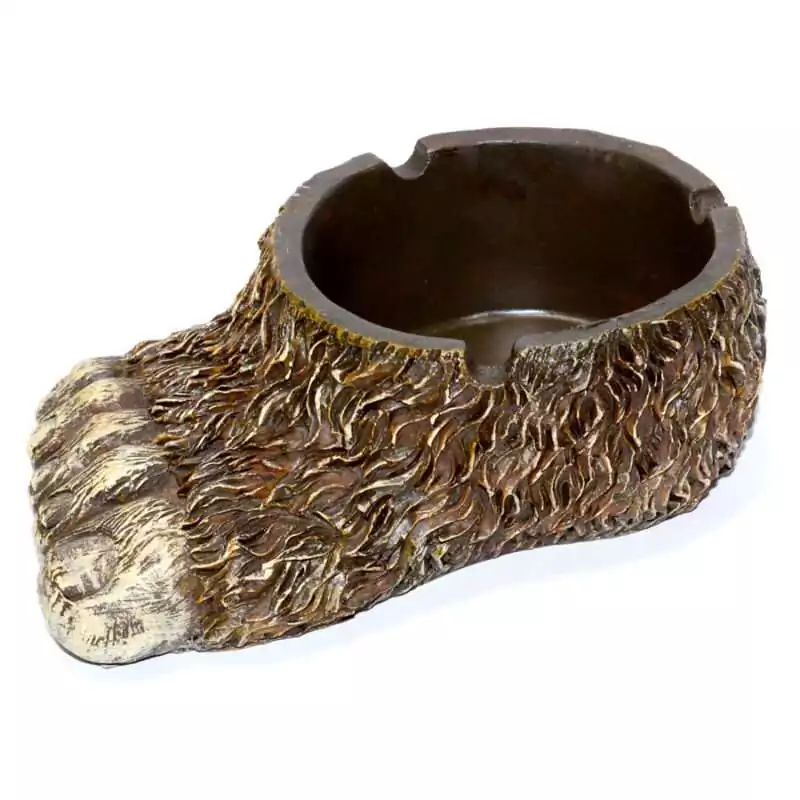
- Shape: Foot with a round bowl at the ankle
- Finish: Sculpted fur in brown with cream toes
- Rim: Notched
A Shaggy Brown Foot With a Bowl at the Ankle
The whole ashtray is a foot. Its toes, pale cream with rounded tips and creases between them, point off to one side, and from there the foot rises in a long, curved instep covered in sculpted fur. Each wavy strand is carved in relief in dark brown with lighter cream edges, so the coat looks thick and slightly windswept. Toward the ankle the fur gives way to a smooth, dark brown bowl set into the top of the foot, and a brown rim surrounds the opening with a touch of olive gold along its upper edge. Notches cut into the rim hold a cigarette or cigar. The shape sits low and wide, with the bowl facing upward and the toes leading, so the ashtray looks as if a creature stepped out of the woods and left a foot on your table. The fur runs from heel to toe in the same direction, which gives the whole foot a sense of movement. The cream toes are the lightest part of the sculpture, which draws the eye along the length of the foot, and at 6 inches the piece is big enough to read clearly from across a room.
The name Bigfoot began with a set of footprints. In August 1958, Jerry Crew, a bulldozer operator for a logging company in northern California, found large tracks pressed into the mud near his machine. His coworkers started calling whatever had made them “Big Foot,” and Andrew Genzoli, a columnist at the Humboldt Times, shortened it to “Bigfoot” in a front-page story that the wire services carried across the country. The name became shorthand for a creature of legend said to roam the forests, and the footprint remained its best-known calling card. A foot is a fitting shape for an ashtray with that history, since the track is the part of the story that started it all. This one is shaggy and wide, with the strands of fur carved so deeply that light and shadow ripple across the surface. The legend has outlived the newspaper columns that named it, and this foot gives it a place on a shelf. Set it beside a field guide, a pair of binoculars, or a row of cryptid books, and it belongs there.
Practical Ritual Applications
Use it as a working ashtray for cigarettes and cigars, or as a conversation piece. A shelf with cryptid books, a compass, and a woodland photograph gives the foot a setting, and a desk or side table shows off the shaggy fur. A cluster of curiosities, such as a fossil, a small skull, or a jar of pinecones, makes a natural history cabinet around it. For a gift, think of a hiker, a camper, a fan of monster documentaries, or anyone who collects cryptid memorabilia. The brown and cream palette sits well beside wood shelving, leather bindings, and green plants, and the fur texture shows best in side light from a window or a lamp. For more unusual pieces, browse my novelty and gift ideas.
How to Use and Care for Your Big Foot Ashtray
Check that it sits level, empty it cold, and dust the fur with a soft brush.
- Check That It Sits Level
Set the foot on a flat, level table and press gently on the toes and the heel to see that it stays steady before you put anything in it. Fire services recommend deep, heavy ashtrays that stay put, and a level surface helps. Choose a spot a few inches from the table's edge and away from curtains, paper, and other flammable things.
- Empty It Only When Cold
Let the contents go fully cold. Fire services advise making sure smoking materials are out and cold, and wetting them before they go in a bin; a wastepaper basket is never the place for them. Empty the bowl carefully into the bin, then dust any ash from the rim and the notches.
- Dust the Fur
Dust the sculpted fur with a very soft brush, such as a clean makeup brush, working along the strands and between the toes with no pressure. Take extra care around the toes, which stick out from the body. Detergents and wipes are best avoided on a decorative sculpture, since cleaning guides for decorative figures advise against them.
The Tarot Fellow Standard
I stock this ashtray for its sculpting: a six inch foot with carved strands of brown fur, pale toes, and a dark bowl, made to catch ash and catch the eye at once. It brings a bit of cryptid folklore to a desk or shelf, and it suits a gift for anyone who laughs at monster stories or camps under the trees. I carry it with the other ashtrays in my shop, each with a character of its own. Browse my ashtray collection to see the rest.
Frequently Asked Questions
Sasquatch is thought to be an anglicization of a word from Halkomelem, a Salishan language of southwestern British Columbia. The linguist Wayne Suttles proposed the form sesqec as the source. Sasquatch is the older of the two names, in print by 1929, while Bigfoot dates to the 1950s.
After Ray Wallace died in 2002, his family said he had made the 1958 tracks with carved wooden feet, and they showed 16-inch wooden feet as evidence. Researchers dispute the claim. Jeff Meldrum, who studies foot morphology, has argued that the wooden feet differ from the plaster casts of the prints Crew found. Both accounts remain part of the story.
The tracks Jerry Crew found in 1958 were about 16 inches long, or roughly 41 centimeters, in several accounts of the discovery. Later reports have claimed prints as long as about 24 inches. The size is why his coworkers began calling the maker Big Foot.


Reviews
There are no reviews yet