

Quick Specs
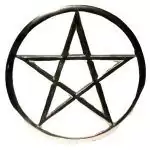
- Type: Metal altar tile, pentagram design
- Size: 5.75″
- Size/Quantity: 5.75 inches across, single tile
- Best for: Wiccan altars, elemental work, trivet for hot ritual tools, focal point
Cut-Out Pentagram Altar Tile: Symbol and Function Combined
This silver-tone metal pentagram tile serves the dual role that the pentagram has always played in Wiccan and Western occult practice: it functions as a powerful symbolic anchor for elemental work and simultaneously as a practical ritual surface. The cut-through star design means the five-pointed star is fully open rather than simply engraved, which gives the tile a presence and visual depth that a flat stamped version cannot replicate. At 5.75 inches across, it reads clearly from across a working altar.
In Wiccan practice, the pentagram represents the five classical elements united under the circle: earth at lower left, water at lower right, fire at upper right, air at upper left, and spirit at the top point. Placing this tile at the center of the altar positions all five elemental forces at the focal point of the ritual space. Many practitioners use the tile as the surface on which they charge crystals, candles, and ritual objects by setting them directly on the star.
Trivet Function and Practical Altar Use
The heavier metal construction makes this tile genuinely heat-resistant, which is a practical advantage that many decorative pentagram tiles made from resin, wood, or ceramic cannot match. Placing a hot cast-iron cauldron or a charcoal incense burner directly on an altar cloth or wooden surface risks burning or staining the surface. The metal tile acts as a buffer, protecting the altar surface while keeping the pentagram symbolism active at the working center.
The 6.5 inch overall footprint with the outer ring gives it a presence that registers as intentional rather than token on a full altar setup. It pairs well with other silver-tone tools such as a chalice, athame, or bell for practitioners who work a matched metal aesthetic. Beginners setting up their first altar find it a useful foundation piece that defines the ritual space clearly and holds its significance across traditions from Wicca to ceremonial magic.
How to Use the Pentagram Altar Tile
Three practical applications for the cut-out pentagram altar tile.
- Set as Central Altar Surface
Set the tile flat on your altar as the central working surface, placing ritual tools such as a chalice, cauldron, or candle on top of it. The cut-through design lets the pentagram remain visible even with items placed above.
- Use as a Heat-Resistant Trivet
Use the tile as a heat-resistant trivet for a hot cauldron or charcoal incense burner during ritual. Position it on your altar cloth or wooden surface to protect the material from heat while keeping the pentagram active.
- Elemental Opening Ritual
Hold the tile during opening ritual to trace the five-pointed star with your dominant hand or athame, calling each elemental point in sequence. Earth, water, fire, air, and spirit are the traditional directional attributions.
The Tarot Fellow Standard
I stock this tile because it earns its place through function, not just appearance. The metal construction delivers real heat protection that most decorative pentagram tiles skip, and the cut-through star design makes it visually substantial at a size that reads well on a full altar setup. Browse Wiccan altar tools and pentagram items in my altar tables and tiles, and explore the broader range of elemental and Wiccan supplies in my altar supplies collection.
Frequently Asked Questions
The pentagram is a five-pointed star encased in a circle used as a primary symbol in Wicca and many Western occult traditions. It represents the five elements, earth, water, fire, air, and spirit, unified under the circle.
The tile measures 5.75 inches across, which fits comfortably as a central altar piece on a standard 18 to 24 inch altar. Its 6.5 inch overall footprint including the outer ring gives it a substantial visual presence.
Yes. The metal construction and cut-through design make it heat-resistant, so it works safely as a trivet under hot cauldrons, lit incense burners, and charcoal dishes. Keep the altar cloth away from heat sources.
A light wipe with a dry cloth removes most dust and incense residue. Avoid submerging in water or using abrasive cleaners that might strip the silver-tone finish. Occasional polishing with a soft cloth keeps it bright.


Reviews
There are no reviews yet