

Quick Specs
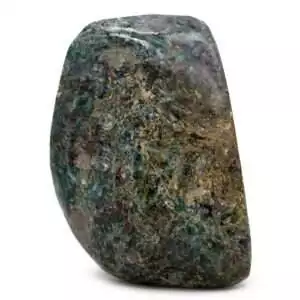
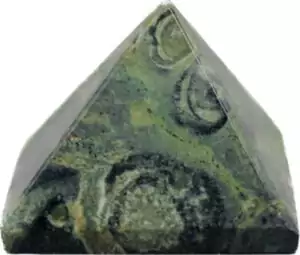
- Stone: Bloodstone (Heliotrope), green chalcedony with red iron oxide inclusions
- Form: Double terminated point, 16 facets
- Size: Approximately 2 inches (individual pieces vary)
- Best for: Crystal healing, grounding, energy work, March birthstone collections
Bloodstone Crystal Point: History of Heliotrope
Bloodstone, known in mineralogy as heliotrope, is a variety of chalcedony, specifically cryptocrystalline quartz, presenting as opaque dark green jasper with spots and streaks of red iron oxide inclusions, primarily hematite. The name heliotrope derives from the ancient Greek: helios (sun) and trepein (to turn), a reference to the ancient belief that the stone would turn the sun red if placed in water. Babylonian practitioners fashioned bloodstone into amulets and talismans as early as the pre-539 BC period. Ancient Egyptians associated it with strength and stealth in battle, believing it could render a warrior invisible to enemies.
The stone’s most significant cultural moment came during the medieval period in Christian Europe, where red inclusions in bloodstone were interpreted as the blood of Christ, said to have fallen upon green jasper at the crucifixion. This narrative elevated bloodstone to sacred status in medieval lapidary traditions, where it was carved into devotional intaglios, signet rings, and cameos depicting religious scenes. The 13th-century scholar Albertus Magnus called heliotrope the “stone of Babylon,” crediting it with magical properties including the ability to cause solar eclipses. Bloodstone remains one of the two traditional birthstones for March, predating aquamarine as the month’s associated gem.
Double Terminated Bloodstone: The Bidirectional Point Form
A double terminated crystal point has two pointed ends rather than one, which in crystal healing practice is understood to allow energy to flow in both directions simultaneously. Single terminated points direct energy in one direction, toward the tip. Double terminated forms are used when a practitioner wants to both transmit and receive, bridge two energy centers, or place a point between two objects or body positions without preferring a single direction of flow. This 16-faceted form adds additional surface geometry, with each facet understood in crystal work as a surface that focuses and reflects energy. The 2-inch size sits well in the hand for holding or placement work.
In contemporary crystal healing practice, bloodstone is associated with the root chakra and the element Earth, making it a grounding stone used in work focused on stability, physical vitality, and connection to the body. It is also used in workings around courage and endurance. Each piece in this listing is natural bloodstone, and coloring will vary from piece to piece, as the distribution of red hematite inclusions differs in every stone. Browse my full crystals and gemstones collection to see additional points, tumbled stones, and crystal forms I carry.
How to Use a Double Terminated Bloodstone Point
Use this double terminated bloodstone point for grounding, energy grid work, or crystal healing practice.
- Cleanse Before First Use
New points often carry energetic imprints from handling and transit. Cleanse your bloodstone with salt, smoke, or brief sunlight before first use. Avoid prolonged water submersion, as bloodstone's surface polish can degrade with extended moisture.
- Place Between Two Points or Hold for Bidirectional Work
Double terminated points suit placement between two chakra points or two hands in meditation. Position both tips toward active energy centers. Hold the stone horizontally between your palms to experience bidirectional flow during grounding sessions.
- Use in Grid Work or Threshold Placement
In crystal grid work, double terminated points serve as connectors between anchor stones, linking energy without a single preferred direction. For protection work, place the point at a threshold with both tips oriented along the doorway plane.
The Tarot Fellow Standard
I stock this bloodstone point because the double terminated form is useful and often harder to find than single point varieties. Bloodstone’s history is among the richest of any crystal material, and the 16-faceted cut makes this piece visually striking as well as functional. Because coloring varies naturally, each piece is a distinct object. If you’re building a grounding or protective crystal practice, take a look at my chakra and meditation products collection for additional tools to work with alongside this point.
Frequently Asked Questions
Bloodstone, also called heliotrope, is a dark green chalcedony with red iron oxide inclusions. The name heliotrope comes from the Greek for 'sun turner,' referencing the ancient belief that the stone would turn the sun red when placed in water.
A double terminated point has two tips rather than one. In crystal healing, this allows energy to flow in both directions simultaneously, making it suitable for bridging two energy centers, grid connector work, or bidirectional meditative placement.
Yes. Bloodstone is one of the two traditional March birthstones alongside aquamarine. It is the older association and remains the primary zodiac stone for Aries. Historically, bloodstone was the sole March stone before modern lists added aquamarine.
No. Bloodstone is natural material, and red hematite inclusions vary in every stone. Size is approximate. Your piece will share the same mineral composition and dimensions but may differ in pattern, shade of green, and red inclusion placement.


Was exactly as expected