

Quick Specs
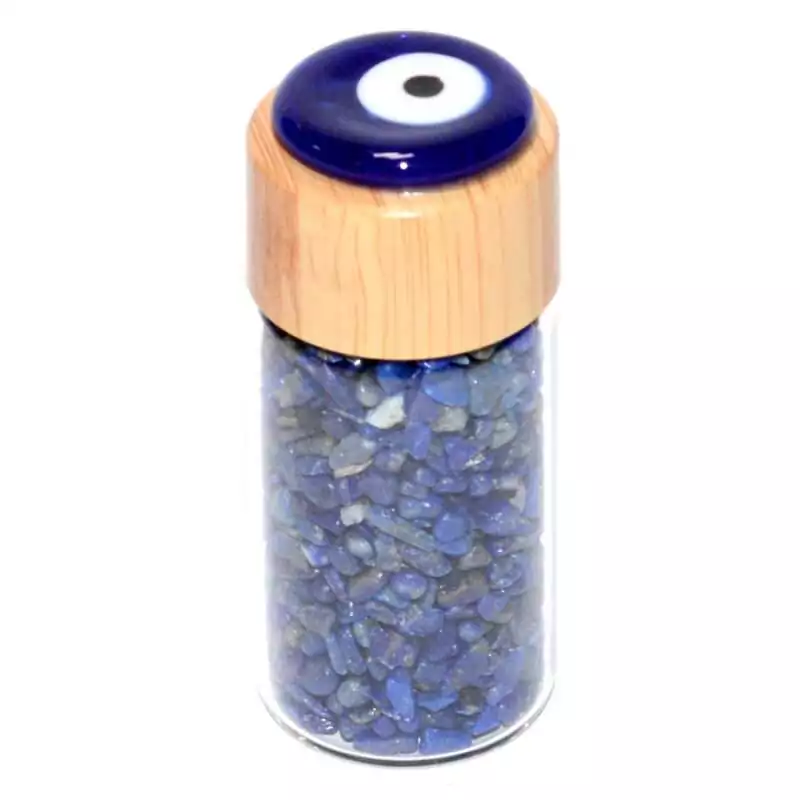
- Type: Glass bottle of lapis chips with an eye cap
- Size: About 3/4 inch wide by 2 1/4 inches tall
- Stone: Lapis lazuli chips
- Cap: Light wood-grain cap with a glossy blue disc on top
- Eye: White ring and black pupil on deep blue
Lapis Chips Under an Eye Cap
A clear glass bottle, about 2 1/4 inches tall and 3/4 inch wide, holds a packed column of small lapis chips. The pieces are irregular, with softened edges, and the color runs from deep royal blue through paler blue-grey, with a few white-grey fragments scattered among them. Through the glass you can see the chips stacked in layers, and a slow tilt shifts them so the pale and dark pieces trade places. A cap in light wood-grain tones fits over the top, and a glossy blue disc sits on its crown. The disc shows an eye: a white ring around a black pupil on a deep blue ground, a simple version of the nazar bead. At this size the bottle sits in a palm, and the pale cap frames the blue chips below it. Because the chips are small and loose, every angle of the bottle shows a slightly different mix of blue, grey and white, and the eye on top gives the bottle a clear focal point. The chips vary in size and shape, which gives the column a rough, mineral texture.
Lapis lazuli has been prized for thousands of years. The Sar-i Sang mines in Badakhshan, Afghanistan, have been worked for more than 6,000 years, and Chile and Russia also have deposits. Ancient Egyptians favored the stone for amulets and ornaments, especially scarabs, and saw it as a symbol of the night sky. The English word azure shares a root with the Persian name for the gem, lāžward. A crystal-lore guide says lapis has been worn to ward off evil, which places the stone in the same territory as the eye on the cap. That eye belongs to the evil eye belief, the idea of a curse brought about by a malevolent glare, usually inspired by envy. In Turkey the eye amulet is called nazar boncuğu, and in Greece it’s called mati. Traditional nazar beads are handmade glass built from rings of dark blue, white, light blue and black, and amulets like them are traditionally hung or carried to guard against the evil eye. In Turkish belief, blue acts as a shield against evil. Here a blue stone and a blue eye share one small bottle.
Practical Ways to Display It
Stand the bottle where you’ll see the eye every day: a shelf by the front door, a desk, a bedside table or a windowsill. On an altar or a tray beside a blue candle, it adds a stone and an eye in one small shape. A bookshelf or a mantel keeps it out of the way of elbows and pets. If you collect stones, set it beside a few tumbled pieces of your own and compare the blues. It also works as a small gift for someone who likes crystals or has just moved into a new place, and a small bag or box carries it safely. Hold it in your palm during a quiet moment and watch the chips settle as you tilt it. See my crystals, stones and gemstones collection for more stones to set beside it.
How to Display and Care for the Lapis Eye Bottle
Three steps cover checking the bottle, choosing a spot and keeping the chips clean.
- Check the Cap and Glass
Hold the bottle upright and look at it from every side. Make sure the cap sits snugly on the glass and the blue eye disc is firmly in place, then tilt the bottle slowly and watch the chips slide. Keep it away from young children and pets, since it is glass and holds small loose pieces, and set it down well back from the edge of a table.
- Choose a Steady Spot
Pick a flat, stable surface away from table edges, such as a shelf, a desk or a windowsill. Lapis can fade after long hours in direct sun, so a spot with bright but indirect light keeps the blue deep. A small dish or a coaster under the bottle keeps it steady and protects the surface beneath it.
- Dust and Store
Wipe the glass and the cap with a soft, dry cloth when they pick up fingerprints or dust. Lapis is porous, so keep sprays, cleaners and solvents away from the chips and skip soaking. When you travel or move house, wrap the bottle in a soft cloth and stand it upright in a box or a bag so the cap stays on and the glass stays clear of anything hard.
The Tarot Fellow Standard
I stock this bottle because it puts a stone and a symbol in one small, shelf-sized piece: lapis chips under an eye. The evil eye is a living folk belief in Turkey, Greece and many other places, and this bottle is a decorative charm that refers to it, an entry point and never a stand-in for the customs of the people who keep them. If the nazar is part of your family’s tradition, follow the customs you were taught. If it’s new to you, learn them from the communities that keep them before you decide what the eye means in your home. The chakra and intention lore for lapis comes from modern crystal practice, and I offer it as symbolism. For more pieces that carry the eye, see my evil eye collection.
Frequently Asked Questions
Lapis lazuli is a rock, made mostly of the blue mineral lazurite with other minerals mixed through it. The brassy gold flecks are pyrite, and the white streaks and patches are calcite. The mix differs from piece to piece, so one chip can look almost solid blue while the next carries more white or more gold.
Brief contact with lukewarm water is fine, but lapis is slightly porous, so long soaking is best avoided. Gem references advise cleaning it with a soft brush and mild soap and keeping it away from steam, ultrasonic cleaners, chemicals and solvents. Lapis rates between 5 and 6 on the Mohs scale and can chip, and long hours in direct sunlight can fade its color.
Modern crystal guides link lapis lazuli with the third eye chakra, and some add the throat chakra. The themes they attach to it include wisdom, truth and clear self-expression. These associations belong to modern crystal lore and vary from guide to guide.
Reviews
There are no reviews yet