

Quick Specs
- Format: Boxed tarot deck with instruction booklet
- Card Count: 78 full-color cards
- Author: Valentina Camerini
- Illustrator: Michele Penco
- Brand: Llewellyn Publications
- ISBN: 9780738785325
Inside the Lovecraft Tarot
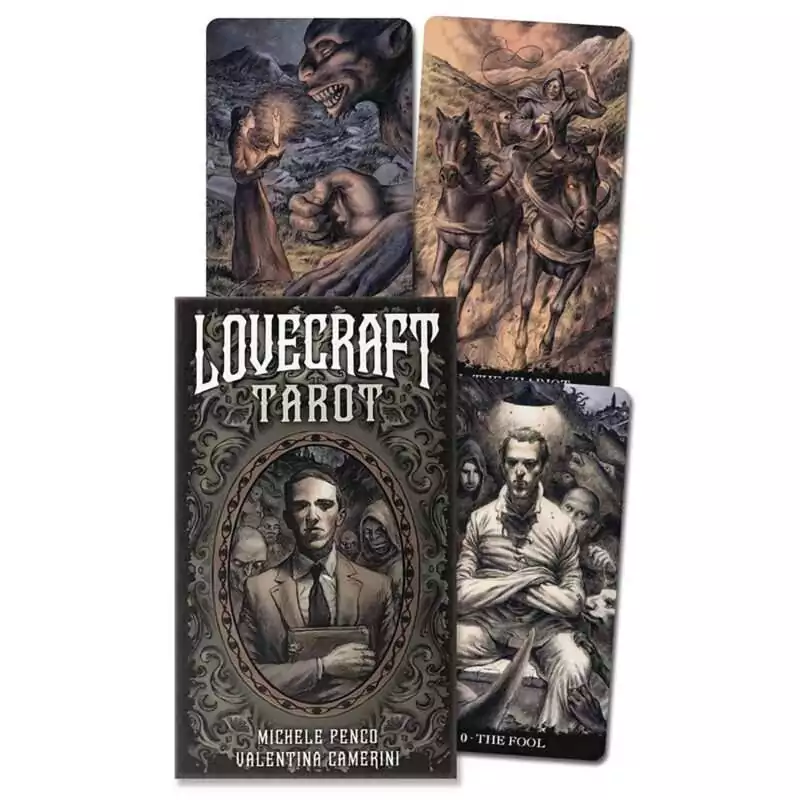
The Lovecraft Tarot sets the fiction of H. P. Lovecraft inside the 78-card structure of the tarot. Names that horror readers know well, among them Cthulhu, Yog-Sothoth, Arkham and the Necronomicon, meet the familiar archetypes, and the result is a deck where strange creatures and powerful sorcerers move through savage landscapes. The cards keep the usual split of 22 Major Arcana and 56 Minor Arcana, so the framework underneath is the one every tarot reader learns, and the box art shows traditional titles such as The Fool and The Chariot. What changes is the world around them: unearthly beings, brutal landscapes and dark rituals replace the familiar settings. Michele Penco illustrated all 78 cards in full color, and the mood is heavy. Hooded figures and monstrous faces crowd the scenes, and the palette stays dark. If you enjoy horror fiction or dark fantasy art, the deck gives you a tarot that speaks in that register from the first card to the last. That commitment to one dark register is the deck’s strength. A compact instruction booklet inspired by Lovecraft’s work comes in the box.
The box art shows what you’re getting into. An oval portrait of a man in a suit, holding a book, sits inside an ornate gray frame while hooded and ghoulish faces crowd behind him. The fanned cards carry the same mood. One shows a woman in a long dress raising a glowing light toward an enormous snarling face and a clenched fist. On The Chariot, a hooded driver urges two dark horses along a hillside under an orange sky. On 0 · The Fool, a pale man with folded arms sits among hooded faces. Each scene works in muted tones with occasional bright highlights, and the card names sit on a plain dark band at the foot. The publisher describes the deck as a way to connect with your inner shadow and recommends it to magicians, witches, horror fans and anyone drawn to the dark side. The imagery supports that pitch and leaves room for readings that look directly at what you would usually avoid. Expect a deck you’ll study slowly, one card at a time.
Practical Ritual Applications
This deck suits late-evening readings when you want a story with some weight. Draw one card, spend a few minutes with the image before you read anything about it, and write down what in the scene you would rather not look at. That exercise follows the deck’s inner-shadow theme and gives a single card a lot to say. A three-card spread also works as a short tale: what has stayed hidden, what is moving in the dark, and what changes once you face it. Keep reversals in the mix: in a deck about shadow, a card turned upside down has plenty to say. The structure is the standard one, so any good tarot reference works beside the deck, and my tarot and divination books include guides to the usual Major and Minor Arcana. If you read by candlelight, keep the cards well away from the flame.
How to Read with the Lovecraft Tarot
Give the shadowy imagery time before you ask a question, then move into a first spread.
- Study the Cards in Good Light
Go through the deck face up once, in good light, before you ask anything. The images are dark and crowded, and details in the corners and backgrounds are easy to miss in a dim room. Notice which cards unsettle you and which draw you in, since both reactions tell you something. Then read through the booklet once, return the cards to the box, and wait until you're ready to read for real.
- Shuffle and Draw with Reversals Included
Shuffle however you normally do, then cut the deck into two stacks, turn one stack end for end, and riffle them together so some cards land reversed without your choosing which. Ask one clear question, then draw a single card for a short answer or three for a fuller picture. Lay each card down exactly as it falls. A reversed card is part of the answer, so read it as the hidden or turned-away side of the same scene.
- Describe the Scene Before You Read About It
Before you check any text, say what you see: who is in the scene, where the light comes from, and what sits half hidden. Then read the booklet's notes on the card and compare. Write the question, the cards and the date in a journal, and add one sentence about what the image made you feel. Return to the entry in a few days and see what has changed.
The Tarot Fellow Standard
I stock the Lovecraft Tarot because it commits fully to one theme and keeps the tarot underneath it intact. One illustrator carries the dark mood through the whole deck, and the card titles stay recognizable, so the deck behaves like tarot. It belongs with the darker decks, and it’s a natural fit if you already love horror fiction or shadowed, detailed art. You can browse more decks in my tarot decks collection. For a reader who wants a deck with weight, this one keeps that tone throughout.
Frequently Asked Questions
It's a redesigned edition of the Dark Grimoire Tarot, now published under the title Lovecraft Tarot. Michele Penco, who illustrated the earlier deck, illustrated this one too. The publisher calls it a redesigned edition, so if you own the Dark Grimoire Tarot, compare the card images with your copy before assuming they match.
No. The names behind the cards have travelled well beyond the books: the publisher notes that Cthulhu, Yog-Sothoth, Arkham and the Necronomicon have spread from Lovecraft's fiction into comics, film and gaming. Cthulhu first appeared in the 1928 story The Call of Cthulhu, and the Necronomicon is a fictional grimoire, so a card that points to it points to an invented book.
The set includes a compact instruction booklet inspired by Lovecraft's work. A review of the earlier Dark Grimoire edition found that its booklet gave suit interpretations, with no card-by-card meanings, so a general tarot reference is the place to look for individual cards. That edition's Major Arcana used the usual titles and order, which keeps those references easy to follow.

Reviews
There are no reviews yet