
Quick Specs
- Type: Lidded cauldron
- Material: Cast iron
- Size: About 4 1/2 inches tall with lid, about 4 inches across the body
- Features: Fitted lid, arched wire handle, two side loops, three legs
- Design: Plain black surface, no emblem
A Plain Black Cauldron Built for Charcoal and Resin
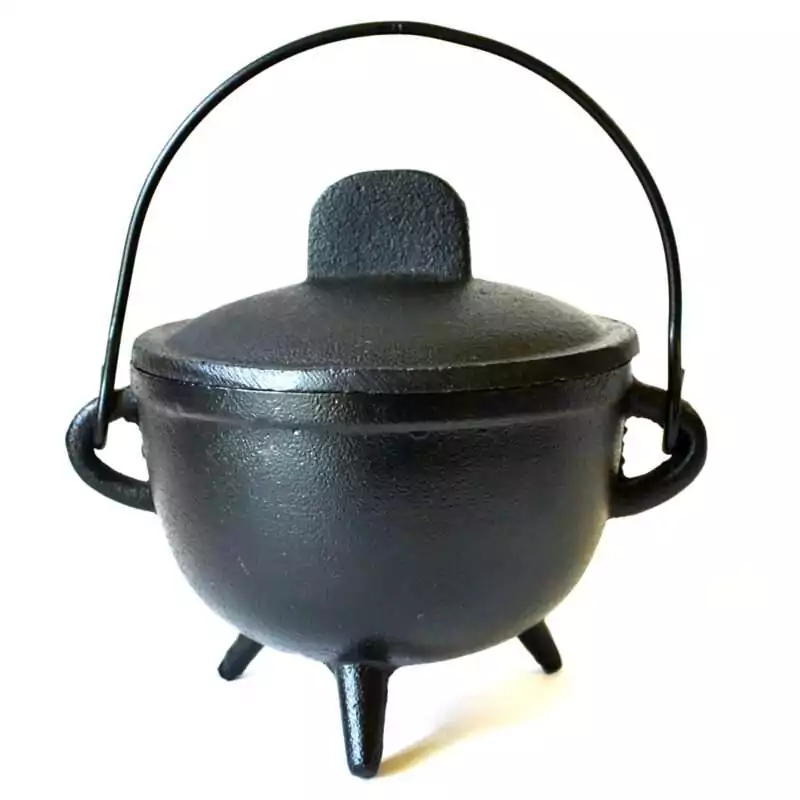
This is a small cauldron in the classic pot shape: a rounded body, a fitted lid with a raised tab, two loops at the sides, a wire handle that arches over the top, and three short legs that lift the base off the surface beneath it. The finish is dark, slightly pebbled and plain, so it reads as a working cauldron. With the lid in place it stands about 4 1/2 inches tall. Cast iron is the reason it can do its job. The metal tolerates the heat of a burning charcoal disc, and it holds that heat for a long while after the disc stops glowing. The shape is far older than the altar. Cauldrons are large cooking and boiling pots that stood over open fires, and examples survive from the Bronze Age and the Roman period. The English word traces back through Norman French to the Latin word for hot. A pot on legs, with a lid and an arched handle, comes straight from that working history, and this one keeps the form at a size that fits an altar.
In Western culture the cauldron is most closely tied to witchcraft, and many modern practitioners keep one on the altar as a vessel of transformation: a place where something goes in and something different comes out. The cauldron is practical as well as symbolic. People use it to burn incense, resin, and dried herbs on charcoal, to blend herbs or ritual salt, or to hold a small offering on the altar. The plain surface suits that range, so it sits comfortably on a pentagram altar, a moon altar, a shelf of elemental tools, or a bare desk. The body is deep enough to hold a layer of sand under a charcoal disc, which is what lets a vessel this small act as a burner. A closed lid cuts off most of the air, so a disc burns down and goes out faster under it. Lift the lid by its raised tab, and use tongs while the iron is hot; closed, the lid also keeps dust and curious fingers out of whatever you’ve left inside.
Practical Ritual Applications
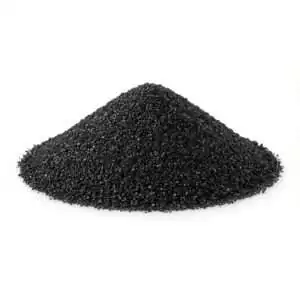
Burn resin incense such as frankincense or myrrh on a lit charcoal disc set into sand, or crumble a pinch of dried herb over the disc to open a working or close one. Find discs, sand, and tongs in my charcoal and sand collection. Between burns, keep the cauldron on the altar with the lid on as a vessel for dry items such as ritual salt, loose herbs, or a few small stones. It also works as a focus in its own right: set it at the center of an altar for a seasonal working and arrange your candles and tools around it. On a desk altar, a cauldron this size gives you a burner that needs only a tile, a little sand, and a single charcoal disc. For a closing ritual, leave a few dried flowers or grains in it as an offering, with the lid off so they stay visible.
How to Use and Care for Your Cast Iron Cauldron
Cast iron stays hot long after the charcoal looks finished, so the order of these steps matters.
- Set up the cauldron and its surface
Place the cauldron on a heat-proof base such as a ceramic tile, a stone slab, or a metal tray, never directly on wood, cloth, or paper. Add a layer of dry sand or ash about an inch deep so the charcoal doesn't rest on bare iron. Keep curtains, books, and loose papers well away from the altar before you light anything.
- Light the charcoal and add your material
Light a self-igniting charcoal disc while you hold it with tongs over the sand, set it down on the sand, and wait until a thin layer of grey ash covers it. Add a few small pieces of resin or a pinch of dried herb, and keep the lid off while the disc burns. Open a window or run a fan, and never walk away from a lit cauldron.
- Cool, empty, and dry it
Let the cauldron cool completely, until it's cold to the touch, then tip the ash and spent charcoal into a non-combustible container. Wipe the inside with a dry cloth and rub a thin film of oil over any bare metal. Store it somewhere dry.
The Tarot Fellow Standard
I stock this cauldron plain because cast iron is the material that handles charcoal heat, and because a plain surface lets it serve any altar, whether yours is built around moon work, the elements, or neither. My cast iron cauldron collection includes pentagram and moon versions in several sizes. It is small enough for a shelf or desk altar. You get a fitted lid, a handle, and legs that keep the body off the surface, the features that make a cauldron useful on an altar.
Frequently Asked Questions
Cast iron rusts when it stays damp, so keep the cauldron dry, wipe out cooled ash, and rub a thin film of oil over bare metal now and then. If rust shows up, scrub it off with steel wool, dry the iron at once, and add a light coat of oil. Don't leave it soaking in water or run it through a dishwasher, which strips oil and invites rust.
Yes, the lid cuts off most of the air, so a disc under a closed lid burns down and goes out faster. Reviews of this pot style mention the lid helping to control flame and smother smoke. The iron stays very hot afterward, so leave the lid in place until everything is cool and keep the room ventilated while the charcoal finishes.
A cauldron sat in or over a fire, so makers gave it feet or an arched hanger. Three legs also hold steady on uneven ground without rocking, because three points always make contact. Heat still travels down iron legs, so the surface under the cauldron matters as much as the cauldron itself.
No. The wire handle is metal and heats along with the body and the lid, so lifting the cauldron while the charcoal is lit or still warm risks a burn. Move it only once it's cool to the touch, or use heat-resistant gloves or tongs if you must shift it sooner. Keep children and pets away from the altar while a disc is burning.



Reviews
There are no reviews yet