



Quick Specs
- Brand: Original Publications
- Type: Paperback, Santeria and Lucumi reference
- Size: 8.7″ x 5.3″ x 0.4″
- Size/Quantity: One book, 8.7 x 5.3 x 0.4 inches
- Best for: Santeria practitioners, Orisha devotees, Afro-Caribbean spirituality study, ceremonial reference
The Orishas in Lucumi and Santeria Tradition
Santeria, formally known as La Regla de Ocha or Lucumi, is an Afro-Cuban religious tradition that developed among Yoruba-descended enslaved people brought to Cuba from what is now Nigeria and Benin. The tradition centers on a pantheon of spiritual beings called Orishas, each governing specific domains of human experience: Elegua rules crossroads and communication, Yemaya governs the ocean and motherhood, Shango controls lightning and justice, and Oshun embodies sweetness, love, and rivers. Under the pressures of colonial slavery and Catholic conversion requirements, each Orisha was syncretized with a corresponding Catholic saint, creating a layered religious system that preserved Yoruba spiritual practice inside Catholic iconography.
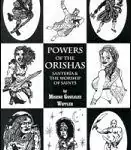
Migene Gonzalez-Wippler is one of the foremost English-language authors on Afro-Caribbean spirituality, with a catalog spanning Santeria, Kabbalah, and esoteric topics. Her work on the Orishas is distinguished by access to practicing santeros and initiates, direct engagement with oral tradition, and a willingness to explain ritual detail that purely academic texts often avoid. Powers of the Orishas is typically described as the practitioner’s companion reference: the book you keep at the altar alongside primary ritual implements rather than on a general bookshelf.
What the Book Covers and How Practitioners Use It
The book provides individual chapters on each major Orisha, covering attributes and domain, associated colors, numbers, sacred tools and emblems, offerings and favorite foods, Catholic saint correspondences, prayers and invocations, and the ritual circumstances under which that Orisha is petitioned. This is the reference structure that devotional practitioners need, particularly those working with multiple Orishas across different life circumstances or those building a sustained altar practice before formal initiation into Lucumi lineage.
Practitioners outside initiated Santeria lineage, including those in diaspora communities who maintain syncretized devotion, folk Catholicism practitioners, and students of Afro-Caribbean religion, find the book’s structured presentation of Orisha attributes essential for approaching altar work and petition protocols correctly. Gonzalez-Wippler does not present the religion as a curiosity or as generically available to any seeker: she writes with respect for the tradition’s boundaries and its initiated hierarchy, which is what makes the book trusted rather than just useful.
How to Use Powers of the Orishas
How to use Powers of the Orishas as an active altar and petition reference rather than a passive reading text.
- Identify which Orisha governs your current need
Use the index to locate the Orisha whose domain matches your petition. Read the full chapter before approaching the altar, including protocol notes. Working with the wrong Orisha, or without respecting protocol, is addressed directly in the text.
- Assemble the correct offerings before petitioning
Each chapter lists the foods, colors, and ritual objects for that Orisha. Gather the correct elements before petitioning. Using traditional offerings demonstrates respect and signals you have done the work of learning the tradition properly.
- Use the prayer and invocation text at the altar
The book provides prayers in both Spanish and English for each Orisha. Read the prayer aloud at the altar after presenting your offerings. Address the Orisha formally by name, acknowledge their domain, and state your petition clearly before closing.
The Tarot Fellow Standard
I carry this because Gonzalez-Wippler’s Orisha reference is genuinely irreplaceable for anyone approaching Santeria devotional work in English, and I keep it stocked because it sells through consistently to practitioners who need it at the altar, not just on the shelf. Santeria is a living tradition, and I offer this book as a reference for study, not a substitute for initiation or for the guidance of a godparent and house. Browse my Voodoo, Hoodoo, and Santeria books for the full reading list, and find Orisha ritual supplies in my Voodoo, Hoodoo, and Santeria collection.
Frequently Asked Questions
Santeria, known formally as La Regla de Ocha or Lucumi, is an Afro-Cuban tradition developed by Yoruba-descended people in Cuba. The Orishas govern specific domains of life, each approached through offerings, colors, numbers, and invocations.
Gonzalez-Wippler is an English-language author on Afro-Caribbean spirituality with direct access to practicing santeros. Her books are trusted because she writes with respect for the religion’s initiated hierarchy and ritual protocols.
No. The book serves initiated practitioners as an altar reference and those studying before initiation. Gonzalez-Wippler writes respectfully of requirements and does not present the book as a substitute for proper lineage and ceremonial initiation.
The book covers the major Orishas of the Lucumi and Santeria tradition: Elegua, Oggun, Yemaya, Oshun, Shango, Obatala, Babalu Aye, Orunmila, and others. Each receives a dedicated chapter with attributes, offerings, colors, numbers, and prayers.



Reviews
There are no reviews yet