

Quick Specs
- Type: Stick incense holder
- Material: Cold cast resin
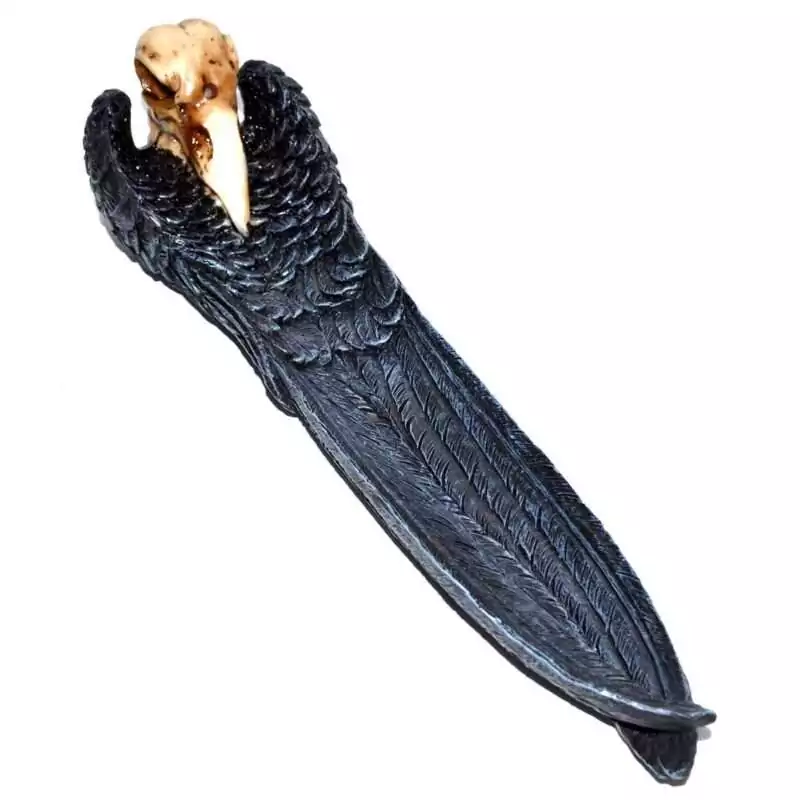
- Design: Raven skull with wings, ash-catching channel down the length
- Size: 10 inches long
- Best for: Stick incense burning, gothic altar display
A Raven Skull Holder for Stick Incense
This holder casts a raven skull and wings in cold cast resin, a technique that gives fine detail (individual feather lines, the delicate curve of the beak) more definition than a simple molded plastic piece would carry. The skull sits at one end with the wings spread back along the full 10-inch length, and a channel runs down the body of the piece to catch ash from a burning stick, functioning as both a display object and a working incense tool at once. Ravens carry a long association with the threshold between life and death across multiple mythological traditions, from the Morrigan’s raven form in Irish myth to Huginn and Muninn as Odin’s thought and memory in Norse tradition, which makes raven imagery a natural fit for altar pieces used in shadow work or ancestor-focused practice.
At 10 inches, this holder accommodates standard-length incense sticks with room for the ash to fall along the full channel as the stick burns down. The cold cast resin construction gives it real weight and a stone-like cool touch, closer in feel to a carved piece than to lightweight molded plastic, though it should still be handled with the same care as any resin casting since it isn’t as impact-resistant as metal or true stone.
Practical Uses for a Raven Skull Incense Holder
Use it for daily stick incense burning where you want a display piece worth leaving out rather than a purely functional holder, or reserve it specifically for shadow work, ancestor work, or any ritual where raven symbolism fits the working. The wing-and-skull design reads as a genuine altar piece even when it’s not actively holding a burning stick, so it works as gothic decor between uses as much as it works as a functional tool. Browse my Incense and Burners collection for stick incense to pair with this holder.
How to Use and Care for a Raven Skull Incense Holder
Cold cast resin holds detail beautifully but calls for gentler handling than metal or stone equivalents.
- Place on a Heatproof Surface
Set the holder on a heatproof surface or tray before lighting incense, since falling ash and the heat from a burning stick tip can mark unprotected wood or fabric over repeated use.
- Seat the Stick Securely
Insert the incense stick into the designated holder point (typically near the skull) at a slight angle so ash falls into the catch channel along the wings rather than off the side. A loose-fitting stick can tip over as it burns down and lightens.
- Clear Ash Between Uses
Empty accumulated ash from the channel after each use rather than letting it build up over multiple sticks, both for a cleaner look and because a full channel won’t catch ash from the next stick as effectively.
The Tarot Fellow Standard
I stock this holder because the level of detail in the wing and skull casting makes it a genuine altar piece rather than a purely utilitarian stick holder, and raven symbolism gives it real thematic weight for shadow work and ancestor-focused practice specifically. Browse my Altar Supplies collection for other gothic-aesthetic altar pieces.
Frequently Asked Questions
It’s built for standard-length stick incense, the same size used across most commercial incense sticks. The 10-inch overall length of the holder gives the ash-catching channel enough room for a full stick to burn down without ash spilling off the end.
Cold cast resin is a casting technique that combines resin with a metal powder (bronze is common) to achieve fine detail and a weightier, more substantial feel than plain resin or plastic. It holds detail well but is more impact-sensitive than solid metal or stone, so it should be set down carefully rather than dropped.
Ravens appear across multiple traditions with associations tied to death, thought, and the threshold between worlds: the Morrigan takes raven form in Irish mythology, and Huginn and Muninn (Thought and Memory) are Odin’s messenger ravens in Norse tradition. That range makes raven imagery a natural fit for shadow work, ancestor work, or any practice focused on liminal, in-between spaces.

Reviews
There are no reviews yet