
Quick Specs
- Material: Serpentine
- Quantity: 1 lb lot of tumbled stones
- Stone Size: 20-30mm (about 0.8 to 1.2 inches)
- Finish: Tumbled and polished
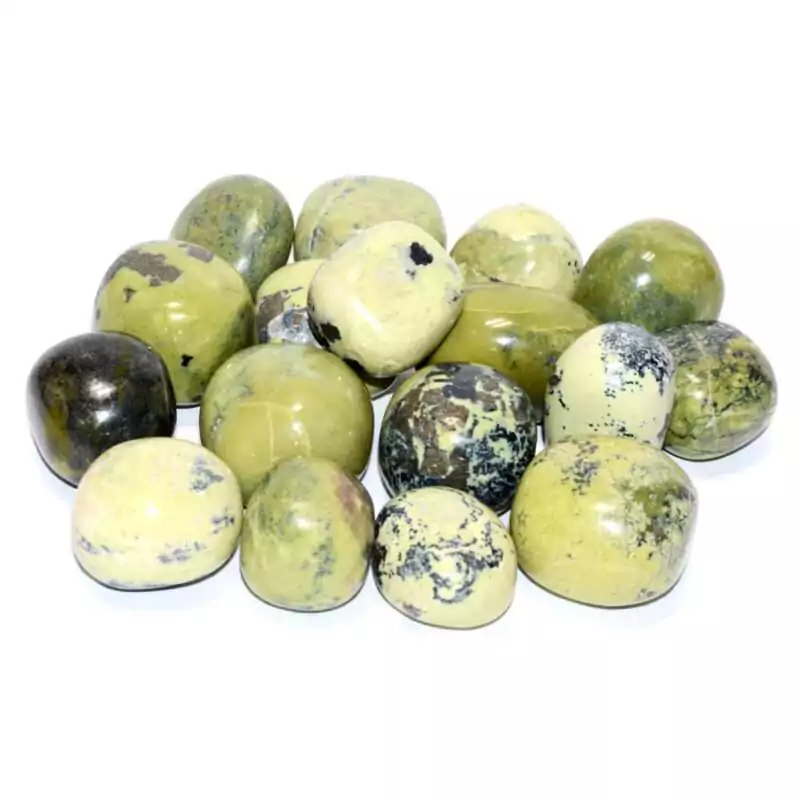
- Color: Pale yellow-green to olive, with dark and cream patches
Serpentine: Snake-Green Stone With a Waxy Shine
Serpentine is the name for a group of minerals, chiefly antigorite, lizardite and chrysotile, which share one chemistry of magnesium, silicon, oxygen and water and differ in how their atoms are arranged. They form when hot water reacts with dark mantle rock such as peridotite and dunite, converting its olivine and pyroxene into serpentine minerals. The rock that results is called serpentinite, and it is widespread in ophiolites, slices of oceanic plate exposed near current and ancient plate boundaries. California made serpentinite its official state rock. The name comes from the Latin serpentinus, meaning snake-like: the green color, the mottled pattern and the slippery feel all recalled a snake. Most serpentine is green, with some yellow, black and white, and its luster is waxy or greasy, which gives a polished piece a soft glow. People have used serpentine for thousands of years as facing stone, wall tiles and sills, and it is carved into bowls, vases and figures. Ornamental serpentine is mined in many places, among them China, Afghanistan and New Zealand. The group runs from soft to moderately hard, reaching about 6 on the Mohs scale at most, so serpentine takes a smooth polish and scratches more easily than quartz.
This lot holds stones from 20 to 30mm, roughly 0.8 to 1.2 inches, a size that sits easily in the palm of a hand. The base color is a pale lime or yellow-green that deepens to olive in some stones, and most carry markings of their own: dark green and black patches, brown and grey specks, cream mottling and, on a few, a web of fine cracks. Tumbling rounds each rough piece into a smooth pebble, and the polish brings out the waxy shine serpentine takes. A pound gathers a wide range of these patterns, so you can sort the stones by look and choose favorites. Serpentine often feels slightly soapy to the touch, a trait the California Geological Survey notes for the rock. Serpentine has been sold as a jade look-alike, and some serpentine in the trade is dyed or resin-treated. In modern crystal practice, guides link serpentine with grounding, protection and a clear mind for meditation.
Practical Ritual Applications
Pour the stones into a shallow dish on your altar or desk and let the pale green pieces and the dark-patched ones sit together; the mix reads like a small landscape. Pick one to carry in a pocket or pouch as a reminder to stay level through a busy day. Set the largest stone, near 30mm, in the center of a small grid and ring it with four or five smaller ones, or lay a stone at each corner of your Tarot cloth before you shuffle. During a quiet sit, hold a stone in each hand and trace its patches and cracks with your thumb while you breathe slowly. A handful also makes a handsome gift pouch for a friend who likes green stones. For more stones chosen for steadiness, browse my grounding and stability tumbled stones.
How to Work With Serpentine Tumbled Stones
Three steps for turning a full pound into a working set.
- Sort the Pound by Pattern
Spread the stones on a light cloth near a window and turn each one in the light. Group them by base color, from pale lime to olive, and then by markings: dark patches, cream mottling, fine cracks. Set aside six or eight favorites for a grid or a dish, and put the rest in a bowl or a pouch. Sorting by eye takes a few minutes and shows how different the pieces in one pound can be.
- Hold One and Trace the Surface
Sit with your feet flat and one stone in each hand. Trace the patches on the surface slowly with your thumb, following a single line from edge to edge, and breathe in time with the movement for a minute or two. Many people use a stone this way before a Tarot reading or a meditation to settle their attention. Return the stones to the dish afterward, so the same pair is easy to find next time.
- Build a Five-Stone Grid
Choose the largest stone, close to 30mm, and rest it in the center of a flat tray or cloth. Place four stones from the 20 to 25mm range around it at the points of a square, and set a candle, a card or a written intention beside the grid. Leave it in place for as long as it suits your purpose, then lift the stones one at a time and return them to the bowl.
The Tarot Fellow Standard
I stock serpentine by the pound for people who like a pale, patterned green with a waxy shine. At 20 to 30mm the stones are large enough to handle one at a time and small enough that a dozen make a grid or a bowl. Every stone in the lot carries its own markings, so you can pick favorites by pattern and keep the rest in a bowl or share them. For other stones sold by the pound, browse my bulk tumbled stones collection.
Frequently Asked Questions
No. Serpentine names a group whose main members are antigorite, lizardite and chrysotile. They share one chemical formula and differ in how their atoms are arranged. Antigorite is green, yellowish-green or blueish-gray, lizardite runs from green and brown to light yellow or white, and chrysotile is greyish green to white. Hardness varies across the group, from soft to about 6 on the Mohs scale.
It can. Chrysotile, one of the three main serpentine minerals, is fibrous and is the most common type of asbestos, and the California Geological Survey notes that serpentine rock often contains some. Of the three, only chrysotile forms asbestos fibers. The hazard comes from fibers released into the air when rock is disturbed, as in excavation. Keep tumbled stones whole and avoid grinding or sanding them.
Use a soft brush, mild detergent and warm water, then dry the stones thoroughly. Gem and bead references advise against steam and ultrasonic cleaning for serpentine. The stone is soft, and even the harder variety called bowenite can be scratched by household dust, so wipe it gently and store the stones in a cloth-lined dish apart from harder ones such as quartz.
No. Jade is a cultural term that covers two tough minerals, jadeite and nephrite, which rate 6.5 to 7 and 6 to 6.5 on the Mohs scale. Serpentine is a softer group of magnesium silicates that reaches about 6 at most. Lime-green serpentine can resemble jade, which is why it has been sold as false jade.
Reviews
There are no reviews yet