
Quick Specs
- Type: Stick incense holder
- Size: Approximately 8 inches by 3.5 inches
- Material: Hand-painted cold cast resin
- Shape: Coffin-shaped tray
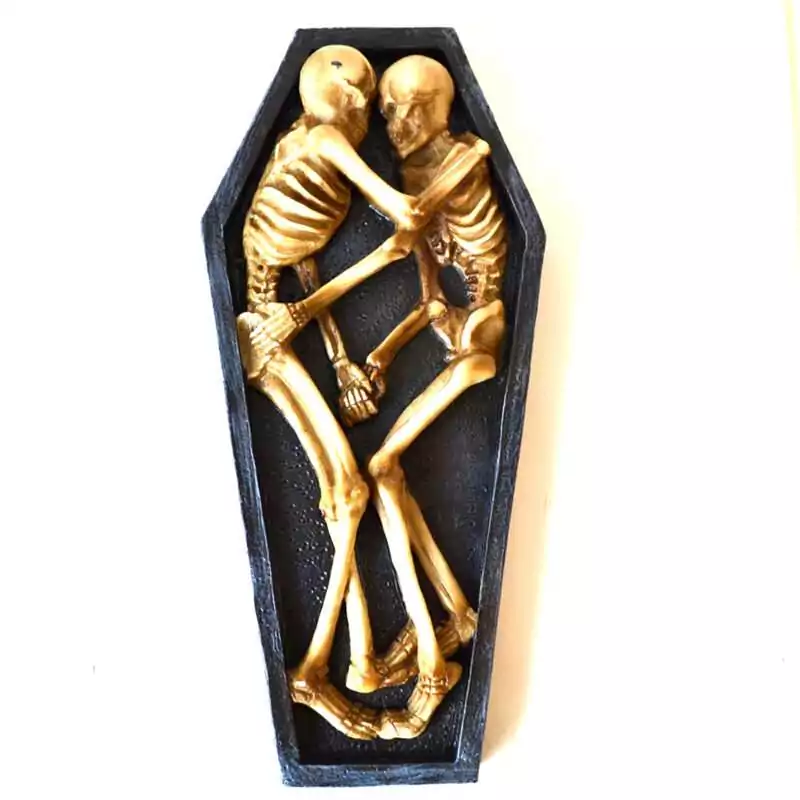
- Design: Two skeletons in an embrace, hands clasped
- Colors: Ivory-toned bones on dark gray
Two Skeletons in an Embrace Inside a Coffin
Two skeletons lie together in a six-sided coffin tray, wide at the shoulders and narrowing toward the foot. They face each other with their heads close and their foreheads almost touching. One arm of each reaches around the other’s shoulders, and the hands of the two come together near the middle in a clasp. At the bottom of the tray, their legs cross and their feet overlap, so the pair reads as a single shape within the outline. The bones are the warm color of old ivory, with darker shading in the joints, between the ribs, and along the long bones, which gives the forms a solid, sculpted look. Each rib stands out as a separate bar, and the finger bones of the clasped hands are modeled one by one. The coffin is dark gray and black, with a pitted, speckled surface and a rough raised rim around the edge. Everything is painted by hand on cold cast resin.
Skeletons holding hands have a long history in European art. The danse macabre, or Dance of Death, is a Late Middle Ages genre in which Death summons people of every rank, from pope and emperor to child and laborer, to dance toward the grave. The earliest recorded example is a lost mural painted at the Holy Innocents’ Cemetery in Paris in 1424 to 1425, and painted versions often show skeletons or cadavers taking the living by the hand. The dead in those scenes look lively and agile, and the living seem clumsy and passive. Holbein reworked the theme in a series of woodcuts in the 1520s. The genre carried a lesson about the universality of death, and it treated every rank alike. The skeletons on this holder hold each other’s hands and lie close in a coffin together, a gothic tableau with a gentler mood than the dance it echoes.
Practical Ritual Applications
Seat a stick of incense in the holder and set it on a mantel, a long shelf, or a windowsill where the 8 inch length has room. Lying flat, the tray reads best from slightly above, so a mantel or a low shelf shows the pair to advantage. The ivory bones stand out against black cloth or dark wood, and a pair of candles at either end makes a small gothic tableau. As a gift, the embracing pair suits a couple who like a gothic take on romance, an anniversary, or Valentine’s Day. Between sticks, the skeletons and the coffin remain on display as sculpted decor. A flat spot with room on every side keeps the holder steady. Browse my stick incense collection to choose a scent for it.
How to Burn Stick Incense in the Skeleton Lovers Holder
Find a flat spot for the long tray, light the stick, and let it cool before you clear it.
- Set the Tray on a Stable Base
Place the holder on a flat, heat-resistant surface such as a ceramic tile or a metal plate, with room on every side for the 8 inch length. Keep curtains, clothing, and paper well away from it, and keep it out of reach of children and pets.
- Light the Stick and Stay Close
Put the stick in the holder, hold a flame to the tip until it glows, then shake the flame out. Fire services advise never leaving burning incense unattended, so stay in the room, and keep a watchful eye on the stick as it burns down.
- Extinguish and Wait for It to Cool
Make sure the stick is completely out before you leave the room or go to bed. Incense ash and holders may remain hot after use, so give the tray time to cool before you move it, and clear the ash only when it is cold.
The Tarot Fellow Standard
I stock this holder because it takes a gothic idea, two skeletons at rest together, and gives it careful sculpting: shaded bones, a pitted coffin, all in hand-painted cold cast resin. It burns stick incense and works as a shelf piece when no stick is lit, and the dark tray keeps the pale bones as the focus of the scene. For a gothic room or a couple’s mantel, my home decor collection has other pieces to build the scene around it.
Frequently Asked Questions
The usual distinction is shape. A coffin is a tapered hexagonal or octagonal box, sometimes described as anthropoid in shape, and a casket is a rectangular box. Coffins are traditionally made with six sides plus the lid and bottom, tapered around the shoulders, and coffins in the UK are mainly of the hexagonal design. The tray on this holder follows the six-sided coffin outline.
Memento mori is a Latin phrase that translates as you must remember to die. The most common motif is a skull, often accompanied by bones, and other motifs include hourglasses, wilting flowers, and coffins. In the fifteenth century, tombs showing cadavers became a fashion among the wealthy. Christian use gave the theme a moral purpose, since the prospect of death emphasizes the fleetingness of earthly pleasures.
Fire services advise keeping burning incense out of the reach of children and pets, away from curtains, clothes, paper, and other flammable materials, and never leaving it unattended. They also note that incense ash and holders may remain hot after use, so keep a holder out of reach until both are cool.

Reviews
There are no reviews yet