

Quick Specs
- Type: Hamsa Hand / Hand of Fatima amulet pendant
- Size: Approximately 3/4 inch
- Best for: Evil eye protection, general warding, cross-cultural spiritual jewelry
Hamsa Hand Amulet: One Symbol, Three Traditions
The hamsa is one of the oldest continuously used protective symbols in the world, with roots stretching back to ancient Mesopotamia and Phoenicia, long before the monotheistic traditions that later adopted it. The open hand with an eye at the center appears in Jewish, Islamic, and pre-Abrahamic North African and Middle Eastern practice, each culture reading its meaning slightly differently but consistently using it to deflect the evil eye, the harmful gaze believed to transmit envy or ill will. In Judaism it is called the Hand of Miriam; in Islam, the Hand of Fatima, referencing the daughter of the Prophet.
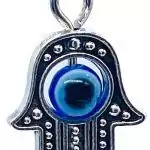
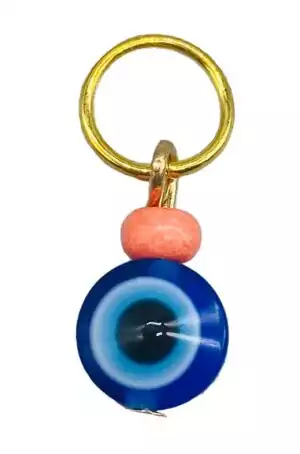
The spinning evil eye set in the center of this pendant is a functional design detail, not just decorative. The eye motif, known in Turkish as nazar, concentrates protective focus and is believed to reflect harmful gazes back to their source. The silver-toned finish reads as traditional metalwork without the weight of solid metal, keeping the piece comfortable for all-day wear at the 3/4 inch scale.
Evil Eye Protection in Wearable Form
Many people prefer the hamsa over culture-specific symbols precisely because of its multi-faith history. It is worn today as a general apotropaic, a ward against negative intent from others, and it pairs easily with other protective items such as black tourmaline, salt, and rue. Browse my amulets and talismans collection to compare other apotropaic pendants and find what resonates with your practice.
The orientation of the hand carries traditional meaning. Fingers pointing downward is the more common pendant orientation, and in that position the hamsa is said to pour blessings on those below, welcoming good fortune into the wearer’s life. Fingers pointing upward traditionally signals a ward-off posture, blocking incoming harm. Either reading is valid, and many practitioners simply wear it as feels right without adhering to a single tradition.
How to Use the Hamsa Hand Amulet
Three ways to work with this hamsa amulet, whether worn as jewelry or placed as a fixed household ward.
- Thread onto a cord or chain
Attach the pendant to a cord or chain through the bail at the top. A length of 18 to 20 inches keeps the 3/4 inch hamsa centered below the collarbone, where it remains visible and accessible throughout the day without snagging on clothing.
- Set a protective intention
Hold the pendant in your dominant hand and focus on what you want it to deflect. Naming an intention before wearing makes the pendant a focused protective charm.
- Hang it in a doorway or sacred space
To use as a stationary ward, hang the pendant near an entrance, fingers down to welcome blessings or fingers up to block harm. This mirrors traditional Middle Eastern household use of the hamsa as a fixed protective charm placed at doorways.
The Tarot Fellow Standard
I carry this hamsa because it crosses boundaries that most protective jewelry does not. It is at home in Jewish, Islamic, and pre-Abrahamic North African practice, and it fits equally well in an eclectic protective practice, making it useful for practitioners who draw from more than one tradition. The spinning evil eye detail adds a layer of specificity that plain hand designs lack. If you want to explore other protective tools for your altar or entryway, take a look at my ritual supplies for candles, herbs, and items that complement warding work.
Frequently Asked Questions
The hamsa is an apotropaic amulet used across Jewish, Islamic, and North African traditions to deflect the evil eye and negative energy. It is worn as jewelry or hung at entrances to protect homes and people from ill will and envy.
Yes. The Hand of Fatima is the Islamic name for the same symbol, referencing Fatima al-Zahra, the Prophet’s daughter. The name hamsa comes from the Arabic for five, the number of fingers. Both names describe the same palm-shaped protective amulet.
Fingers pointing downward is the traditional pendant orientation, associated with pouring blessings onto the wearer. Fingers upward signals active warding. Many practitioners choose orientation by feel rather than adhering to strict tradition.
The eye in the hamsa’s palm is a nazar, concentrating protective gaze and reflecting harmful intent back to its source. The pairing of open hand and eye creates a layered protective amulet found across Middle Eastern and Mediterranean traditions.



Reviews
There are no reviews yet