
Quick Specs
- Material: Fuchsite (chromium-rich muscovite mica)
- Quantity: 3 lb lot of untumbled stones
- Stone Size: 2-6 inches
- Finish: Untumbled, natural surfaces
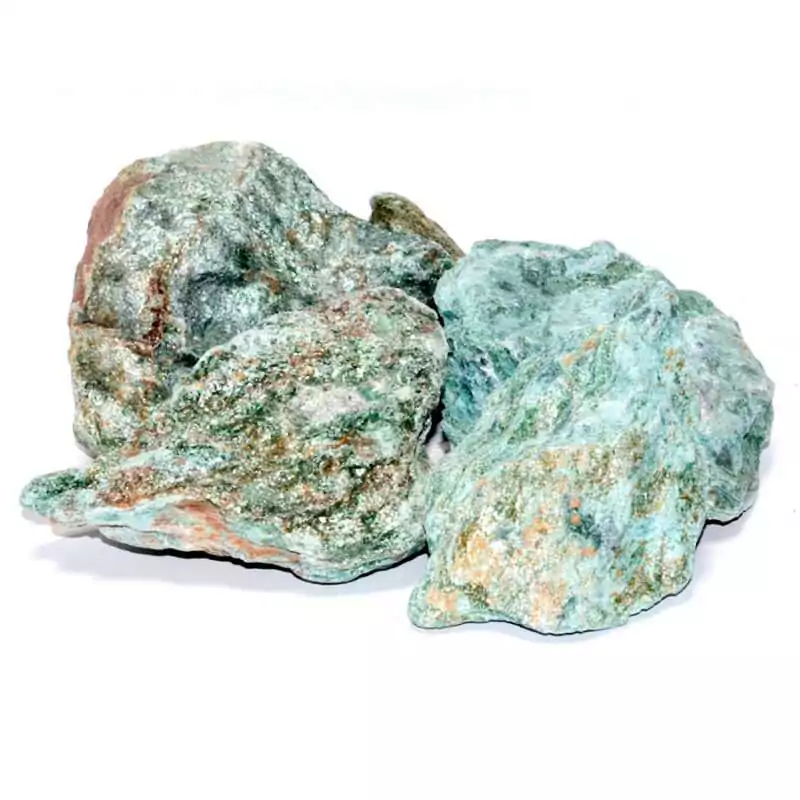
- Color: Green to sea-green with glittering flakes and rust-orange patches
- Mohs Hardness: 2 to 3
Fuchsite: Chromium-Green Mica That Glitters
Fuchsite is a chromium-rich variety of muscovite, a mica. Trivalent chromium replaces some of the aluminum in the mineral’s structure, and that swap supplies the green, which runs from pale mint to emerald depending on how much chromium is present. Micas form in thin, flexible layers that split apart easily, and fuchsite glitters wherever those flakes catch the light. Fuchsite crystallizes in the monoclinic system and occurs in chromium-rich schists and phyllites of the greenschist facies, usually as tiny grains scattered through the rock, and rock made almost entirely of fuchsite is called verdite. German chemist and mineralogist Johann Nepomuk von Fuchs gave the mineral its name. On the Mohs scale it measures 2 to 3, which makes it a soft stone, and crystal references describe it as fragile, with flakes that shed easily from rough surfaces. Because mica splits along its layers, a raw piece shows its character where it has broken: flat, shiny faces in one place and crumbly, sparkling edges in another, and the break lines on one stone rarely resemble those on the next.
These pieces are untumbled, so every stone keeps the surface it had when the rock was broken out. The sizes run from 2 to 6 inches, so the lot ranges from stones that fit one palm to pieces that need two hands. The color ranges from deep leafy green to a paler, sea-green shade that leans toward teal, and fine silvery-green glitter shows across many of the faces, flashing as you turn a piece toward a window. Patches of rust-orange and pale cream mark some stones, so a single chunk can carry green, teal and warm brown at once. Smooth areas look waxy, and rougher areas look granular and sparkling. Pieces differ in shape too, from thick blocks to flatter slabs with ragged edges, and the mix of textures is part of the draw: a lot this size holds showy, glittering faces beside quieter, matte ones. Because the stones come straight from broken rock, no two match, and the lot offers a wide range of greens: one large stone can anchor a display while a few smaller ones stay close at hand.
Practical Ritual Applications
Crystal guides tie fuchsite to the heart chakra and to self-compassion, renewal and forgiveness, which makes it a fit for a heart-themed altar. Set the largest piece at the back of a tray as a backdrop, and arrange smaller green stones and a candle in its own holder in front of it. Rest a piece on your journal while you write down something you want to forgive in yourself, or hold a small chunk while you pull a card for the week ahead. A rough slab also makes a base for a smaller polished stone or a sphere. Keep the pieces on a shelf where they stay undisturbed, since the flakes loosen with handling. For more pieces to display, see my collection of crystal and mineral specimens.
How to Display and Handle Raw Fuchsite
Choose your pieces, set up a display, then dust and store the soft mica gently.
- Inspect and Choose
Lay a cloth or tray on a table and set the pieces out under good light. Turn each stone by its sides and look at the faces: shiny and glittering, waxy and smooth, or crumbly at the edge. Pick a large piece for display and a few smaller ones to handle, and work over the tray so any loose flakes land on it. Mica flakes easily, so a little glitter may come off rough spots.
- Build a Heart Display
Stand the largest stone at the back of a shallow tray or a shelf, with its best face turned toward where you sit. Place two or three smaller pieces in front, and add a green or pink candle in a holder set well apart from the stones. Choose a spot out of foot traffic and away from the edge of the shelf. A word or a card that stands for kindness toward yourself can rest in front of the arrangement.
- Dust and Store Gently
Fuchsite is soft and fragile, and crystal references recommend dry cleaning, so keep it out of water. Brush the pieces lightly with a soft dry brush or a lint-free cloth. For storage, wrap each stone separately in soft cloth and keep it away from harder stones such as quartz, since quartz at 7 can scratch a mineral this soft.
The Tarot Fellow Standard
This lot is here for anyone who wants fuchsite in its raw form: glittering green faces, broken edges and pieces big enough to stand on their own. Raw stones show how the mineral looks when it comes out of the rock, and the range from deep green to sea-green makes a lot this size interesting to sort through. Heart chakra and self-compassion meanings come from crystal lore, and they make good prompts for a journal page. For more rough stones sold by weight, browse my raw bulk stones collection.
Frequently Asked Questions
Yes. Fuchsite is a chromium-rich variety of muscovite mica, and the chromium gives it a green that runs from pale to emerald. Like other micas it forms in thin, flexible layers, and that layered structure produces its glitter. Rock made almost entirely of fuchsite is called verdite.
Aventurine is a form of quartz that holds tiny reflective flakes, and in green aventurine those flakes are fuchsite, which supplies the color and the shimmer. Fuchsite itself is the mica, so it is much softer: 2 to 3 on the Mohs scale, compared with 7 for quartz. When fuchsite is abundant in aventurine, the stone becomes opaque and can pass for malachite at first glance.
Crystal guides connect fuchsite with the heart chakra and with renewal, self-compassion and forgiveness, and one encyclopedia lists self-worth among its recommended uses. These meanings belong to modern crystal practice. The chakras themselves come from Hindu and Buddhist tantric texts, which list different numbers of centers, so the pairing works best as a theme for reflection.
Reviews
There are no reviews yet