

Quick Specs
- Type: Holy water font with Marian figure
- Height: 6 1/2 inches
- Width: 4 1/2 inches
- Depth: 2 inches
- Material: Resin
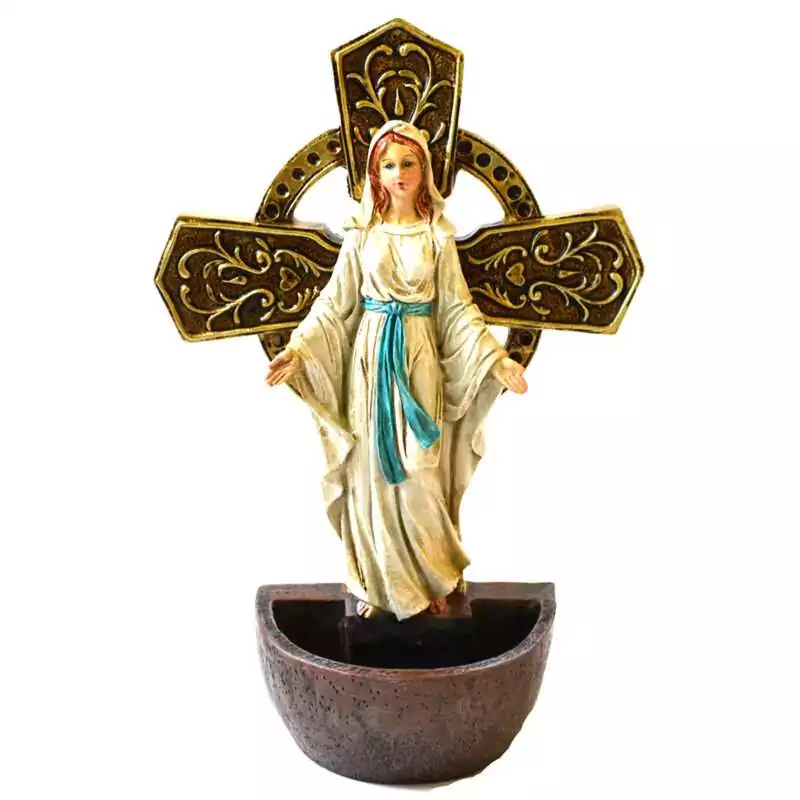
- Finish: White robe, turquoise sash, gold-toned cross, bronze-toned basin
- Display: Wall-hung or standing on a table or dresser
Mary With Open Arms at the Foot of a Cross
The figure stands upright with her arms open at her sides and her hands turned outward, a posture of welcome that faces whoever comes to the basin. She wears a white robe with wide, loose sleeves and a hood that falls in soft folds over her shoulders, and soft auburn hair shows at the front. Her face is painted with blue eyes, a small closed mouth, and a calm, direct gaze, and her bare feet show at the hem. A turquoise sash is tied at her waist, its ends hanging well below the knot, the one strong color in an otherwise cream and ivory figure. She stands on a small plinth at the rim of the basin. Behind her a gold-toned cross spreads its three visible arms, each filled with scrolling tendrils and a small heart at the center, and a ring set with small dots circles the crossing. The robe has an aged ivory finish with darker creases in the folds, while the cross and basin use warmer, darker metallic tones, so the pale figure draws the eye first.
Lady of Grace is a title of Mary in Catholic devotion, and it has been attached to more than one image. Parishes, churches, and schools carry the name in many countries. The Catholic Encyclopedia sorts holy water fonts into three kinds: stationary fonts at church entrances, portable fonts for sprinkling and rites, and private fonts in which holy water is kept in houses. Each kind answers a different need, from welcoming a congregation to keeping a small supply of blessed water at hand. This is a private font. The same account calls holy water vessels very ancient, known first from archaeology, and says private fonts were made of every sort of material, among them ivory, copper, porcelain, and faience. A font is often placed at the base of a crucifix or other Christian art, and the arrangement here follows that model, with the basin at the foot of the cross and the figure. The basin is a still bowl, and the water in it is whatever you add to it.
Practical Devotional Applications
A font by the door lets you touch the water on the way out and again on the way back, and a bedroom wall suits a quiet moment before sleep. In a prayer corner it can anchor a small arrangement with a candle in a separate holder, a rosary, or a framed prayer card; keep any flame well clear of the resin. Because the figure’s arms are open, the piece reads from across a room, which makes a front hall or a landing a natural place for it. It also suits a shelf of Marian images, where the white robe stands apart from darker figures. For more devotional pieces, see my statues collection, or let this one hold a wall on its own.
How to Set Up and Care for the Lady of Grace Font
Three steps for setting up the font and keeping it in good order.
- Test the Fit
Hold the font where you plan to hang it and step back to check the height and angle, since the figure is made to be seen from the front. Rest a small level on the rim of the basin so the water will sit even, then mark the wall and use hardware rated for the font plus a basin of water.
- Add the Water
Pour holy water into the basin a little at a time, stopping well below the rim. A shallow pool is enough to dip a fingertip, and it keeps splashes off the wall below. If the font stands on a table, set a small saucer or cloth under it in case of spills.
- Refresh the Basin
Empty and wipe the basin when the water has sat for a while or has gathered dust. Use a soft cloth, damp and then dry, and dust the figure and cross with a soft brush. Water spots can mark a painted finish, so dry the rim and the plinth as you go.
The Tarot Fellow Standard
I stock this font as a Marian devotional piece for Catholic homes, and as a quiet gift for someone setting up a prayer corner. The Lady of Grace title belongs to a living tradition with its own shrines, feast days, and prayers, and a statue is a prompt toward that. Parish life, the sacraments, and a priest’s guidance stay where they are. If you’re new to keeping a font, ask at your parish how holy water is blessed and shared. Browse my angels and saints collection for more devotional figures.
Frequently Asked Questions
The title is tied to several images, and one of them, according to Marian reference works, is the image on the front of the Miraculous Medal. In 1830 a Daughter of Charity in Paris, Catherine Labouré, reported a vision of Mary standing on a globe with her arms outstretched and rays of light streaming from her fingers. This statue shows Mary standing on a small plinth with her arms open, so it presents the title in a more general form.
You touch the water with your fingertips and make the sign of the cross, the way worshippers do at the door of a church, where the gesture is a reminder of their baptismal vows. The Catechism says the sprinkling of holy water recalls Baptism. Retailers of Catholic goods suggest hanging a font by the door and blessing yourself on entering and leaving the house.
The best known stood at Ipswich in Suffolk, where the shrine of the Lady of Grace was a medieval pilgrimage destination, second only to Walsingham in Norfolk among English shrines to Mary. A royal wedding took place there in 1297, and Henry VIII and Thomas More are among later visitors. The original shrine is gone, and a plaque on a shop wall in Lady Lane is all that remains at the site; the nearby Church of St Mary at the Elms keeps a restored shrine.

Reviews
There are no reviews yet