
Quick Specs
- Material: Pyrite with druse (iron sulfide, FeS2)
- Shape: Sphere
- Diameter: 40mm (about 1.6 inches)
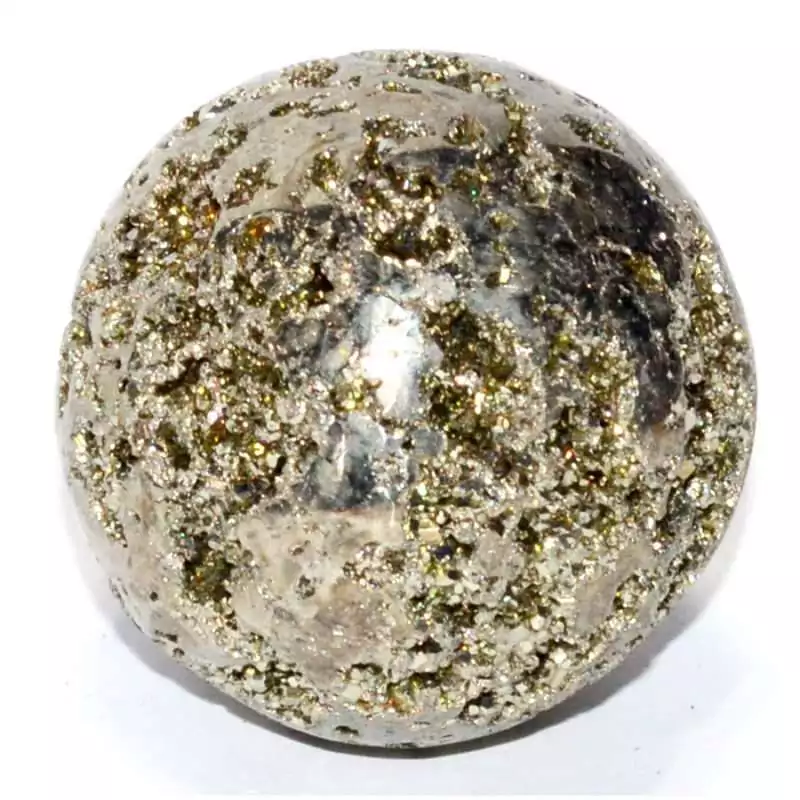
- Finish: Druse crystals with smooth polished patches
- Color: Brass-gold crystals with olive glints on pale silver-grey stone
- Mohs Hardness: 6 to 6.5
Pyrite With Druse: A Crystal Ball Named for Fire
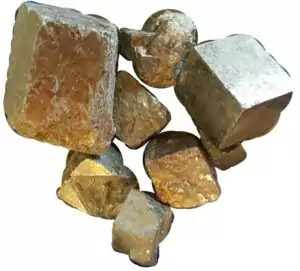
Pyrite is iron sulfide, FeS2, and its name comes from the Greek word pyr, meaning fire. The ancient Romans used a name meaning a stone that strikes fire for rocks that threw sparks against steel, and pyrite earned it: people used it with flint to start fires and, later, to ignite early firearms. It is the most common sulfide mineral, and it forms in so many settings that it turns up around the world. Pyrite usually grows as cube-shaped crystals, though it can also form twelve-sided pyritohedra, and a coating of small crystals on a surface is called druse. Each crystal face in a druse acts as a tiny mirror, which is why a druse glitters and shifts as you move. Its hardness is 6 to 6.5, and its surface is somewhat brittle. Its metallic luster and brass-yellow color give it a gold-like gleam, and the nickname fool’s gold stuck to it for that reason. A druse-covered sphere shows that gleam from every side at once.
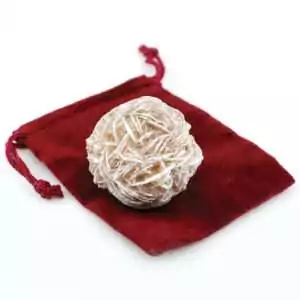
This sphere measures 40mm, about 1.6 inches, small enough to rest in the center of one hand. Most of the surface is druse, a crust of tiny crystal faces in brass-gold with olive glints that flash in different places as the ball turns. Through the glitter, smooth patches of pale silver-grey stone have been polished flat to the curve of the sphere, and one dark grey patch shines like a mirror. The mix of rough sparkle and smooth polish gives the sphere an uneven, hand-worked look. Under a lamp the crystals flash gold and green in different spots, and in dim light the pale polished patches carry the shape. Turn the ball slowly and the flashes travel across the surface as the faces catch the light one after another, and the smooth patches and the rough crust give the sphere two textures in one piece. Because druse covers each ball in a different pattern, no two spheres match. Set the sphere down gently on a soft cloth, since the surface is brittle.
Practical Ritual Applications
Place the sphere on a stand beside your notebook when you plan the month ahead, and let the glitter give your eyes a bright point of focus. Crystal guides regard pyrite as a symbol of abundance, prosperity and good luck, so a sphere on a desk or an altar is a natural nod to those themes. Set it among tumbled stones in a dish and the druse stands out as the brightest piece. On a reading table, set it near a candle in a holder, and the druse picks up the flame in dozens of tiny flashes. Keep the flame clear of paper and cloth. For other stones in this shape, browse my crystal balls and spheres collection.
How to Use a Pyrite Sphere With Druse
Three steps for seating the sphere, using it as a focus and keeping it in good shape.
- Seat the Sphere
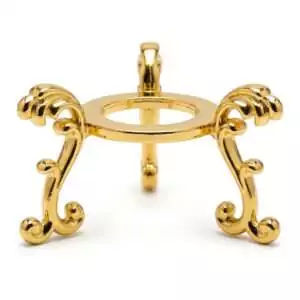
Choose a small stand, a wooden ring or a shallow dish lined with felt and set it on a flat, solid surface, away from the edge of the shelf or desk. Rest the sphere in it and tap the surface gently to check that nothing shifts. A stable seat protects the druse from knocks. Keep the sphere out of reach of pets and small children.
- Use It as a Bright Point of Focus
Sit with the sphere at eye level and a lamp or candle to one side. Let your eyes move across the glitter and then rest on one smooth, polished patch, where the surface turns still. Hold that look for a few breaths, then return to your notebook, your cards or your work. The shifts between sparkle and shine give the eye something simple to follow while you settle.
- Dust and Store With Care
Dust the sphere with a soft, dry brush, working gently across the druse. Wrap it alone in a soft cloth or keep it in a lined box, away from harder stones such as quartz, which can scratch the polished patches. When you pick it up, hold the ball by its sides so your fingers stay off the crystal tips.
The Tarot Fellow Standard
I stock this sphere for people who want a crystal ball with some glitter in it. At 40mm it is a small sphere, sized for a desk, a shelf or one hand, and the druse gives it a texture that changes with every turn. Because a sphere needs a base, browse my crystal ball stands for one that suits it. The brassy gold against pale silver-grey reads well beside a candle, a book and a deck of cards, and each ball has its own pattern of druse and polish.
Frequently Asked Questions
Yes. Pyrite's pale brass-yellow color and metallic luster look like gold at a glance, which gave it the nickname fool's gold. Gold is much softer and leaves a yellow streak, while pyrite is harder, at 6 to 6.5 on the Mohs scale, and leaves a greenish-black streak.
Crystal guides pair pyrite with the solar plexus chakra, the third chakra in the modern seven-chakra system, located in the upper abdomen. One guide lists the second and third chakras together. Pyrite is also regarded in crystal practice as a symbol of abundance, prosperity and good luck. These are crystal-lore associations, offered as themes for reflection.
Yes. Pyrite tarnishes readily, turning darker and often picking up an iridescent film, and one geology reference calls it a poor jewelry stone for that reason. It also oxidizes when exposed to air and moisture. Keep the sphere in a dry spot, and expect the brass color of fresh druse to deepen over time.

Reviews
There are no reviews yet