
Quick Specs
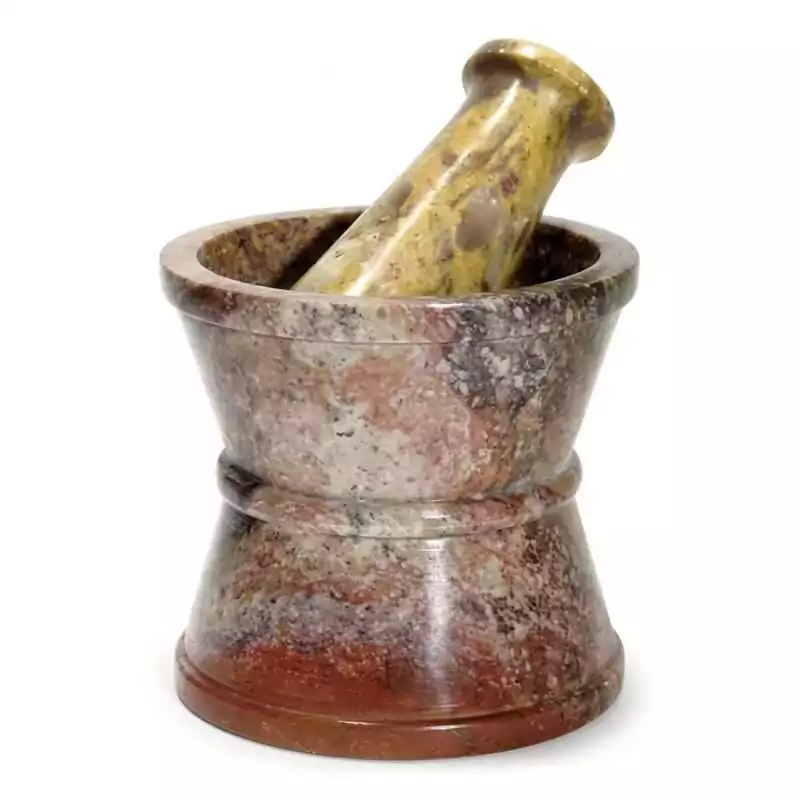
- Material: Natural soapstone (steatite)
- Type: Mortar and pestle grinding set
- Size/Quantity: 3 inches wide x 3 inches tall
- Best for: Grinding herbs, resins, roots, loose incense, and spell powders
Soapstone as a Ritual Grinding Material
Soapstone, technically known as steatite, is a talc-rich metamorphic rock with a Mohs hardness of 1 to 2. That softness translates to excellent workability when hand-carved into mortar and pestle sets, and its dense, smooth surface is well suited to grinding everything from dried herbs and plant roots to raw resins and incense powders. Unlike wood or unglazed clay mortars, soapstone has very low porosity, meaning it does not absorb oils, scents, or residues from one use into the next.
Heat retention is another distinctive property of soapstone. It holds warmth well and will not crack or stress under the modest heat of loose charcoal incense or smoldering resins placed directly in the bowl. This makes it more practical for working with frankincense, copal, dragon’s blood, and other heat-requiring materials than ceramic or thin marble alternatives. The 3-inch by 3-inch size in this set is compact and suited to focused altar preparation rather than large-batch production.
Use in Ritual and Herbal Work
The mortar and pestle is one of the oldest tools in both sacred and practical herbalism. Soapstone is valued for its workability and earthen properties, and in ritual preparation the physical act of grinding and combining ingredients is often treated as part of the working itself, an intentional transformation of raw plant material into a prepared magical component. You can browse a full selection of herb preparation tools in my mortar and pestle collection.
This set is distinct from smudge sticks, loose incense blends, and pre-ground powders because it is a preparation tool, not a finished ingredient. Its purpose is to transform raw dried herbs, roots, seeds, or resins into a usable form for incense blends, sachet powders, spell bags, or floor washes. Practitioners who work from raw material rather than pre-blended products will find it an essential piece of altar kit.
How to Use a Soapstone Mortar and Pestle
How to grind and prepare herbs, resins, and ritual ingredients using a soapstone mortar and pestle.
- Load and Break Down the Material
Add dry ingredients to the mortar in small amounts. Hold the pestle firmly and use a circular pressing motion against the grooved interior to break down coarser materials like dried herb stems, resins, or whole seeds before grinding finer.
- Grind to the Desired Consistency
Switch to a rhythmic grinding stroke once the material begins to break down, working the pestle in a circular or figure-eight path. Soapstone’s density and slight surface texture make it efficient for reducing herbs and resins to consistent powder.
- Clean Between Uses
Wipe the mortar clean with a dry cloth between uses. Soapstone does not absorb oils or odors the way wood or unfinished marble can, so a dry wipe is usually sufficient. For resinous buildup, a cloth with rubbing alcohol clears residue cleanly.
The Tarot Fellow Standard
I carry this soapstone set because it is the right tool for practitioners who prepare their own herbal blends, spell powders, and incense mixes from scratch. The soapstone material gives it real advantages over ceramic or wood: no absorbed odors between uses, heat tolerance for resins and charcoal work, and a dense grinding surface that handles both fine herbs and hard resins without chipping or cracking. The 3-inch size is compact enough for altar use but large enough to handle a practical working quantity of material. If you work with loose herbs and raw materials rather than pre-made blends, browse my full herb and accessories collection for ingredients to use with it.
Frequently Asked Questions
Yes. Soapstone is a talc-rich metamorphic rock (steatite) with good heat retention, making it safe to use with loose charcoal incense, smoldering herbs, or hot resins placed directly in the bowl. It will not crack under normal ritual heat use.
Soapstone does not absorb odors or oils between uses the way wood or unglazed clay can. A dry cloth wipe is usually enough. For sticky resinous residue, a cloth with a small amount of rubbing alcohol removes buildup without damaging the stone.
The mortar measures 3 inches wide and 3 inches tall. This compact size suits small-batch spell preparation, focused altar work, and personal rituals rather than large-volume grinding. It fits easily on a working altar or herb preparation surface.
Yes. Soapstone’s low porosity keeps residue from one working from contaminating the next, unlike more porous or absorbent surfaces.
Reviews
There are no reviews yet